Text NLP: How Computers Understand and Work With Language
Text NLP, or text natural language processing, is the branch of artificial intelligence that helps computers analyze, interpret, and generate human language. It powers tools people use every day, including search engines, chatbots, spam filters, translation services, and voice assistants.
Human language is complex. A word can have different meanings depending on context, and the same idea can be expressed in many ways. Text NLP combines linguistic methods, statistical models, and machine learning to help software work with these variations.
What Is Text NLP?
Natural language processing (NLP) is a broad field focused on enabling computers to work with human language. Text NLP specifically deals with written language, such as emails, documents, reviews, social media posts, and web pages.
Some NLP systems identify patterns in text, while others classify or summarize content. More advanced systems can generate responses or rewrite text. The techniques used depend on the task, the available data, and the level of accuracy required.
How Text NLP Works
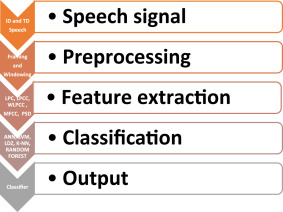
A text NLP workflow often includes several stages. Not every project needs every stage, and modern machine learning systems may handle some steps differently.
- Collecting text: The system receives text from a source, such as a document, form, or database.
- Preparing the text: The text may be cleaned, split into sentences or smaller units, and converted into a format a model can process.
- Analyzing meaning and structure: The system looks for patterns, relationships, and relevant features in the text.
- Completing a task: The system might assign a category, identify a name, detect a language, or produce a summary.
- Reviewing results: Teams evaluate the output for accuracy, usefulness, and potential errors.
Common Text NLP Techniques
Tokenization
Tokenization breaks text into smaller pieces called tokens. A token may be a word, part of a word, punctuation mark, or another unit, depending on the system.
Text Classification
Classification assigns text to one or more categories. For example, a support team could sort incoming messages by topic, or an email service could identify likely spam.
Named Entity Recognition
Named entity recognition identifies items such as people, organizations, locations, dates, and product names. It can help organize documents or extract key details from large collections of text.
Sentiment Analysis
Sentiment analysis estimates the tone or opinion expressed in a text. Businesses may use it to review customer feedback, although sarcasm, mixed opinions, and cultural differences can make results difficult to interpret.
Information Extraction
Information extraction finds specific facts or relationships in unstructured text. For example, a system might identify a contract’s dates, parties, or payment terms for further review.
Machine Translation and Text Generation
NLP systems can translate text between languages, draft responses, summarize documents, and generate other written content. These outputs can be useful, but important material may still require human review.
Where Text NLP Is Used
- Customer service: Routing requests, suggesting replies, and answering common questions.
- Search: Matching a query with relevant documents, even when the wording differs.
- Healthcare: Organizing clinical notes and locating information for qualified professionals.
- Finance: Reviewing reports, classifying documents, and identifying relevant details.
- Education: Supporting language learning, feedback, and document organization.
- Content management: Tagging, summarizing, and searching large collections of text.
Benefits and Limitations
Text NLP can help people process large volumes of written information more quickly and consistently. It can automate repetitive tasks, make content easier to search, and help organizations identify patterns that might otherwise be difficult to spot.
However, NLP systems are not perfect. They may misunderstand context, produce inaccurate results, or perform unevenly across languages and communities. Their quality depends on factors such as training data, task design, and evaluation methods. Sensitive information also requires careful handling, including appropriate privacy and security practices.
How to Choose a Text NLP Solution
Start by defining the task. A tool designed for sentiment analysis may not be suitable for extracting contract details, and a general-purpose language model may need additional testing before it is used in a specialized setting.
- Identify the problem the system needs to solve.
- Check which languages, formats, and data types it supports.
- Test it with realistic examples, including unusual or ambiguous cases.
- Measure performance against clear criteria.
- Consider privacy, security, cost, and the need for human review.
The Future of Text NLP
Text NLP continues to develop as language models and other machine learning methods improve. Current work includes making systems more reliable, supporting more languages, reducing bias, and helping users understand how results were produced. In many settings, the strongest approach combines automated processing with human judgment.
Conclusion
Text NLP gives computers practical ways to work with written language, from sorting messages to translating documents. Understanding its methods, strengths, and limitations makes it easier to choose the right tools and use their results responsibly.
NLP FAQs: Meaning, Spirituality, ChatGPT, and the Four Types
- What is NLP in spirituality?
- What does NLP stand for?
- Is ChatGPT NLP?
- What are the four types of NLP?
What is NLP in spirituality?
In spirituality, NLP usually refers to neuro-linguistic programming, not natural language processing. It is a set of communication and self-reflection techniques that some people use to explore beliefs, habits, and personal goals. In spiritual settings, these techniques may be paired with practices such as meditation or journaling, but NLP is not itself a spiritual tradition, and claims about its effectiveness should be considered critically.
What does NLP stand for?
NLP stands for natural language processing, a field of artificial intelligence that helps computers understand, analyze, and generate human language. It’s used in tools such as chatbots, translation apps, search engines, and voice assistants.
Is ChatGPT NLP?
Yes, ChatGPT is an example of natural language processing (NLP) technology. It uses a large language model trained on text to interpret prompts and generate responses. ChatGPT can perform many NLP tasks, including answering questions, summarizing documents, translating languages, and rewriting content. NLP is the broader field of technology for working with human language, while ChatGPT is one application within that field. Although its responses can sound natural and confident, they may contain errors, so important information should be verified.
What are the four types of NLP?
There isn’t one universally accepted list of the “four types” of NLP, but common text-NLP tasks can be grouped into four areas: text classification, which sorts content into categories; information extraction, which finds details such as names and dates; language understanding, which interprets meaning, intent, or sentiment; and language generation, which produces or transforms text, such as summaries, translations, and responses. These areas often overlap, and NLP systems may combine several of them to complete a task.