Understanding Google NLP AI: A Revolution in Language Processing
Natural Language Processing (NLP) has become a cornerstone of artificial intelligence, enabling machines to understand and interact with human language. Among the leaders in this field is Google, whose advancements in NLP AI have transformed how we interact with technology and access information.
What is Google NLP AI?
Google NLP AI refers to the suite of tools and technologies developed by Google to process and understand human language. This includes everything from sentiment analysis and entity recognition to language translation and conversational agents. At its core, Google’s NLP leverages machine learning models, particularly deep learning architectures, to interpret the nuances of human language.
Key Features of Google NLP AI
- Sentiment Analysis: Google’s NLP can assess the sentiment behind a piece of text, determining whether it is positive, negative, or neutral. This feature is widely used in analyzing customer feedback, social media posts, and reviews.
- Entity Recognition: The technology can identify and categorize key elements within a text, such as names of people, organizations, locations, dates, and more. This capability is crucial for organizing information and extracting meaningful insights from large datasets.
- Language Translation: With its advanced translation algorithms, Google has made real-time translation accessible through tools like Google Translate. This breaks down communication barriers across different languages.
- Syntactic Analysis: Google’s NLP can parse sentences to understand their grammatical structure. This helps in comprehending complex sentence formations and improving machine-human interactions.
The Technology Behind Google NLP
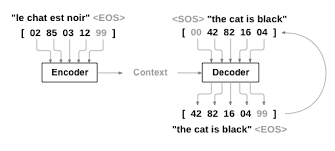
The backbone of Google’s NLP capabilities lies in its use of advanced machine learning models such as BERT (Bidirectional Encoder Representations from Transformers). BERT has been revolutionary because it considers the context of words within sentences bidirectionally rather than processing them one at a time. This allows for a more nuanced understanding of language compared to previous models.
BERT’s introduction marked a significant leap forward for Google’s search algorithms as well. By better understanding user queries’ context and intent, search results have become more relevant and accurate.
Applications Across Industries
The applications for Google’s NLP AI are vast and span multiple industries:
- E-commerce: Enhancing customer service through chatbots that understand natural language queries.
- Healthcare: Analyzing patient feedback or medical records to improve care delivery.
- Finance: Extracting insights from financial reports or news articles for market analysis.
The Future of Google NLP AI
The future looks promising as Google continues to refine its NLP technologies. With ongoing research into more sophisticated models like GPT-3 (Generative Pre-trained Transformer 3) by other companies setting new benchmarks in language processing capabilities, it’s clear that we are only at the beginning stages of what these technologies can achieve.
As these systems become even more adept at understanding context nuances across various languages globally – including dialects – we can expect even greater integration into everyday applications ranging from personal assistants on smartphones all way up enterprise-level solutions designed streamline workflows improve decision-making processes alike!
The impact will be profound: enabling seamless communication between diverse populations worldwide; transforming industries; unlocking new opportunities previously thought impossible due linguistic limitations alone!
This evolution underscores importance continued investment research development within field ensure future innovations keep pace growing demands modern society increasingly interconnected world where effective communication key success survival alike!
7 Essential Tips for Mastering Google NLP AI
- Understand the basics of natural language processing (NLP) before diving into Google NLP AI.
- Explore Google Cloud Natural Language API for pre-trained models and easy integration.
- Take advantage of Google’s powerful machine learning algorithms for accurate text analysis.
- Utilize entity recognition to identify and extract important information from text data.
- Experiment with sentiment analysis to understand the emotions conveyed in text content.
- Consider customizing models for specific tasks using Google AutoML Natural Language.
- Stay updated on new features and improvements in Google NLP AI for enhanced performance.
Understand the basics of natural language processing (NLP) before diving into Google NLP AI.
Before diving into Google NLP AI, it’s essential to grasp the basics of natural language processing (NLP) to fully appreciate the technology’s capabilities and applications. NLP is a field of artificial intelligence that focuses on the interaction between computers and humans through natural language. By understanding foundational concepts such as tokenization, syntax and semantic analysis, sentiment detection, and machine learning models, users can better comprehend how Google NLP AI interprets and processes human language. This foundational knowledge not only aids in effectively utilizing Google’s tools but also enhances one’s ability to implement NLP solutions in various applications, from chatbots to sentiment analysis in business intelligence.
Explore Google Cloud Natural Language API for pre-trained models and easy integration.
Discover the power of Google Cloud Natural Language API, a robust tool that offers pre-trained models and seamless integration for your NLP projects. By leveraging this service, you can tap into Google’s advanced machine learning capabilities to analyze and understand text with ease. Whether you need sentiment analysis, entity recognition, or syntax analysis, the Natural Language API provides a reliable solution that simplifies the implementation of NLP features into your applications. Take advantage of the convenience and efficiency offered by Google Cloud Natural Language API to enhance your language processing tasks effortlessly.
Take advantage of Google’s powerful machine learning algorithms for accurate text analysis.
By leveraging Google’s robust machine learning algorithms, users can harness the full potential of accurate text analysis through Google NLP AI. These advanced algorithms enable precise and insightful interpretation of textual data, allowing for sentiment analysis, entity recognition, syntactic analysis, and more. By taking advantage of Google’s sophisticated technology, individuals and businesses can unlock valuable insights from their text data, leading to enhanced decision-making, improved communication strategies, and streamlined processes.
Utilize entity recognition to identify and extract important information from text data.
Entity recognition is a powerful feature of Google NLP AI that allows users to identify and extract critical information from vast amounts of text data. By automatically recognizing entities such as names, dates, locations, and organizations within a document, businesses and individuals can streamline data processing and analysis. This capability is particularly beneficial in fields like customer service, where understanding the context of interactions can enhance response strategies. In research and journalism, entity recognition aids in quickly gathering relevant information from large datasets. By leveraging this tool, users can focus on decision-making and strategy development rather than manual data sorting, thus increasing efficiency and accuracy in their operations.
Experiment with sentiment analysis to understand the emotions conveyed in text content.
Experimenting with sentiment analysis using Google NLP AI can provide valuable insights into the emotions conveyed in text content. This powerful tool allows users to automatically assess whether a piece of text expresses positive, negative, or neutral sentiments. By analyzing customer reviews, social media posts, or any written feedback, businesses and individuals can gain a deeper understanding of public perception and emotional responses. This understanding can guide decision-making processes, enhance customer engagement strategies, and improve product offerings. Whether you’re a marketer seeking to refine your brand’s messaging or a researcher studying public opinion, sentiment analysis offers a nuanced view of how language reflects human emotions.
Consider customizing models for specific tasks using Google AutoML Natural Language.
When utilizing Google NLP AI, it is beneficial to consider customizing models for specific tasks through tools like Google AutoML Natural Language. By tailoring the models to the unique requirements of a particular task or industry, users can enhance accuracy and efficiency in processing natural language data. Google AutoML Natural Language empowers users to train and deploy custom machine learning models without requiring extensive expertise in data science, making it accessible and effective for a wide range of applications. Customizing models using this tool can lead to more precise results and better alignment with the specific needs of a project, ultimately improving overall performance and user experience.
Stay updated on new features and improvements in Google NLP AI for enhanced performance.
To maximize the performance of Google NLP AI, it is crucial to stay informed about the latest features and enhancements. By keeping up-to-date on new developments in Google’s NLP technology, users can leverage the most advanced capabilities to achieve superior results. Continuous learning and adaptation to improvements ensure that users can make the most of Google NLP AI’s evolving functionalities for enhanced performance and efficiency in language processing tasks.