Supervised Learning in Natural Language Processing
Supervised learning is one of the most widely used approaches in natural language processing (NLP). It teaches a computer to perform a language-related task by showing it examples that include both input text and the correct answer. From classifying customer reviews to identifying names in documents, supervised learning helps NLP systems recognize patterns and make predictions about new text.
What Is Supervised Learning?
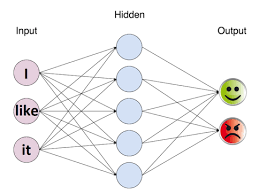
In supervised learning, a model learns from a labeled dataset. Each training example contains an input and a target label or output. For example, a sentiment analysis dataset might pair customer reviews with labels such as “positive,” “negative,” or “neutral.” The model examines these examples, learns relationships between the text and the labels, and then uses what it has learned to make predictions on text it has not seen before.
The word “supervised” refers to the presence of these known answers during training. The model’s predictions are compared with the correct labels, and its parameters are adjusted to reduce errors.
Common Supervised NLP Tasks
Supervised learning can be applied to many language tasks, including:
- Text classification: Assigning a category to a passage, such as identifying spam, routing a support request, or classifying a news article by topic.
- Sentiment analysis: Predicting whether a review, comment, or message expresses a positive, negative, or neutral opinion.
- Named entity recognition: Finding and labeling names of people, organizations, locations, dates, and other entities in text.
- Intent detection: Identifying what a user wants to do, such as check an order, reset a password, or book an appointment.
- Question answering: Selecting or generating an answer based on a question and relevant text, depending on how the task is defined and the data is labeled.
- Machine translation: Learning to translate text from one language to another using aligned examples of source and target sentences.
How the Process Works
Define the task
First, the goal must be specific. A project might aim to classify incoming emails by department, detect product names in contracts, or predict the sentiment of short reviews. A clear task definition determines what labels are needed and how success will be measured.
Collect and label data
The training data should represent the kind of text the system will encounter in real use. Human annotators or other reliable processes assign the correct labels. For instance, a named entity recognition dataset may mark each word as part of a person’s name, a location, an organization, or none of these categories.
Label quality matters. Inconsistent or incorrect labels can confuse a model and limit its performance. Clear annotation guidelines and review procedures can help make the dataset more reliable.
Prepare the text
Text may need to be cleaned, normalized, or divided into smaller units called tokens. The appropriate preparation depends on the language, task, and model. Modern neural models often use subword tokenization, which can handle unfamiliar words by breaking them into smaller pieces.
Train a model
During training, the model processes examples and produces predictions. A learning algorithm compares those predictions with the labeled answers and updates the model to reduce the difference. Traditional approaches may use methods such as logistic regression or support vector machines with engineered text features. Neural approaches often use transformer-based models that learn useful representations from context.
Evaluate and improve
After training, the model is tested on examples that were held out from training. This helps estimate how well it may perform on new data. If results are weak, the team may improve the labels, add representative examples, adjust the model, or refine the task definition.
Training, Validation, and Test Data
A dataset is commonly divided into three parts:
- Training set: The examples used to teach the model.
- Validation set: The examples used to compare model settings and guide development.
- Test set: A separate set used for a final evaluation.
Keeping these sets separate helps prevent data leakage, which happens when information from evaluation examples inadvertently influences training. For example, near-duplicate documents in both the training and test sets can make performance appear better than it really is.
Measuring Model Performance
The right evaluation metric depends on the task. Accuracy measures the share of predictions that are correct, but it can be misleading when some classes are much more common than others. For example, a model that labels nearly every message as “not spam” may have high accuracy if spam is rare, while still failing to identify the messages that matter.
For classification, precision measures how often a predicted label is correct, while recall measures how many of the relevant examples the model finds. The F1 score combines precision and recall. For sequence labeling and translation, other metrics may be more appropriate, and human review can provide valuable insight into errors that a single score cannot capture.
Benefits and Limitations
Supervised learning is useful when a task has a clear definition and enough high-quality labeled examples. It can produce measurable results, support consistent decisions, and be tailored to a particular industry or application.
However, supervised systems also have limitations. Creating labeled datasets can be costly and time-consuming, especially for specialized fields or less-resourced languages. A model may perform poorly when it encounters text that differs from its training data, such as new terminology, regional expressions, or a change in customer behavior. It can also reproduce biases present in the examples it learned from.
These challenges make ongoing evaluation important. Teams should test models on realistic data, review errors across different groups and use cases, protect sensitive information, and monitor performance after deployment.
Supervised Learning and Modern NLP
Many modern NLP systems use pretrained language models. These models first learn broad language patterns from large collections of text, then may be fine-tuned with labeled examples for a specific task. This approach can reduce the amount of task-specific data needed, although the results still depend on the quality of the labels, the fit between training data and real-world use, and careful evaluation.
Supervised learning remains a central tool in NLP because it connects human-defined goals with machine predictions. When the task is well specified, the data is representative, and performance is carefully assessed, supervised models can help people organize, search, analyze, and work with language more effectively.
9 Essential Tips for Supervised Learning in NLP
- Use high-quality, consistently labeled data.
- Split data before preprocessing to prevent leakage.
- Keep class labels balanced where possible.
- Start with a simple baseline model.
- Tokenize text consistently across datasets.
- Use precision, recall, and F1—not accuracy alone.
- Tune hyperparameters on a validation set.
- Inspect errors to find labeling or data issues.
- Test once on a held-out dataset.
Use high-quality, consistently labeled data.
High-quality, consistently labeled data is essential for building reliable supervised NLP models. Labels teach the model what patterns to recognize, so errors or disagreements in the dataset can lead to inaccurate, inconsistent predictions. Create clear labeling guidelines, train annotators on them, and review examples regularly to catch mistakes and resolve ambiguities. Well-labeled data helps a model learn the task more effectively and perform more reliably on new text.
Split data before preprocessing to prevent leakage.
Split your dataset into training, validation, and test sets before fitting preprocessing steps. If you build a vocabulary, select features, or calculate normalization statistics using the full dataset first, information from the validation or test sets can leak into training and make performance look better than it really is. Fit preprocessing only on the training set, then apply the same transformations to the other splits without refitting.
Keep class labels balanced where possible.
When preparing data for supervised NLP, keep class labels balanced where possible so the model has enough examples to learn each category. If one label dominates the dataset, the model may favor that class and miss less common but important cases. You can address imbalance by collecting more examples for underrepresented classes, carefully resampling the data, or using class weights during training. Always evaluate performance for each class—not just overall accuracy—to make sure the model works well across the categories that matter.
Start with a simple baseline model.
Start with a simple baseline model before trying more complex NLP approaches. A basic method, such as a majority-class predictor or a model using TF-IDF features with logistic regression, gives you a clear point of comparison and can reveal whether your data and labels support the task. Once you know how the baseline performs, you can identify its weaknesses, choose meaningful evaluation metrics, and judge whether a more advanced model is actually improving results.
Tokenize text consistently across datasets.
Tokenize text consistently across training, validation, and test datasets so the model encounters language in the same format throughout development and evaluation. Differences in handling punctuation, capitalization, contractions, special characters, or subword units can create mismatches that hurt performance or make results unreliable. Use the same tokenizer and settings for every dataset, and document any preprocessing steps so they can be reproduced when the model is deployed.
Use precision, recall, and F1—not accuracy alone.
When evaluating a supervised NLP model, look beyond accuracy and consider precision, recall, and F1 score. Accuracy can be misleading when the dataset is imbalanced—for example, a model may correctly label most messages as “not spam” while missing many actual spam messages. Precision shows how often the model’s positive predictions are correct, recall measures how many relevant examples it finds, and F1 balances the two. Together, these metrics give a clearer picture of how well the model performs on the cases that matter.
Tune hyperparameters on a validation set.
Tune hyperparameters—such as learning rate, batch size, model depth, and regularization strength—using a validation set that is separate from the training data. Compare settings based on a metric suited to your NLP task, such as F1 for imbalanced text classification, and choose the configuration that performs best on validation examples. Keep the test set untouched until final evaluation so it provides a more reliable estimate of how well the model will handle unseen text.
Inspect errors to find labeling or data issues.
Inspecting a supervised NLP model’s errors can reveal problems that a single performance score may hide. Review examples the model misclassified and look for patterns: labels may be inconsistent, important cases may be missing from the training data, or the examples may not reflect how people actually use language. For instance, sarcasm, regional phrasing, or specialized vocabulary can expose gaps in the dataset. Use these findings to clarify labeling guidelines, correct inaccurate labels, and add representative examples—then retrain and evaluate the model again.
Test once on a held-out dataset.
Test your supervised NLP model once on a held-out dataset that was kept separate from training and model selection. This provides a more reliable estimate of how well the model may perform on new, unseen text. Repeatedly checking the test set and making changes based on its results can lead to overfitting, so use a validation set for tuning and reserve the held-out test set for the final evaluation.