Data Processing in Natural Language Processing (NLP)
Natural language processing (NLP) helps computers work with human language, from sorting customer feedback to answering questions and translating text. Before an NLP system can perform these tasks, it needs data that is relevant, consistent, and suitable for the intended use. Data processing is the set of steps used to collect, prepare, transform, and evaluate that data.
Careful processing can improve the reliability of an NLP system. Poorly prepared data, on the other hand, may introduce errors, reinforce biases, or make a model perform badly on real-world text. The right workflow depends on the task, the language, the data source, and the model.
Collecting and Selecting Data
NLP data may come from sources such as books, websites, customer support messages, surveys, transcripts, or internal documents. The data should reflect the language and situations the system is expected to handle. For example, a model designed to classify product reviews benefits from examples that include the vocabulary, tone, and writing styles found in actual reviews.
Data collection also involves checking whether the material can be used for the intended purpose. Privacy requirements, licensing terms, consent, and organizational policies should be considered before data is gathered or reused. Sensitive information may need to be excluded or handled with additional safeguards.
Cleaning and Normalization
Raw text often contains noise: duplicated records, formatting artifacts, broken characters, irrelevant markup, or incomplete entries. Cleaning helps address these issues. Common steps include removing accidental duplicates, correcting encoding problems, and separating useful text from surrounding page content.
Normalization makes text more consistent. Depending on the task, this might include standardizing whitespace, converting text to a consistent character format, or handling variations in punctuation. Lowercasing can be useful for some applications, but it is not always appropriate. Capitalization, for example, can help distinguish names from ordinary words.
Cleaning rules should be chosen carefully. Removing unusual spellings or informal language might make a dataset look more uniform while also removing the very patterns a system needs to understand.
Tokenization and Text Representation
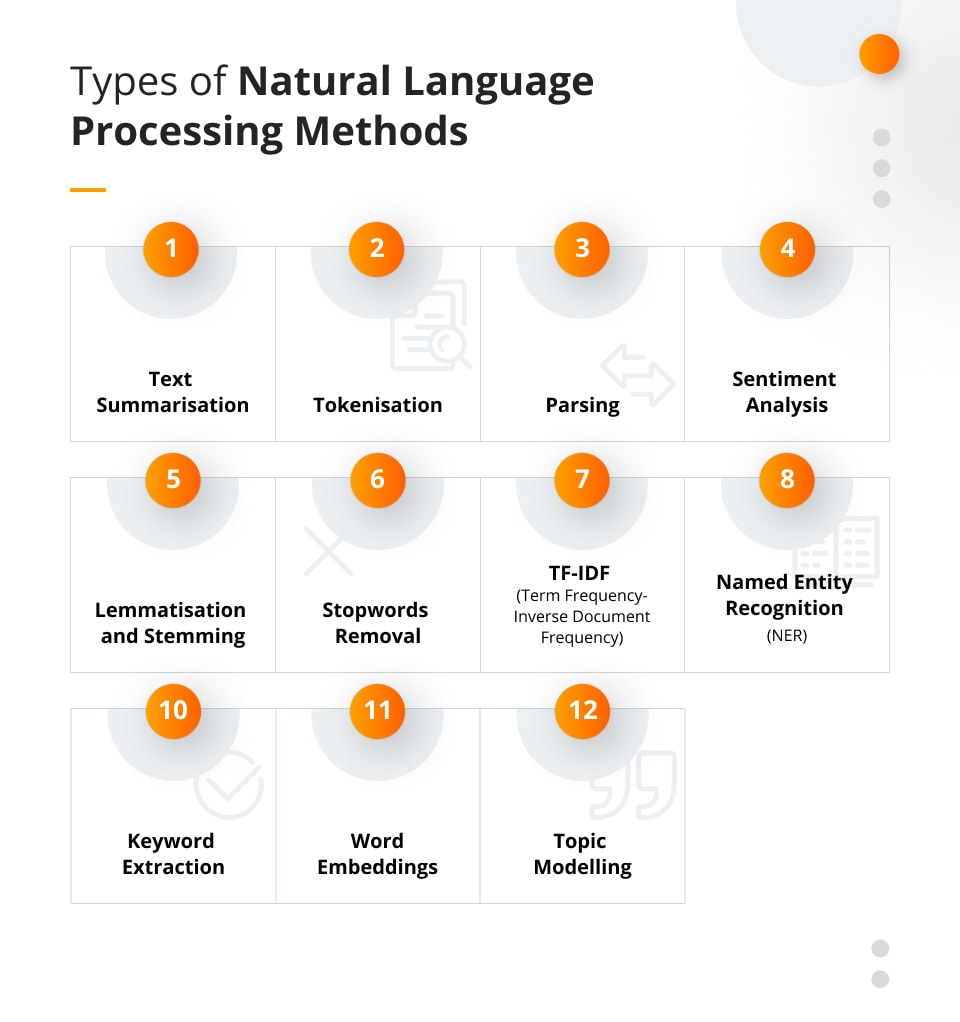
Computers need text represented in a form they can process. Tokenization divides text into smaller units, such as words, punctuation marks, or subword pieces. The choice of tokenization method affects how a system handles unfamiliar words, contractions, compound terms, and languages that do not use spaces in the same way English does.
After tokenization, text can be converted into numerical representations. Traditional approaches include counts of words or phrases, while modern systems often use learned representations called embeddings. These representations help models identify patterns and relationships among words and passages.
Some NLP tasks also use additional processing, such as part-of-speech tagging, stemming, or lemmatization. These techniques can be helpful for certain applications, but they are not universally necessary. Modern language models may handle many linguistic variations without a separate stemming step.
Labeling and Annotation
Supervised NLP systems learn from examples that have been labeled with the desired answers. A dataset for sentiment analysis might mark each review as positive, negative, or neutral. A dataset for named-entity recognition might identify which words refer to people, organizations, or locations.
Clear annotation guidelines help different annotators make consistent decisions. For subjective tasks, such as identifying tone or intent, disagreement may be unavoidable. Measuring agreement and reviewing ambiguous examples can reveal where guidelines need clarification.
Labels should also be checked for errors and imbalances. If a dataset contains many more examples of one category than another, a model may favor the common category. Possible responses include collecting more examples, adjusting training methods, or reporting performance separately for each group.
Splitting Data for Evaluation
Data is commonly divided into training, validation, and test sets. The training set is used to fit the model, the validation set helps guide model choices, and the test set provides a final evaluation. Keeping these sets separate helps estimate how well the system may work on data it has not seen.
Data leakage occurs when information from the evaluation data influences training or model selection. For example, duplicated or near-duplicated documents appearing in both training and test sets can make results look better than they really are. Splitting strategies should match the task: time-based data may require chronological splits, while related records may need to stay together in the same partition.
Processing for Different NLP Tasks
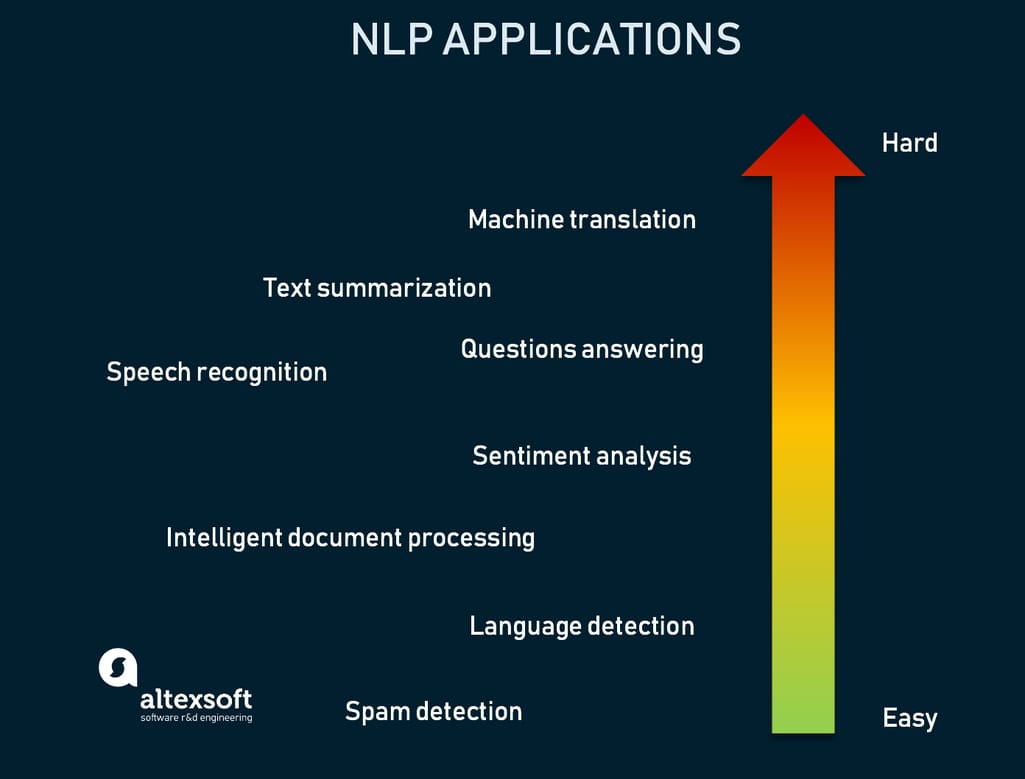
Data preparation varies by application. Text classification may require representative examples and balanced labels. Machine translation needs aligned source and target text. Question-answering systems may require passages paired with questions and answers. Speech-based NLP often involves transcripts, timestamps, or audio segments in addition to text.
For multilingual applications, processing should account for differences in scripts, word boundaries, grammar, and regional usage. A workflow designed only for English may not transfer cleanly to other languages. Language-specific review and evaluation are important, especially when training data is limited.
Privacy, Bias, and Data Quality
Data processing is not only a technical task. Text can contain personal details, confidential information, or harmful content. Teams should limit access, remove or protect sensitive information where appropriate, and follow applicable privacy and security requirements.
Datasets can also reflect social and cultural biases. If certain groups, dialects, or writing styles are underrepresented, a system may work less reliably for them. Reviewing data composition and testing performance across relevant groups can help uncover these gaps. The goal is not simply to remove every difference, but to understand how data affects system behavior and reduce avoidable harm.
Documenting and Monitoring the Pipeline
Good data processing is repeatable and transparent. Teams can document data sources, transformations, labeling rules, known limitations, and evaluation methods. Versioning datasets and processing code makes it easier to reproduce results and understand why a system’s behavior changes over time.
Processing should not stop when a model is deployed. Language changes, new topics emerge, and user behavior can shift. Monitoring performance and reviewing new data can reveal when a dataset or model needs updating. Updates should be evaluated carefully to avoid introducing new errors or worsening existing disparities.
Conclusion
Data processing is a foundational part of NLP. It turns raw language into material that models can learn from and people can evaluate. A strong process combines thoughtful collection, appropriate cleaning, reliable annotation, careful evaluation, privacy protections, and ongoing review. By treating data quality as an essential part of system design, NLP teams can build tools that are more useful, dependable, and responsible.
Data Processing in NLP: 8 Frequently Asked Questions
- What are the four types of data processing?
- What is data preprocessing for NLP projects?
- Is ChatGPT an NLP?
- What is data processing in NLP?
- What are the three types of NLP?
- What are the different steps for data processing in NLP?
- Is NLP in AI or ML?
- Why is data processing required in NLP?
What are the four types of data processing?
The four commonly discussed types of data processing are batch, real-time, online, and distributed processing. Batch processing handles groups of data at scheduled intervals, such as preparing a large text corpus for NLP model training. Real-time processing analyzes data as it arrives, while online processing lets users submit data and receive results interactively, such as instant text classification. Distributed processing divides work across multiple computers to handle large datasets more efficiently. These categories can overlap, and NLP systems may use more than one depending on their needs.
What is data preprocessing for NLP projects?
Data preprocessing for NLP projects is the process of preparing raw text so it can be analyzed or used to train a language model. It may include removing duplicate or irrelevant content, correcting formatting and encoding issues, standardizing text, and splitting it into tokens or other numerical representations. Depending on the project, preprocessing can also involve labeling examples, handling missing data, and protecting sensitive information. The steps should be tailored to the task and language, since excessive processing can remove useful context or meaning.
Is ChatGPT an NLP?
Yes, ChatGPT is an application of natural language processing (NLP), rather than NLP itself. NLP is the broader field focused on helping computers process and generate human language. ChatGPT uses a large language model to interpret prompts and produce responses for tasks such as answering questions, summarizing text, translating languages, and drafting content. Its processing involves breaking text into tokens and using patterns learned during training to generate responses. Although ChatGPT can produce fluent, relevant text, it can also make mistakes, so important information should be verified.
What is data processing in NLP?
Data processing in NLP is the process of preparing text or speech so a computer can analyze and use it. It may include collecting and cleaning data, removing duplicates or unwanted content, splitting text into tokens, converting words into numerical representations, and adding labels for tasks such as sentiment analysis or translation. The specific steps depend on the application, and careful processing helps improve a system’s accuracy, fairness, and reliability.
What are the three types of NLP?
The three commonly cited approaches to NLP are rule-based, statistical, and neural. Rule-based NLP uses hand-written linguistic rules; statistical NLP learns patterns from data using probability and machine-learning methods; and neural NLP uses neural networks, including large language models, to interpret and generate language. These approaches have evolved over time and can be combined, so the exact classification may vary by context.
What are the different steps for data processing in NLP?
Data processing in NLP typically includes collecting relevant text, removing duplicates and correcting formatting or encoding issues, and normalizing the text as needed. The data is then tokenized into words or subword units and converted into a numerical representation that a model can process. For supervised tasks, examples may also be labeled or annotated. Finally, the dataset is divided into training, validation, and test sets, then checked for quality, privacy concerns, and potential bias. The exact steps vary depending on the language, task, and model.
Is NLP in AI or ML?
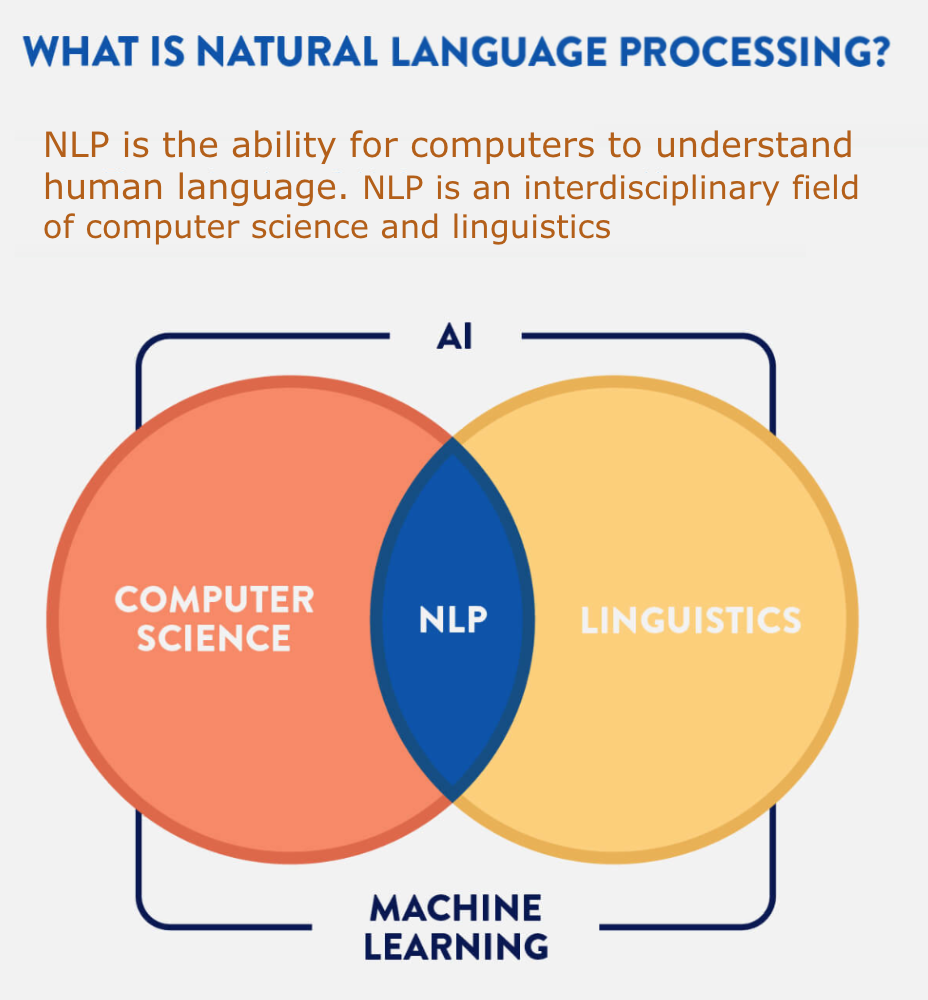
NLP, or natural language processing, is a field of artificial intelligence (AI) focused on helping computers understand, interpret, and generate human language. Machine learning (ML) is one of the main approaches used to build NLP systems: models learn patterns from examples rather than relying only on hand-written rules. So NLP is generally considered part of AI, and many modern NLP applications use ML, though some NLP methods also rely on rules or other techniques.
Why is data processing required in NLP?
Data processing is required in NLP because raw text is often inconsistent, noisy, or unstructured, making it difficult for models to interpret reliably. Steps such as cleaning, normalization, tokenization, and formatting help convert text into a consistent form that a system can analyze. Well-processed data can improve model accuracy, reduce errors, and make results more dependable across different inputs.