Natural Language Processing in Computational Intelligence
People communicate through language that is flexible, context-dependent, and often ambiguous. Helping computers work with that language is the goal of natural language processing (NLP). When NLP is combined with computational intelligence, it can support systems that learn from data, recognize patterns, and adapt to complex tasks rather than relying only on fixed rules.
What Is Computational Intelligence?
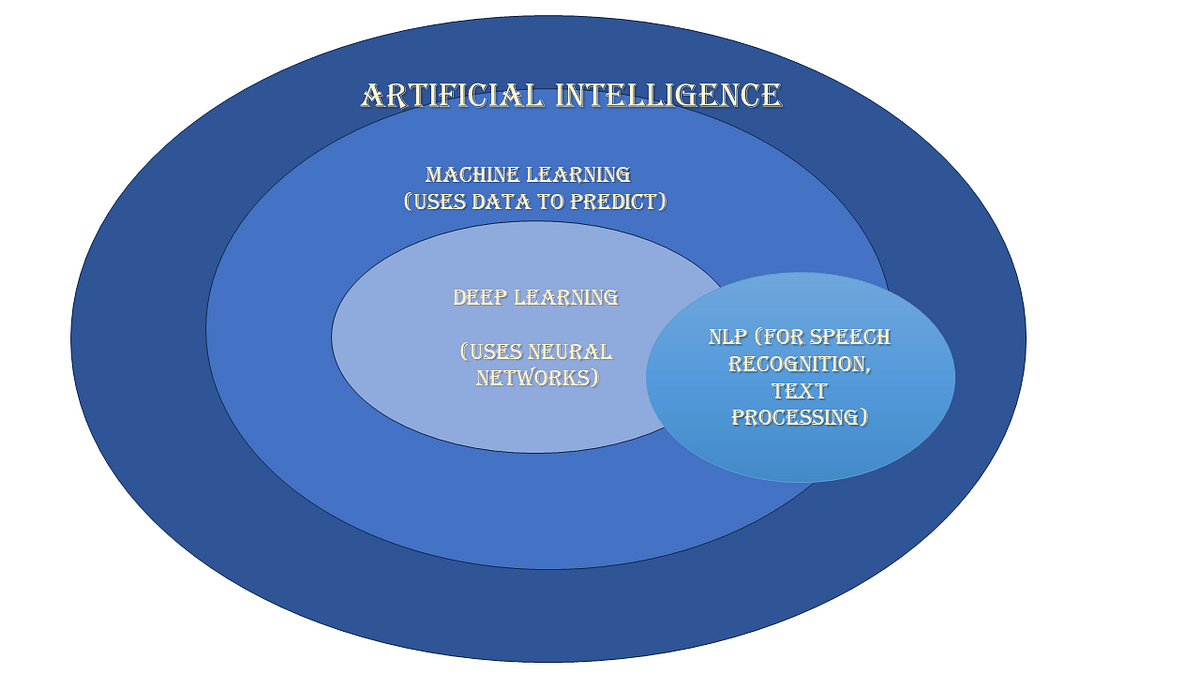
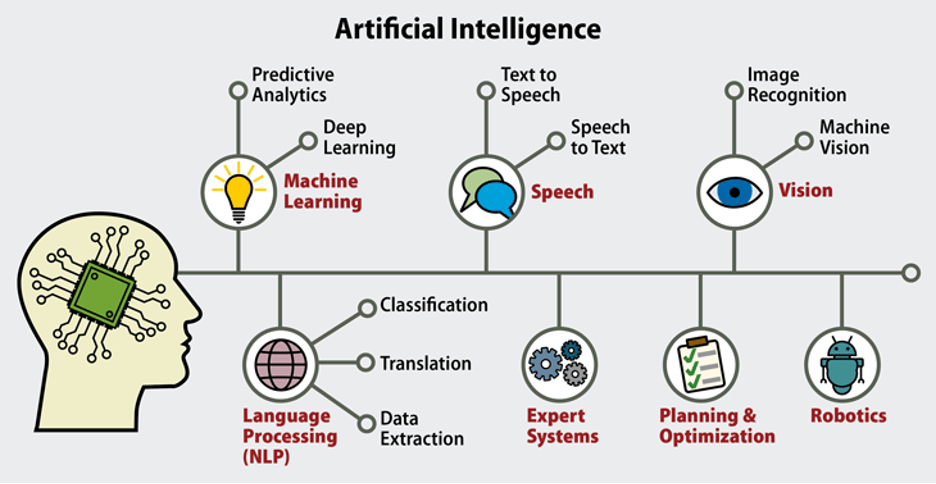
Computational intelligence is a field of artificial intelligence that draws on methods such as machine learning, neural networks, fuzzy logic, and evolutionary computation. These approaches are useful when problems are too complex, uncertain, or variable to solve with simple, explicitly programmed instructions.
NLP focuses on enabling computers to process, analyze, and generate human language. The two fields overlap because many NLP systems use computational intelligence techniques to learn language patterns from examples. Together, they help computers handle tasks such as identifying the subject of a message, translating a sentence, or generating a helpful response.
How Computational Intelligence Supports NLP
Language is full of variation. A word can have several meanings, people express the same idea in different ways, and the meaning of a sentence can depend on what came before it. Computational intelligence provides tools for learning these patterns from large collections of text and speech.
- Machine learning: Algorithms learn to classify or predict language-related outcomes from examples. They can, for instance, sort customer feedback by topic or identify whether a review is positive or negative.
- Neural networks: These models learn complex relationships among words and phrases. Modern language systems often use transformer architectures, which can consider relationships between words across a passage.
- Fuzzy logic: Fuzzy methods can represent degrees of confidence or partial truth. They may be useful when categories are not clear-cut, such as distinguishing between mildly dissatisfied and strongly negative feedback.
- Evolutionary computation: Inspired by natural selection, these methods search for effective solutions among many possibilities. They can be used to optimize model settings or other components of a language-processing system.
Common NLP Tasks
Computational intelligence helps power a wide range of NLP tasks. Text classification assigns labels to documents or messages, such as identifying spam or routing a support request. Named entity recognition detects references to people, organizations, locations, dates, and other entities. Machine translation converts text from one language to another, while speech recognition turns spoken language into text.
Other tasks include summarization, information extraction, question answering, and sentiment analysis. Generative language systems can also produce text, such as a draft email or a summary. Their output is based on learned patterns and should be reviewed when accuracy, safety, or factual detail matters.
Applications in the Real World
Organizations use NLP to make large volumes of language easier to search and understand. In customer service, systems can categorize incoming requests and help agents find relevant information. In healthcare, NLP tools may help organize clinical notes or extract details for review, subject to strict privacy and professional oversight. In education, language technologies can support writing feedback, accessibility, and personalized learning resources.
NLP also helps people interact with software through voice assistants, chat interfaces, and search tools. For businesses working across languages, translation and multilingual text analysis can make information more accessible. In each case, the system’s usefulness depends not only on its model but also on the quality of its data, its design, and the way people use its results.
Challenges and Limitations
Language systems can reflect biases present in their training data. If certain groups, dialects, or writing styles are underrepresented, a model may perform less reliably for them. Evaluation across diverse users and contexts is therefore important.
Context remains another challenge. A system may produce a fluent answer that misunderstands the request, overlooks an important qualification, or states an incorrect fact confidently. Language models can also struggle with sarcasm, specialized terminology, cultural references, and rapidly changing information.
Privacy and security require attention as well. Text may contain personal or confidential information, so organizations should consider how data is collected, stored, and processed. For high-impact uses, human review, clear accountability, and ongoing monitoring are essential.
The Future of NLP in Computational Intelligence
Research continues to explore systems that are more efficient, multilingual, explainable, and reliable. One promising direction is combining neural language models with structured knowledge, databases, or specialized tools. This can help systems draw on information beyond patterns learned from text alone, although it does not remove the need to verify results.
Another priority is building models that work well across different languages and communities, including languages with fewer digital resources. Researchers and developers are also working on ways to reduce computational costs and evaluate systems for fairness, robustness, and safety.
Conclusion
NLP in computational intelligence brings together language technologies and adaptive computational methods. It enables computers to classify, interpret, translate, and generate human language across many applications. These capabilities offer significant benefits, but they are not a substitute for careful evaluation or human judgment. The most effective systems combine capable models with high-quality data, responsible design, and appropriate oversight.
Understanding NLP in Computational Intelligence: Key Concepts and FAQs
- What are the 7 levels of NLP?
- What are the four types of NLP?
- What are the 4 elements of NLP?
- What is the NLP in AI?
- What is NLP and how it works?
- What are the 5 steps in NLP?
What are the 7 levels of NLP?
In natural language processing (NLP), the “seven levels” commonly refer to the layers of language that a system may analyze: phonology (speech sounds), morphology (word structure), lexical analysis (words and their meanings), syntax (sentence structure), semantics (literal meaning), discourse (connections across sentences), and pragmatics (meaning shaped by context and intent). These levels are interconnected, and NLP systems may use several of them at once to interpret or generate language. The exact terminology can vary across textbooks and applications.
What are the four types of NLP?
There isn’t one universally accepted set of “four types” of natural language processing (NLP), but a useful way to group its capabilities is natural language understanding (interpreting meaning and intent), natural language generation (producing human-like text), machine translation (converting text between languages), and speech processing (recognizing spoken language or generating speech). These areas often overlap, and computational intelligence techniques such as machine learning and neural networks help power them.
What are the 4 elements of NLP?
In natural language processing (NLP), the four commonly described elements are lexical and morphological analysis, syntactic analysis, semantic analysis, and pragmatic analysis. Lexical and morphological analysis examines words and their forms; syntactic analysis identifies how words are arranged into sentences; semantic analysis determines their literal meaning; and pragmatic analysis uses context and intent to interpret what a speaker or writer means. Some frameworks also treat discourse analysis as a separate element, so the exact list can vary.
What is the NLP in AI?
In AI, natural language processing (NLP) is the field that enables computers to work with human language, including text and speech. It combines methods such as machine learning and computational linguistics to help systems understand, analyze, translate, and generate language. NLP powers tools such as chatbots, voice assistants, search engines, and translation software, though these systems can still misunderstand context or produce inaccurate results.
What is NLP and how it works?
Natural language processing (NLP) is a branch of artificial intelligence that helps computers work with human language, including text and speech. It works by processing language data, identifying patterns, and using those patterns to interpret or generate language. Depending on the task, an NLP system may break text into words, analyze grammar and context, identify names or topics, translate a sentence, or create a response. Many modern systems use machine-learning models trained on large collections of language examples, but their results can still be incomplete or incorrect, so important outputs should be checked.
What are the 5 steps in NLP?
The five commonly recognized steps in natural language processing (NLP) are lexical or morphological analysis, syntactic analysis, semantic analysis, discourse integration, and pragmatic analysis. These steps examine words and their forms, determine how words fit together grammatically, interpret sentence meaning, connect meaning across sentences, and use context to infer the speaker’s intent. NLP systems may combine or repeat these stages, and modern machine-learning approaches do not always follow them as a strict sequence.