What Does an NLP Services Company Do?
Businesses generate large amounts of text and speech every day, from customer support conversations and online reviews to contracts and internal reports. Much of this information is difficult to analyze with traditional software. An NLP services company helps organizations turn that language data into useful insights, automated workflows, and better customer experiences.
Natural language processing, or NLP, is a field of artificial intelligence focused on how computers analyze, interpret, and generate human language. With the right implementation, NLP can help businesses find information faster, handle routine requests, and make better use of unstructured data.
What Is an NLP Services Company?
An NLP services company designs, develops, and integrates software that works with written or spoken language. Its services may include consulting, data preparation, model development, system integration, and ongoing monitoring.
Depending on the project, a provider may use established language models, custom machine learning models, rules-based methods, or a combination of approaches. The goal is not simply to add AI to a business process. It is to solve a specific problem with measurable results.
Common NLP Services for Businesses
Text Classification
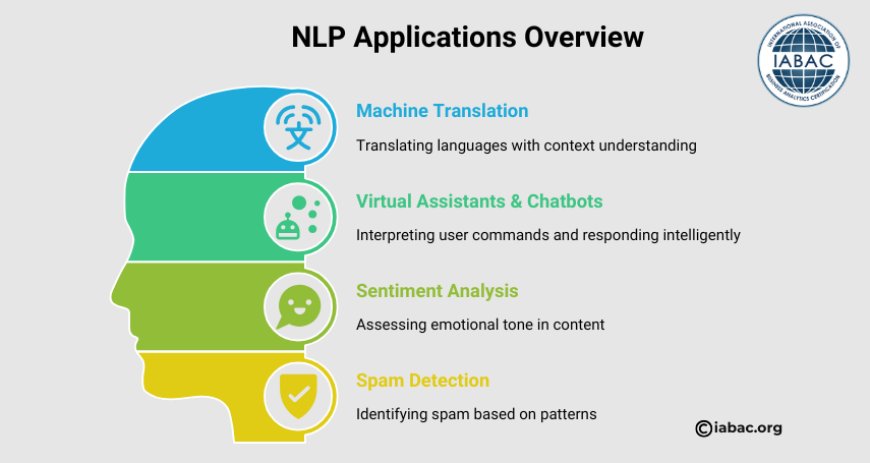
Text classification organizes content into predefined categories. For example, a customer service team can automatically route incoming messages to billing, technical support, or account management. This reduces manual sorting and helps requests reach the right team sooner.
Sentiment Analysis
Sentiment analysis evaluates whether language expresses positive, negative, or neutral opinions. Businesses use it to monitor customer feedback, identify recurring frustrations, and track reactions to products or services. More advanced systems can analyze sentiment about specific features, such as pricing or delivery.
Chatbots and Virtual Assistants
NLP-powered assistants can answer common questions, guide users through processes, and help employees locate information. Effective implementations include clear limits, access controls, and a path to human assistance when a request is complex or sensitive.
Information Extraction
Information extraction identifies useful details within documents, such as names, dates, invoice numbers, product references, and contract terms. These capabilities can reduce repetitive data entry and support document-heavy workflows.
Semantic Search
Unlike basic keyword matching, semantic search aims to retrieve information based on meaning and context. It can help users find relevant content even when their wording differs from the language used in the source documents.
Translation and Multilingual Processing
NLP supports machine translation, language detection, and multilingual content analysis. These services can help organizations communicate across markets and process customer feedback in multiple languages. For legal, medical, or other high-stakes content, qualified human review remains important.
Summarization and Content Generation
Language models can produce summaries of reports, conversations, and other lengthy materials. They can also assist with drafting responses or preparing content. Because generated text may contain inaccuracies or omit important details, review requirements should reflect the risks of the use case.
Benefits of Working With an NLP Services Company
- Reduced manual work: Automating repetitive language tasks can free employees to focus on work that requires judgment.
- Faster access to information: Search and extraction tools make large document collections easier to navigate.
- More consistent workflows: Defined classification and processing rules can reduce variation in routine tasks.
- Better customer insights: Analyzing feedback at scale can reveal patterns that manual reviews might miss.
- Improved multilingual operations: Language technology can support communication and analysis across regions.
These benefits depend on data quality, system design, and user adoption. A narrowly scoped solution with clear success criteria often delivers more value than a broad project without a defined business objective.
How to Choose the Right NLP Services Company
Look for Relevant Experience
A provider should understand the language, documents, and operational requirements of the intended use case. Experience with retail reviews does not automatically translate into expertise with clinical records or complex legal agreements.
Ask How Performance Will Be Measured
Evaluation should use representative data and metrics suited to the task. These may include classification precision and recall, extraction accuracy, retrieval relevance, response latency, and cost per request. Claims about “high accuracy” are less useful without a clear testing method.
Review Privacy and Security Practices
Ask how data is stored, who can access it, whether third-party services receive it, and whether it may be used for model training. Retention policies, encryption, deployment options, and applicable regulatory requirements should be addressed before implementation.
Consider Integration and Maintenance
An NLP solution must work with existing business systems. It also needs monitoring as documents, customer behavior, and business requirements change. Clarify responsibility for updates, error handling, human review, and ongoing costs.
Start With a Focused NLP Project
A practical first step is to identify one language-heavy workflow with a clear bottleneck. Establish a baseline, test a limited solution on representative data, and compare the results against measurable goals.
The right NLP services company combines technical expertise with a realistic understanding of business needs. By prioritizing reliable performance, responsible data handling, and practical integration, organizations can turn language technology into a useful part of everyday operations.
8 Tips for Choosing the Right NLP Services Company
- Define your NLP project goals clearly.
- Choose a provider with industry experience.
- Ask how your data will be protected.
- Check support for your languages and formats.
- Request a small pilot before scaling.
- Review accuracy on real-world examples.
- Plan for ongoing model updates.
- Compare pricing, integrations, and support.
Define your NLP project goals clearly.
Clearly defined goals give an NLP project direction and make its results easier to evaluate. Before choosing a solution, identify the problem you want to solve, who will use the system, and what success looks like—for example, reducing document-processing time, routing support requests more accurately, or helping employees find information faster. Set measurable targets, consider data and privacy requirements, and agree on how performance will be tested. A clear scope helps an NLP services company recommend the right approach, avoid unnecessary complexity, and deliver a solution that supports your business needs.
Choose a provider with industry experience.
Choose an NLP services provider with experience in your industry. Familiarity with your field’s terminology, workflows, regulations, and data challenges can make it easier to design a solution that fits your needs. Ask for relevant case studies or examples, and find out how the provider measures accuracy and handles industry-specific requirements. Industry experience doesn’t guarantee success, but it can help reduce implementation risks and shorten the learning curve.
Ask how your data will be protected.
Before choosing an NLP services company, ask how your data will be protected throughout the project. Find out where information will be stored, how it will be encrypted, who can access it, and whether any third-party providers will process it. Confirm whether your data will be used to train models and whether you can prohibit that use. Request clear policies on data retention, deletion, and breach notification, along with documentation of security controls and compliance with applicable privacy requirements. Getting these details in writing helps protect sensitive information and sets clear expectations before work begins.
Check support for your languages and formats.
Check that the NLP services company supports the languages and content formats your team actually uses. Language tools can perform differently across languages, dialects, and specialized terminology, so ask for results from relevant examples—not just a general list of supported languages. Confirm that the service can process your files and data sources, such as PDFs, scanned documents, email, chat transcripts, audio, or structured records, and clarify whether any formats require extra conversion or manual review.
Request a small pilot before scaling.
Request a small pilot before scaling an NLP solution across your organization. A focused test lets you evaluate performance on real-world data, uncover integration or privacy concerns, and measure results against clear goals before making a larger investment. Agree on success criteria with the provider in advance, such as accuracy, response time, or reduced manual work, and use what you learn to refine the solution before expanding it.
Review accuracy on real-world examples.
Review an NLP services company’s accuracy using real-world examples from your own workflows, not just polished demos or generic test data. Include typical inputs, messy or incomplete text, different writing styles, and edge cases to see how the system performs under everyday conditions. Ask how accuracy is measured, what kinds of errors occur, and whether results are checked by human reviewers. This provides a clearer picture of whether the solution can meet your needs reliably.
Plan for ongoing model updates.
Plan for ongoing model updates because language, customer needs, and business processes change over time. New terminology, products, regulations, or communication trends can reduce a model’s accuracy if it is left untouched. Work with your NLP services company to monitor performance, review errors and user feedback, refresh training data, and test updates before deployment. A regular maintenance plan helps keep the solution reliable, relevant, and aligned with your goals.
Compare pricing, integrations, and support.
When choosing an NLP services company, compare more than the initial price. Ask what the quote includes, such as setup, usage fees, customization, maintenance, and future upgrades. Check that the company’s tools integrate with your existing software and workflows, and find out whether those integrations require additional development. Finally, review the level of support available, including response times, troubleshooting, training, and ongoing assistance. A clear comparison of cost, compatibility, and support can help you choose a provider that fits your needs over the long term.