NLP in 2022: A Turning Point for Language AI
Natural language processing, or NLP, reached a major turning point in 20
Advances in large language models made it possible for software to generate more fluent text, answer complex questions, write code, and translate between languages with growing flexibility. At the same time, these systems exposed persistent problems with factual accuracy, bias, privacy, and reliability.
The year marked a shift from AI systems designed mainly for individual language tasks toward more general-purpose models that could handle many tasks through written instructions. By the end of 2022, conversational AI had moved from a specialized research topic into mainstream public discussion.
What Is Natural Language Processing?
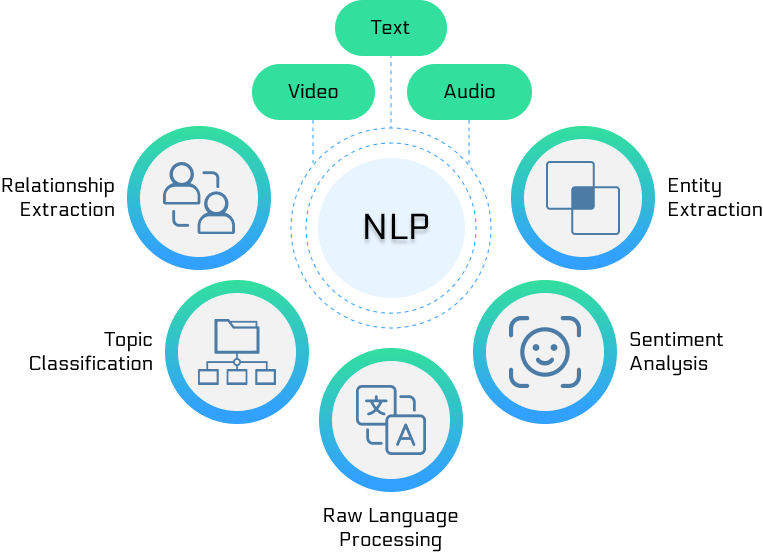
NLP is a field of artificial intelligence focused on how computers process and generate human language. It combines techniques from computer science, machine learning, and linguistics to support applications such as translation, search, speech transcription, sentiment analysis, and text summarization.
Earlier NLP systems often relied on manually written rules or models trained for a narrow purpose. By 2022, many leading systems used transformer architectures, which learn relationships between words and other units of text across large datasets. These models could be adapted to different tasks through additional training, examples, or instructions supplied in a prompt.
Large Language Models Took Center Stage
Large language models, commonly called LLMs, were central to NLP progress in 20
Trained on substantial collections of text, these systems learned patterns that allowed them to produce coherent responses and perform a wide range of language tasks.
Several releases and research projects illustrated the direction of the field:
- PaLM: Google introduced its Pathways Language Model, demonstrating strong performance across language, reasoning, and coding benchmarks.
- Chinchilla: DeepMind showed that training data volume deserved greater attention alongside model size. Its findings challenged the assumption that increasing parameter counts alone was the best use of a fixed computing budget.
- OPT: Meta released Open Pre-trained Transformer models, expanding research access to large language models.
- BLOOM: The BigScience collaboration released a large multilingual language model through an international research effort, supporting broader participation in language AI research.
These developments helped shift the conversation from simply building larger models to improving training efficiency, data quality, accessibility, and practical usefulness.
Instruction Following Made Models More Useful
A major challenge for language models was the gap between predicting plausible text and following a user’s request. A model might generate fluent language without producing a relevant, accurate, or appropriate answer.
Instruction tuning helped address this problem by training models on examples of tasks paired with desired responses. Reinforcement learning from human feedback, or RLHF, also gained prominence. This approach uses human judgments to help steer model behavior toward responses people prefer.
OpenAI’s InstructGPT research, published in 2022, was an influential example. It demonstrated that human-feedback-based training could make models more useful at following instructions, even compared with larger models that had not undergone the same process.
These methods improved usability, but they did not eliminate factual errors, harmful outputs, or sensitivity to how a question was phrased.
ChatGPT Brought Conversational NLP to a Wider Audience
The public launch of ChatGPT on November 30, 2022, became one of the year’s most visible NLP milestones. Its conversational interface allowed people to ask follow-up questions, request revisions, and explore tasks without needing specialized technical knowledge.
Users experimented with drafting emails, explaining concepts, summarizing passages, brainstorming ideas, and generating code. The experience made the capabilities of large language models easier to understand than benchmark scores or research demonstrations alone.
The launch also made their limitations highly visible. ChatGPT could produce convincing but incorrect answers, invent references, and respond inconsistently to similar questions. Its popularity intensified discussions about education, employment, misinformation, and responsible deployment.
Multilingual NLP and Translation Continued to Advance
Multilingual language technology was another important area of progress in 20
Researchers worked to extend NLP capabilities beyond English and other languages with abundant digital training data.
Meta’s No Language Left Behind project introduced NLLB-200, a machine translation model supporting 200 languages. The project emphasized improving translation for languages that had historically received less attention from commercial and research systems.
Such work mattered because language coverage alone does not guarantee useful translation. Translation quality can vary significantly depending on the language pair, subject matter, writing style, and availability of representative training data.
For businesses, multilingual NLP offered opportunities to localize content and communicate with broader audiences. However, professional review remained important for legal, medical, technical, and culturally sensitive material.
Speech Recognition Became More Accessible
Although speech recognition is a distinct technical area, it closely connects with NLP by turning spoken language into text that software can process.
OpenAI released Whisper in September 2022, making a multilingual speech recognition model and its code publicly available. Its capabilities included transcription across multiple languages and translation of non-English speech into English.
Tools like Whisper made it easier for developers to build transcription workflows, generate captions, and make audio content searchable. Still, accuracy depended on factors such as recording quality, accents, background noise, and specialized terminology.
How Organizations Used NLP in 2022
While generative AI attracted much of the attention, established NLP applications continued to deliver practical value. Organizations used language technology to process large volumes of information and reduce repetitive work.
- Customer support: Classifying requests, routing tickets, and assisting agents with suggested responses.
- Search: Improving retrieval by matching the meaning of a query rather than relying only on exact keywords.
- Document processing: Extracting names, dates, organizations, and other relevant details from text.
- Content analysis: Identifying topics, customer sentiment, and recurring themes in feedback.
- Translation and localization: Producing draft translations and supporting multilingual content workflows.
- Writing assistance: Suggesting edits, generating outlines, and helping draft routine communications.
For many organizations, the most effective approach was to combine automated processing with human oversight rather than treat NLP output as automatically correct.
The Biggest Challenges Facing NLP in 2022
Factual Accuracy
Language models could generate statements that sounded authoritative but were unsupported or false. Often called hallucinations, these errors were especially concerning when users expected dependable information rather than creative text.
Bias and Uneven Performance
Models could reproduce stereotypes and other biases present in training data. Performance also varied across languages, dialects, demographic groups, and subject areas, making broad claims of reliability difficult to justify.
Privacy and Data Governance
The use of large text collections raised questions about personal information, consent, data provenance, and copyright. Organizations also needed clear policies governing whether sensitive information could be entered into external language tools.
Computing Costs and Environmental Impact
Training and operating large models required substantial computing resources. Research such as Chinchilla highlighted opportunities to use those resources more efficiently, but cost remained a significant barrier to developing and deploying leading systems.
Evaluation
High benchmark scores did not always translate into dependable real-world performance. Evaluating open-ended answers required attention to factuality, relevance, safety, and usefulness—not just fluency.
Why 2022 Still Matters
The significance of NLP in 2022 was not limited to any single model release. The year brought together advances in scale, training methods, multilingual coverage, open research, and conversational interfaces.
It also clarified an essential distinction: producing natural-sounding language is not the same as providing verified information. Successful applications needed to account for that gap through testing, appropriate safeguards, and human review.
Looking back, 2022 stands out as the year language AI became broadly visible as a general-purpose tool. Its breakthroughs expanded what people could do with language technology, while its shortcomings established many of the central questions that would shape the field in the years ahead.
6 Essential NLP Tips for 2022
- Use pretrained transformer models for strong baseline results.
- Fine-tune models on task-specific, high-quality data.
- Check datasets for bias and privacy risks.
- Measure performance across diverse user groups.
- Use smaller models when they meet your needs.
- Track NLP benchmarks and tools released in 2022.
Use pretrained transformer models for strong baseline results.
In 2022, pretrained transformer models offered a practical way to establish strong baseline results for many NLP tasks, including text classification, summarization, and question answering. Models such as BERT and RoBERTa had already learned useful language patterns from large text collections, so they could often be fine-tuned with less task-specific data and effort than training a model from scratch. Start with a model suited to the task and language, then evaluate it on representative data before making further changes.
Fine-tune models on task-specific, high-quality data.
In 2022, fine-tuning a pre-trained NLP model on high-quality, task-specific data was an effective way to adapt its broad language abilities to a particular need, such as sentiment analysis, document classification, or customer support. Carefully labeled examples that reflect the real tasks and language the model will encounter can improve relevance and consistency, while noisy, unbalanced, or outdated data may reinforce errors and bias. Start with a focused dataset, check its quality and representation, and evaluate the fine-tuned model on examples it did not see during training.
Check datasets for bias and privacy risks.
When working with NLP in 2022, review datasets for bias and privacy risks before using them to train or evaluate a model. Check whether the data overrepresents certain groups, languages, or viewpoints, and look for personal or sensitive information that may have been collected without appropriate consent. Document data sources and limitations, remove or protect identifying details where possible, and test how these issues could affect model outputs. Careful dataset review can help reduce harmful disparities and protect people’s privacy.
Measure performance across diverse user groups.
In 2022, evaluating an NLP system meant looking beyond its overall accuracy: performance could vary widely across languages, dialects, accents, and user groups. Test the system with representative data, report results separately for relevant groups, and examine errors such as mistranslations or misclassifications. This can reveal who benefits from the tool—and who may be underserved—so teams can improve fairness and reliability while protecting users’ privacy.
Use smaller models when they meet your needs.
In 2022, the rapid growth of large language models made it tempting to assume that bigger was always better, but smaller models could be the smarter choice when they met the task’s requirements. They often cost less to run, respond faster, and require fewer computing resources, making them practical for focused jobs such as classifying support requests or extracting information from documents. Test a model on representative examples and compare its accuracy, speed, and operating cost before choosing; for many applications, a smaller, well-suited model can deliver the results needed without the added expense and complexity of a larger one.
Track NLP benchmarks and tools released in 2022.
To understand how NLP evolved in 2022, track the benchmarks and tools released that year, such as BIG-bench, HELM, BLOOM, NLLB-200, and Whisper. Compare what each was designed to measure or support, and look beyond headline scores: check language coverage, evaluation methods, data limitations, and known weaknesses. This gives a more balanced view of progress and helps identify which tools may be useful for your own work.