The Power of NLP Coding
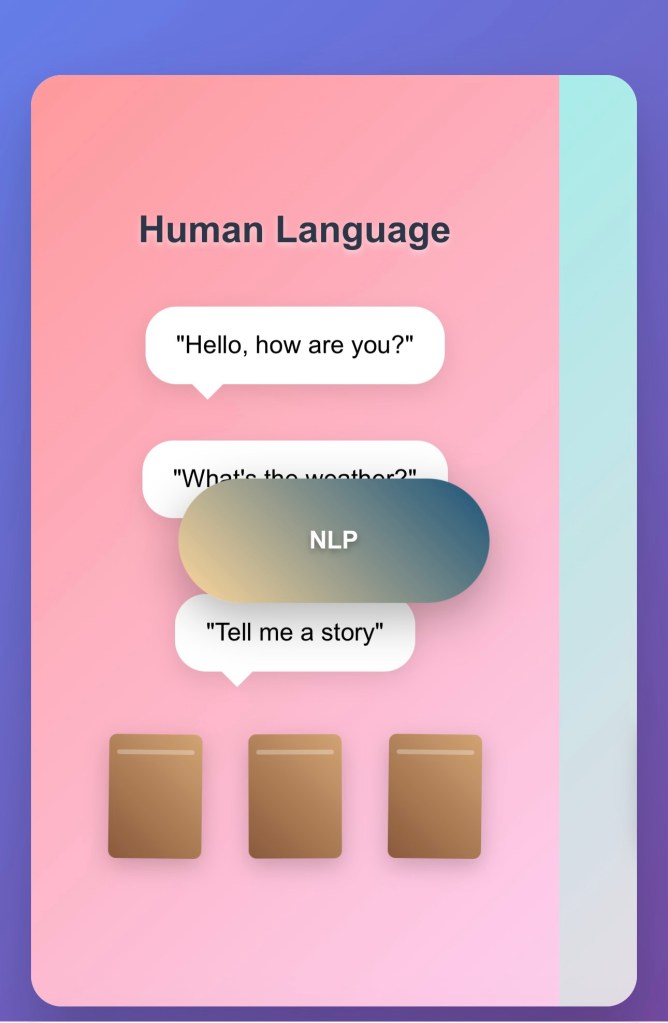
Natural Language Processing (NLP) is a field of artificial intelligence that focuses on the interaction between computers and human language. NLP coding plays a crucial role in enabling machines to understand, interpret, and generate human language in a way that is valuable and meaningful.
With the advancement of technology and the increasing demand for intelligent systems, NLP coding has become an essential skill for developers and data scientists alike. By leveraging various programming languages and frameworks, developers can build powerful NLP applications that can analyze text, extract insights, classify information, and even generate human-like responses.
One of the key aspects of NLP coding is the use of machine learning algorithms to train models that can process and understand natural language data. These algorithms are designed to learn patterns and structures within text data, allowing machines to perform tasks such as sentiment analysis, named entity recognition, text summarization, and more.
Furthermore, NLP coding involves working with libraries and tools specifically designed for natural language processing tasks. Popular libraries like NLTK (Natural Language Toolkit), spaCy, TensorFlow, and PyTorch provide developers with pre-built functions and models that simplify the process of building NLP applications.
From chatbots and virtual assistants to language translation services and sentiment analysis tools, NLP coding has revolutionized the way we interact with machines and how machines interact with us. As technology continues to advance, the possibilities for NLP applications are endless, making it an exciting field for developers to explore and innovate in.
Whether you are a seasoned developer looking to expand your skill set or a newcomer interested in the world of artificial intelligence, diving into NLP coding can open up a world of opportunities to create intelligent systems that understand and communicate with humans in ways we never thought possible.
9 Essential Tips for Effective NLP Coding and Model Optimization
- Understand the problem domain before starting NLP coding.
- Preprocess text data by removing noise and irrelevant information.
- Tokenize the text into words or subword units for further analysis.
- Use libraries like NLTK, spaCy, or Transformers for NLP tasks.
- Explore different word embeddings such as Word2Vec or GloVe for semantic representation.
- Consider using pre-trained models like BERT or GPT for advanced NLP tasks.
- Evaluate your model using appropriate metrics like accuracy, precision, recall, and F1-score.
- Fine-tune hyperparameters to improve the performance of your NLP model.
- Stay updated with the latest trends and research in the field of natural language processing.
Understand the problem domain before starting NLP coding.
Before delving into NLP coding, it is crucial to thoroughly understand the problem domain you are working with. By gaining a deep understanding of the context, requirements, and challenges specific to the domain, you can tailor your NLP solutions effectively to address the key issues at hand. This initial step not only helps in defining clear objectives and goals for your NLP project but also ensures that the resulting code and models are aligned with the needs of the domain, ultimately leading to more accurate and impactful outcomes.
Preprocess text data by removing noise and irrelevant information.
In NLP coding, a crucial tip is to preprocess text data by eliminating noise and irrelevant information. By cleaning the text data before feeding it into NLP models, developers can enhance the accuracy and effectiveness of natural language processing tasks. Removing noise such as special characters, punctuation, and unnecessary whitespace, as well as filtering out irrelevant information like stop words or irrelevant terms, helps streamline the data and allows the models to focus on extracting meaningful insights from the text. This preprocessing step plays a vital role in improving the performance of NLP applications and ensuring that the output is more accurate and relevant to the intended task at hand.
Tokenize the text into words or subword units for further analysis.
In the realm of NLP coding, a fundamental tip is to tokenize the text into words or subword units before delving into deeper analysis. Tokenization involves breaking down a piece of text into smaller units, such as individual words or subword components, which serves as the foundation for various NLP tasks like text classification, sentiment analysis, and language modeling. By segmenting the text into meaningful tokens, developers can extract valuable insights and patterns from the data, enabling machines to better understand and process human language in a structured and efficient manner.
Use libraries like NLTK, spaCy, or Transformers for NLP tasks.
When diving into NLP coding, a valuable tip is to leverage specialized libraries such as NLTK, spaCy, or Transformers for handling various natural language processing tasks. These libraries offer a wide range of pre-built functions, models, and tools that can significantly streamline the development process and enhance the performance of NLP applications. By utilizing these advanced libraries, developers can access powerful capabilities for tasks like text analysis, entity recognition, language modeling, and more, allowing them to build sophisticated NLP solutions efficiently and effectively.
Explore different word embeddings such as Word2Vec or GloVe for semantic representation.
To enhance the semantic representation of text data in NLP coding, it is beneficial to explore various word embeddings like Word2Vec or GloVe. These powerful techniques convert words into dense vectors that capture semantic relationships between them, enabling algorithms to understand context and meaning more effectively. By incorporating these word embeddings into NLP models, developers can improve tasks such as language translation, sentiment analysis, and information retrieval, ultimately enhancing the overall performance and accuracy of their applications.
Consider using pre-trained models like BERT or GPT for advanced NLP tasks.
When delving into NLP coding, it is highly beneficial to consider utilizing pre-trained models such as BERT or GPT for tackling advanced natural language processing tasks. These sophisticated models have been trained on vast amounts of text data and possess a deep understanding of language nuances, making them invaluable for tasks like text classification, question answering, and language generation. By leveraging pre-trained models like BERT or GPT, developers can expedite their NLP projects, achieve higher accuracy levels, and focus more on fine-tuning the models to suit their specific needs rather than starting from scratch.
Evaluate your model using appropriate metrics like accuracy, precision, recall, and F1-score.
When working on NLP coding projects, it is essential to evaluate your model using appropriate metrics such as accuracy, precision, recall, and F1-score. These metrics provide valuable insights into the performance of your model in handling natural language data. Accuracy measures the overall correctness of predictions, while precision focuses on the proportion of correctly predicted positive instances. Recall, on the other hand, assesses the ability of the model to capture all positive instances. The F1-score combines both precision and recall into a single metric, offering a balanced evaluation of the model’s performance. By carefully analyzing these metrics, developers can fine-tune their NLP models to achieve optimal results and enhance the effectiveness of their natural language processing applications.
Fine-tune hyperparameters to improve the performance of your NLP model.
Fine-tuning hyperparameters is a crucial step in optimizing the performance of your NLP model. By carefully adjusting parameters such as learning rate, batch size, and regularization techniques, you can enhance the accuracy and efficiency of your model. Experimenting with different hyperparameter configurations allows you to fine-tune the model to better suit the specific task at hand, leading to improved results and overall performance in natural language processing tasks.
Stay updated with the latest trends and research in the field of natural language processing.
To excel in NLP coding, it is crucial to stay updated with the latest trends and research in the field of natural language processing. By keeping abreast of advancements in NLP algorithms, techniques, and tools, developers can leverage cutting-edge technologies to enhance their coding skills and create more sophisticated NLP applications. Continuous learning and staying informed about industry developments not only expand one’s knowledge base but also ensure that NLP projects are built using the most effective and efficient methods available.