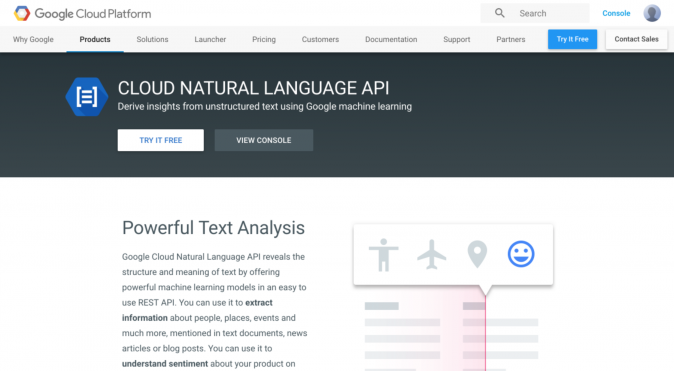
Google’s Natural Language API: Unlocking the Power of Language Processing
Google’s Natural Language API is a cutting-edge tool that harnesses the power of artificial intelligence to analyze and understand human language. This powerful API enables developers to integrate sophisticated language processing capabilities into their applications, allowing them to extract valuable insights, sentiment, and meaning from text.
With Google’s Natural Language API, developers can access a range of features that facilitate advanced language analysis. These include entity recognition, sentiment analysis, syntax analysis, and content classification. By leveraging these capabilities, developers can create intelligent applications that can automatically understand and interpret text in a human-like manner.
Entity recognition is a key feature of Google’s Natural Language API that allows developers to identify and extract entities such as people, organizations, and locations mentioned in text. This feature is particularly useful for tasks such as named entity recognition in natural language processing applications.
Sentiment analysis is another powerful capability of the Natural Language API that enables developers to determine the sentiment or emotional tone expressed in text. By analyzing the sentiment of text data, developers can gain valuable insights into how people feel about a particular topic or issue.
Syntax analysis provided by Google’s Natural Language API helps developers parse and analyze the grammatical structure of sentences. This feature enables applications to understand the relationships between words in a sentence, making it easier to extract meaning and context from text data.
Content classification is yet another valuable feature offered by Google’s Natural Language API. This capability allows developers to categorize text into predefined categories or topics based on its content. By classifying text data automatically, developers can organize and process large volumes of textual information efficiently.
In conclusion, Google’s Natural Language API is a powerful tool that empowers developers to unlock the full potential of language processing in their applications. By leveraging advanced features such as entity recognition, sentiment analysis, syntax analysis, and content classification, developers can create intelligent applications that can understand and interpret human language with remarkable accuracy and efficiency.
5 Key Advantages of Google’s Natural Language API for Enhanced Text Processing
- Advanced language processing capabilities
- Easy integration into applications
- Entity recognition for identifying people, organizations, and locations
- Sentiment analysis for understanding emotional tone in text
- Syntax analysis for parsing grammatical structure of sentences
7 Drawbacks of Google’s Natural Language API: Customization, Cost, and More
- 1. Limited customization options may restrict the ability to fine-tune the API for specific use cases.
- 2. Costly pricing structure could be prohibitive for small-scale projects or developers with limited budgets.
- 3. Dependency on Google’s infrastructure and services may raise concerns about data privacy and security.
- 4. Occasional inaccuracies in entity recognition and sentiment analysis could impact the reliability of results.
- 5. Integration complexities may arise when incorporating Google’s Natural Language API into existing software systems.
- 6. Lack of support for certain languages or dialects may limit the API’s effectiveness in multilingual environments.
- 7. Limited offline functionality could pose challenges in scenarios where internet connectivity is unreliable or unavailable.
Advanced language processing capabilities
Google’s Natural Language API offers advanced language processing capabilities that enable developers to analyze and understand human language with exceptional precision and depth. By utilizing sophisticated features such as entity recognition, sentiment analysis, syntax analysis, and content classification, developers can extract valuable insights and meaning from text data in a way that closely mimics human comprehension. This pro of the Natural Language API empowers developers to create intelligent applications that can automatically interpret and respond to natural language input, revolutionizing the way we interact with technology and enhancing user experiences across various industries.
Easy integration into applications
One significant advantage of Google’s Natural Language API is its seamless integration into applications. Developers can easily incorporate the API into their software systems, thanks to its well-documented and user-friendly interface. This streamlined integration process allows developers to quickly leverage the powerful language processing capabilities of the API without extensive setup or complex configurations. By effortlessly integrating Google’s Natural Language API into their applications, developers can enhance the functionality and intelligence of their software with minimal effort, ultimately improving user experience and expanding the capabilities of their products.
Entity recognition for identifying people, organizations, and locations
One of the key advantages of Google’s Natural Language API is its robust entity recognition capability, which allows developers to easily identify and extract entities such as people, organizations, and locations mentioned in text data. This feature enables applications to automatically recognize and categorize important entities within text, facilitating tasks like named entity recognition and information extraction. By leveraging Google’s advanced entity recognition technology, developers can enhance the accuracy and efficiency of their language processing applications, enabling them to extract valuable insights and meaning from textual data with precision.
Sentiment analysis for understanding emotional tone in text
One of the key benefits of Google’s Natural Language API is its powerful sentiment analysis feature, which allows developers to gain valuable insights into the emotional tone expressed in text. By leveraging this capability, developers can better understand how people feel about a particular topic, product, or issue based on the sentiment conveyed in written content. This feature enables applications to automatically analyze and interpret the emotional nuances present in text data, providing a deeper understanding of user sentiment and feedback.
Syntax analysis for parsing grammatical structure of sentences
Google’s Natural Language API offers a valuable pro in the form of syntax analysis, which allows for parsing the grammatical structure of sentences. This feature enables developers to gain deeper insights into the relationships between words within a sentence, helping to extract meaning and context more effectively from textual data. By leveraging syntax analysis, developers can enhance the accuracy and efficiency of their language processing applications, ultimately improving the overall user experience and functionality of their products.
1. Limited customization options may restrict the ability to fine-tune the API for specific use cases.
One significant drawback of Google’s Natural Language API is its limited customization options, which may restrict the ability to fine-tune the API for specific use cases. While the API offers a range of powerful features for language analysis, developers may find it challenging to customize the tool to meet their unique requirements or address specialized use cases. This limitation can hinder developers who require more flexibility and control over how the API processes and interprets text data, potentially limiting its effectiveness in certain applications that demand highly tailored language processing capabilities.
2. Costly pricing structure could be prohibitive for small-scale projects or developers with limited budgets.
The pricing structure of Google’s Natural Language API can be a significant drawback for small-scale projects or developers with limited budgets. The costs associated with using this API can quickly add up, making it prohibitive for those operating on a tight budget. For developers looking to integrate advanced language processing capabilities into their applications without breaking the bank, the potentially high costs of utilizing Google’s Natural Language API may present a barrier to entry. This limitation could restrict access to the powerful features and benefits of the API for individuals or organizations with limited financial resources.
3. Dependency on Google’s infrastructure and services may raise concerns about data privacy and security.
One significant con of using Google’s Natural Language API is the dependency on Google’s infrastructure and services, which may raise concerns about data privacy and security. By relying on Google’s platform for language processing, users are entrusting their data to a third-party provider, potentially exposing sensitive information to privacy risks. The integration of the API into applications means that data is transmitted and processed through Google’s servers, leading to questions about who has access to the data and how it is being handled. This dependency on external services can be a barrier for organizations that prioritize strict data privacy regulations and require more control over their data handling processes.
4. Occasional inaccuracies in entity recognition and sentiment analysis could impact the reliability of results.
Occasional inaccuracies in entity recognition and sentiment analysis within Google’s Natural Language API could potentially undermine the reliability of the results generated. These inaccuracies may lead to misinterpretations of text data and could affect the overall accuracy of the insights and conclusions drawn from the analysis. Developers and users should be mindful of these limitations and consider implementing additional validation processes to ensure the integrity of the information extracted from the API.
5. Integration complexities may arise when incorporating Google’s Natural Language API into existing software systems.
One potential drawback of incorporating Google’s Natural Language API into existing software systems is the possibility of integration complexities. Due to differences in data formats, system requirements, and programming languages, developers may encounter challenges when trying to seamlessly integrate the API with their current software infrastructure. This can lead to delays in implementation, additional development time, and potential compatibility issues that need to be addressed before the API can be fully utilized within the existing system. Careful planning and thorough testing are essential to ensure a smooth integration process and minimize any disruptions to the functionality of the software system.
6. Lack of support for certain languages or dialects may limit the API’s effectiveness in multilingual environments.
The lack of support for certain languages or dialects within Google’s Natural Language API can pose a significant challenge in multilingual environments, limiting the API’s effectiveness. When the API is unable to accurately analyze or process text in specific languages or dialects, it hinders its ability to provide comprehensive language processing capabilities across diverse linguistic contexts. This limitation may result in incomplete or inaccurate analysis of text data, leading to potential misinterpretations and errors in applications that rely on the API for language processing tasks. As a result, developers and users operating in multilingual environments may encounter obstacles when attempting to leverage the full potential of the Natural Language API for comprehensive language analysis and understanding.
7. Limited offline functionality could pose challenges in scenarios where internet connectivity is unreliable or unavailable.
One significant drawback of Google’s Natural Language API is its limited offline functionality, which could present challenges in scenarios where internet connectivity is unreliable or unavailable. Since the API relies on an internet connection to process and analyze text data, users may encounter difficulties accessing its features in offline environments. This limitation can hinder the usability of the API in situations where real-time language processing is required but internet access is not guaranteed, potentially impacting the efficiency and effectiveness of applications relying on this technology.