NLP Meaning in Computers: What Natural Language Processing Is and How It Works
In computing, NLP stands for Natural Language Processing. It is a field of artificial intelligence (AI) that helps computers analyze, interpret, and generate human language. NLP powers familiar tools such as translation apps, chatbots, search engines, and email spam filters.
Instead of requiring people to communicate only through programming languages or rigid commands, NLP allows software to work with everyday language, including written text and, when combined with speech technologies, spoken conversations.
What Does NLP Mean in Computer Science?
Natural language processing combines computer science, linguistics, and machine learning to make human language useful to computer systems. “Natural language” refers to languages people use, such as English, Spanish, and Japanese, rather than programming languages like Python or Java.
Human language is often ambiguous. The same word can have multiple meanings, and a sentence’s meaning can change depending on context. For example, “bank” could refer to a financial institution or the land beside a river. An NLP system uses surrounding language and patterns learned from data to identify the likely meaning.
Although NLP is often described as helping computers “understand” language, that does not imply human-like understanding. These systems process linguistic patterns and relationships to perform specific tasks.
How Does Natural Language Processing Work?
NLP systems use different methods depending on their purpose. Some rely on predefined rules, while others learn patterns from examples. Many modern systems use deep learning, including transformer models trained on large collections of text.
A typical NLP workflow may include the following steps, although not every system uses all of them:
- Collecting input: The system receives text, such as a search query, customer review, or document. For spoken input, a speech recognition system first converts audio into text.
- Preparing the text: The system may clean up formatting or divide text into smaller units called tokens. Tokens can be words, parts of words, or punctuation.
- Creating numerical representations: Text is converted into numbers that a computer model can process. Modern systems often use embeddings, which represent patterns and relationships in language.
- Analyzing context: The model evaluates the input to identify relevant information, relationships, or likely meanings.
- Producing a result: The system returns an output, such as a translation, category label, extracted name, summary, or generated response.
Common NLP Tasks
Text Classification
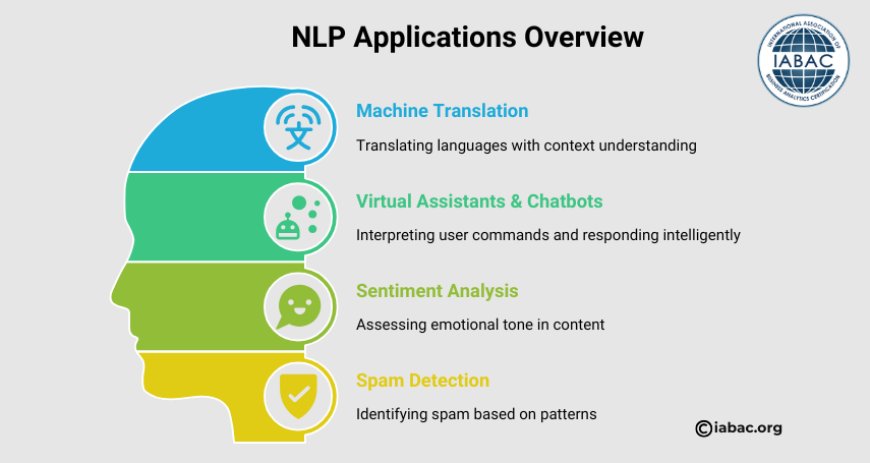
Text classification assigns categories to text. An email service might classify a message as spam, while a customer support platform might label a request as a billing question.
Sentiment Analysis
Sentiment analysis estimates the opinion or emotional tone expressed in text. Businesses use it to examine customer reviews, survey responses, and social media comments. Detecting sarcasm and mixed opinions remains challenging.
Named Entity Recognition
Named entity recognition identifies information such as people, organizations, locations, and dates. In “Jordan joined Acme in Chicago on Monday,” a system might identify Jordan as a person, Acme as an organization, Chicago as a location, and Monday as a date.
Machine Translation
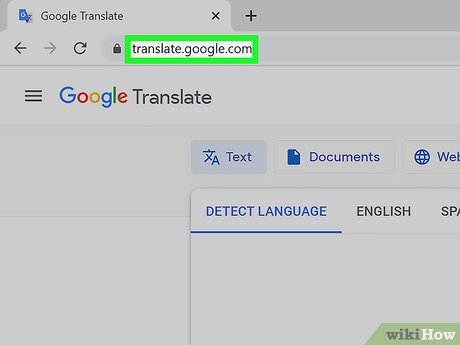
Machine translation converts text from one language to another. Modern translation models consider context rather than simply replacing each word with a dictionary equivalent. Accuracy still depends on the language pair, subject matter, and quality of the source text.
Text Summarization
Summarization reduces a longer document to its main points. Some systems select important passages, while others generate new sentences that describe the original content.
Question Answering and Text Generation
NLP systems can answer questions, draft messages, and generate explanations. Some applications combine language models with document retrieval to help produce answers grounded in relevant sources.
Examples of NLP in Everyday Computing
- Search engines: Interpreting queries and finding relevant results, even when the wording differs from the source material.
- Translation tools: Helping people read and communicate across languages.
- Chatbots: Responding to customer questions and helping users complete tasks.
- Writing assistants: Suggesting spelling, grammar, and style improvements.
- Email applications: Filtering spam, categorizing messages, and suggesting replies.
- Voice assistants: Using NLP alongside speech recognition to interpret spoken requests.
- Document processing software: Extracting information from contracts, invoices, and reports.
NLP vs. AI vs. Machine Learning
These terms are closely related, but they do not mean the same thing:
| Term | Meaning |
|---|---|
| Artificial intelligence | A broad field focused on building systems that perform tasks associated with intelligence, such as language processing, planning, and perception. |
| Machine learning | An area of AI in which systems learn patterns from data rather than relying only on explicitly programmed rules. |
| Natural language processing | A field focused on computational methods for processing human language. NLP can use rules, machine learning, or a combination of approaches. |
| Large language model | A type of model trained on large amounts of language data that can support many NLP tasks, including text generation, summarization, and translation. |
Why Is NLP Important?
NLP helps people work with large amounts of language-based information. A company can use it to organize support tickets, a researcher can use it to search document collections, and an individual can use it to translate an unfamiliar phrase.
It also makes software easier to use by allowing people to express requests in everyday language. When combined with accessible interfaces and speech technologies, NLP can offer additional ways to interact with digital services.
Challenges and Limitations of NLP
Despite major advances, natural language processing is not always reliable. Important challenges include:
- Ambiguity: Words and sentences can have several plausible interpretations.
- Context and cultural differences: Humor, idioms, sarcasm, and local references can be difficult to interpret.
- Uneven language support: Performance can vary across languages, dialects, and specialized subjects.
- Bias: Systems may reflect or amplify biases found in training data.
- Privacy: Processing messages and documents requires careful handling of personal or confidential information.
- Factual errors: Generative systems can produce convincing statements that are incorrect or unsupported.
For legal, medical, financial, or other high-stakes content, NLP output should be checked by a qualified professional. Human review is also valuable when translation accuracy or cultural nuance is especially important.
Frequently Asked Questions
What is the full form of NLP in computers?
NLP stands for Natural Language Processing. It refers to technologies that help computers process and generate human language.
Is NLP the same as speech recognition?
No. Speech recognition converts spoken audio into text. NLP works with language to perform tasks such as identifying intent, extracting information, or generating a response. The two technologies often work together.
Does NLP require machine learning?
No. NLP can use handwritten rules and dictionaries. However, many modern applications use machine learning or deep learning because these approaches can handle a wider range of language patterns.
Is ChatGPT an example of NLP?
Yes. ChatGPT is an application built around large language models that perform NLP tasks, including answering questions, generating text, and summarizing information.
Conclusion
The meaning of NLP in computers is Natural Language Processing: the field that enables software to analyze, interpret, and generate human language. From search and translation to chatbots and document analysis, NLP helps bridge the gap between everyday communication and computer processing. Its results can be useful, but accuracy, privacy, and context remain important considerations.
What Is NLP in Computing? 6 Key Facts and Applications
- NLP stands for Natural Language Processing.
- NLP helps computers understand and work with human language.
- Chatbots often use NLP to interpret questions.
- NLP can analyze text sentiment and topics.
- Speech recognition often uses NLP to process spoken words.
- Machine translation is a common NLP application.
NLP stands for Natural Language Processing.
In computers, NLP stands for Natural Language Processing, a field of artificial intelligence that helps software work with human language. NLP enables computers to analyze, interpret, and generate text, supporting tools such as translation apps, chatbots, voice assistants, and search engines.
NLP helps computers understand and work with human language.
Natural language processing (NLP) helps computers work with human language, such as English, Spanish, and Japanese. It enables software to analyze text, identify meaning and context, translate languages, answer questions, and generate responses. NLP powers many everyday tools, including search engines, chatbots, translation apps, and writing assistants.
Chatbots often use NLP to interpret questions.
Chatbots often use natural language processing (NLP) to interpret questions written or spoken in everyday language. NLP helps a chatbot identify key words, understand the user’s likely intent, and choose a relevant response. While this can make conversations feel more natural, the chatbot may misunderstand vague wording, slang, or complex questions, so clear phrasing can help improve its answers.
NLP can analyze text sentiment and topics.
Natural language processing (NLP) can analyze text to identify both sentiment and topics. Sentiment analysis estimates whether a message expresses a positive, negative, or neutral opinion, while topic analysis helps determine what the text is about. For example, a company might use NLP to review customer feedback, gauge satisfaction, and spot recurring concerns such as shipping delays or product quality. These insights can help organize large volumes of text, though results may need human review when language is ambiguous or nuanced.
Speech recognition often uses NLP to process spoken words.
Speech recognition often works alongside natural language processing (NLP) to make spoken commands easier for computers to understand. First, speech recognition converts audio into text; then NLP analyzes the words and their context to determine the speaker’s intent. For example, when someone says, “Set an alarm for 7 a.m.,” these technologies can help a device recognize the request and schedule the alarm.
Machine translation is a common NLP application.
Machine translation is a common natural language processing (NLP) application that automatically converts text from one language to another. Modern translation systems use machine learning to analyze context and relationships between words, helping produce more natural translations than word-for-word substitutions. They’re useful for understanding documents, websites, and everyday messages, though important or nuanced translations may still benefit from human review.