Linguistics in Natural Language Processing
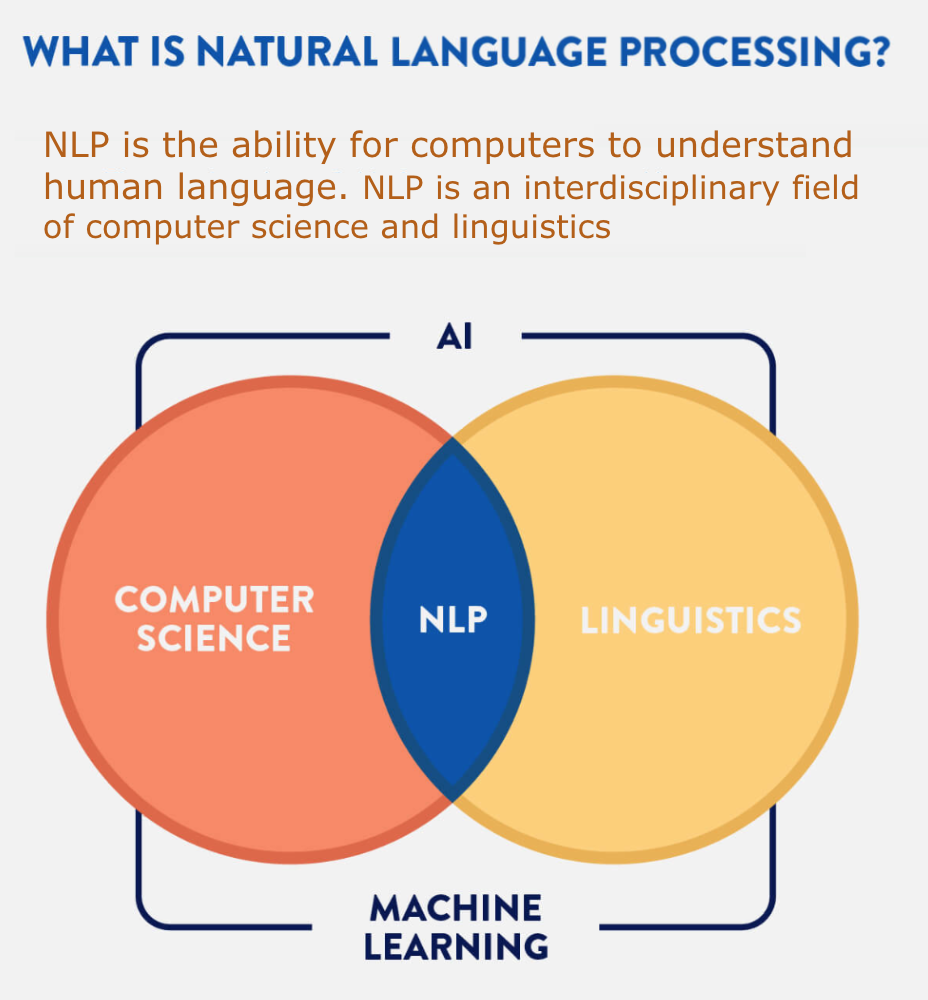
Natural language processing (NLP) is the field of computing concerned with working with human language. It powers tools such as search engines, translation apps, speech assistants, chatbots, and text-analysis systems. Linguistics—the scientific study of language—helps explain how language is structured, how meaning is conveyed, and how context shapes interpretation. Its concepts have influenced NLP from its earliest rule-based systems to today’s machine-learning models.
What Linguistics Contributes to NLP
Human language is more than a collection of words. Words change form, combine into phrases, and take on different meanings depending on context. Linguistics offers ways to describe these patterns. That knowledge can help researchers design language technologies, create datasets, diagnose errors, and evaluate how well a system works.
Several areas of linguistics are especially relevant:
- Phonetics and phonology study speech sounds and sound patterns. They inform speech recognition, speech synthesis, and pronunciation modeling.
- Morphology examines how words are formed. For example, the words “connect,” “connected,” and “connection” share a meaningful root but differ in form and use.
- Syntax studies how words combine into sentences. It helps explain grammatical relationships, such as which noun is the subject of a verb.
- Semantics focuses on meaning, including relationships between words and the meanings of sentences.
- Pragmatics explores how context, intent, and shared knowledge affect meaning. It helps account for indirect requests, irony, and implied information.
- Sociolinguistics examines how language varies across communities and situations, including differences in dialect, register, and style.
From Linguistic Rules to Data-Driven Models
Early NLP systems often relied on rules written by linguists and engineers. A system might use a grammar to identify sentence structure or a dictionary to look up word meanings. Such approaches could be precise within a limited domain, but they were difficult to scale. Natural language has many exceptions, and people express the same idea in countless ways.
Statistical methods changed the field by allowing systems to learn patterns from text and speech data. Later, neural networks made it possible to learn complex representations of language from large datasets. Modern language models use these learned patterns to perform tasks such as summarization, translation, and question answering.
This shift did not make linguistics irrelevant. Instead, it changed how linguistic knowledge is used. Rather than encoding every grammatical rule directly, researchers may use linguistic insights to select data, define tasks, interpret model behavior, or identify weaknesses. Linguistic analysis can also reveal whether a system is relying on meaningful structure or simply exploiting surface patterns in its training data.
Why Language Structure Still Matters
Consider the sentence, “The dog chased the cat.” A reader understands that the dog performed the action and the cat was chased. If the word order changes—“The cat chased the dog”—the meaning changes too. Syntax helps explain this relationship.
Other challenges require different kinds of linguistic knowledge. Morphology matters when processing languages with many word endings. Semantics is important when a word has multiple meanings, as “bank” can refer to a financial institution or the side of a river. Pragmatics becomes important when someone says, “Could you open the window?” The sentence is grammatically a question, but in many contexts it functions as a request.
Language technologies also need to handle variation. People use regional dialects, informal spelling, technical vocabulary, and different levels of formality. Sociolinguistic knowledge helps researchers recognize that language variation is systematic rather than simply an error or a departure from a single standard.
Linguistics and Large Language Models
Large language models learn statistical relationships from vast amounts of text. They can produce fluent responses and handle many language tasks, but fluency does not guarantee accurate interpretation. A model may generate a convincing answer while misunderstanding a sentence, missing an implication, or reproducing a bias found in its data.
Linguistics provides useful tools for examining these systems. Researchers can test how models handle ambiguity, grammatical agreement, word formation, coreference, and conversational context. For example, a coreference test might ask whether a system can determine what a pronoun such as “she” or “it” refers to in a passage.
These tests should be designed carefully. A model’s success on a particular example does not necessarily show that it has human-like understanding. It may have learned a shortcut that works for familiar patterns but fails in new contexts. Linguistic evaluation can help reveal the difference between robust generalization and memorized or superficial correlations.
Multilingual NLP
Linguistic knowledge is especially valuable in multilingual NLP. Languages differ in how they mark grammatical relationships, form words, express tense, and organize sentences. Some languages use word order to signal who did what; others rely more heavily on case endings or other grammatical markers.
These differences affect translation, speech recognition, and text generation. A model developed mainly with English data may perform poorly on languages with fewer digital resources or very different structures. Linguists can help document those structures, develop appropriate evaluation methods, and create resources that reflect local language use.
Multilingual work also involves cultural and social context. A direct translation may be grammatically correct but sound unnatural or carry an unintended tone. Effective language technology needs to account for meaning, register, and the expectations of the people who use it.
Challenges and Ethical Considerations
NLP systems are shaped by their training data. If a dataset underrepresents certain dialects or communities, a system may perform less reliably for those users. It may also associate particular language varieties with negative judgments or treat one variety as the default. Linguistic and sociolinguistic research can help identify these problems, though technical fixes alone may not address their underlying causes.
Another challenge is deciding what counts as “correct” language. People routinely use informal, regional, and emerging forms that differ from edited standard writing. Systems designed only around one standard can exclude users or misinterpret their language. Good NLP design considers the purpose of the application and the needs of the people affected by it.
The Future of Linguistics in NLP
Linguistics and NLP offer complementary perspectives. Computational methods can process enormous volumes of language data, while linguistic analysis helps explain the patterns and social practices within that data. Collaboration between the fields can lead to systems that are more reliable, inclusive, and easier to evaluate.
As NLP continues to develop, linguistic expertise will remain useful in building language resources, supporting less-represented languages, testing model capabilities, and understanding how systems handle meaning and variation. The goal is not necessarily to make computers process language exactly as people do. It is to build tools that work effectively and responsibly for the real ways people communicate.
5 Tips for Applying Linguistics to NLP
- Use morphology to handle word forms and inflections.
- Apply syntax to capture relationships between words.
- Use semantics to represent meaning beyond keywords.
- Account for ambiguity in words and sentence structure.
- Evaluate models across dialects and language varieties.
Use morphology to handle word forms and inflections.
Morphology helps NLP systems recognize that different word forms can share the same root and meaning. For example, “connect,” “connected,” and “connecting” are related forms, while endings such as “-ed” and “-ing” can signal tense or grammatical role. By analyzing these inflections—or reducing words to a root or base form—systems can match related terms more reliably, improve search and text classification, and handle languages with rich word formation.
Apply syntax to capture relationships between words.
Applying syntax in NLP helps systems understand how words relate to one another within a sentence, rather than treating text as a simple sequence of terms. By identifying grammatical roles and connections—such as the subject performing an action or the object receiving it—a system can better interpret meaning, resolve ambiguity, and extract useful information. For example, syntax helps distinguish “The dog chased the cat” from “The cat chased the dog,” even though both sentences contain the same words.
Use semantics to represent meaning beyond keywords.
Use semantics to represent meaning beyond keywords. Words can have multiple meanings, and people often express the same idea in different ways, so matching exact terms may miss what a sentence is actually saying. Semantic techniques help NLP systems identify relationships between words, interpret phrases in context, and recognize paraphrases. For example, a system should understand that “I’m looking for a place to stay” may relate to “find a hotel,” even though the two phrases share few keywords. By focusing on meaning as well as wording, NLP applications can deliver more relevant search results, accurate classifications, and helpful responses.
Account for ambiguity in words and sentence structure.
In NLP, accounting for ambiguity means recognizing that a word or sentence can have more than one interpretation. For example, “bank” may refer to a financial institution or a riverbank, while “I saw the person with binoculars” can mean either that the speaker used binoculars or that the person had them. Systems can resolve these ambiguities by considering surrounding words, sentence structure, and broader context. This helps improve tasks such as translation, search, and question answering, where choosing the wrong interpretation can change the meaning of the entire message.
Evaluate models across dialects and language varieties.
Evaluating NLP models across dialects and language varieties helps reveal whether a system works well for diverse speakers—not just people who use standardized or widely represented forms of a language. Test models with examples from regional dialects, informal speech, and different social and cultural contexts, and compare performance across groups. This can uncover gaps in tasks such as speech recognition, translation, and sentiment analysis, where a model may misinterpret vocabulary, grammar, or tone. Treating language variation as a normal part of communication leads to fairer, more reliable systems and helps prevent users’ language from being incorrectly labeled as an error.