Understanding NLP Cloud Services: Revolutionizing Language Processing
Natural Language Processing (NLP) cloud services are transforming the way businesses and developers handle language data. With the rapid advancement in artificial intelligence and machine learning, NLP has become an indispensable tool for automating and enhancing communication processes. This article delves into what NLP cloud services are, their benefits, and how they are shaping the future of technology.
What Are NLP Cloud Services?
NLP cloud services provide developers with APIs and tools to integrate language processing capabilities into applications without needing extensive expertise in AI or machine learning. These services leverage powerful algorithms to analyze, understand, and generate human language in a valuable way. They are hosted on cloud platforms, offering scalability, flexibility, and ease of integration.
Key Features of NLP Cloud Services
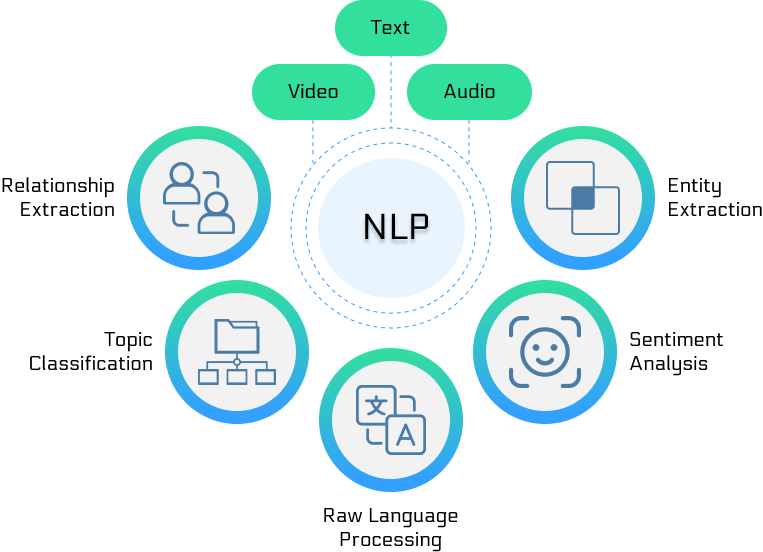
- Text Analysis: These services can perform sentiment analysis, entity recognition, and syntax parsing to extract meaningful information from text.
- Language Translation: With support for multiple languages, NLP cloud services can translate text accurately and efficiently.
- Speech Recognition: Convert spoken language into text using advanced speech-to-text capabilities.
- Chatbot Integration: Enhance customer service by deploying intelligent chatbots that understand and respond to user queries effectively.
Benefits of Using NLP Cloud Services
The adoption of NLP cloud services offers numerous advantages:
- Cost-Effective: By leveraging cloud-based solutions, companies save on infrastructure costs associated with hosting complex NLP models in-house.
- Scalability: Easily scale up or down based on demand without worrying about hardware limitations.
- User-Friendly Integration: APIs allow for seamless integration into existing applications with minimal coding effort.
- Continuous Improvement: Benefit from regular updates and improvements as service providers enhance their models over time.
The Future of NLP Cloud Services
The future of NLP cloud services looks promising as technology continues to evolve. With advancements in deep learning models like transformers and BERT (Bidirectional Encoder Representations from Transformers), these services are becoming more accurate and contextually aware. Industries such as healthcare, finance, e-commerce, and customer support stand to gain immensely as they adopt these technologies to improve user experiences and operational efficiency.
NLP cloud services are not just about automating tasks; they’re about enabling smarter interactions between humans and machines. As natural language understanding becomes more sophisticated, expect a surge in innovative applications that will redefine how we interact with technology every day.
NLP cloud services are at the forefront of technological innovation by making powerful language processing tools accessible to everyone. Whether you’re a developer looking to enhance your application or a business aiming to streamline operations through automation – embracing these solutions is key to staying competitive in today’s digital landscape.
Understanding NLP Cloud Services: Key FAQs Answered
- What is cloud NLP?
- What is an NLP service?
- What is NLP Cloud API?
- Is ChatGPT an NLP?
- Why is NLP obsolete?
- What is NLP SaaS?
- Is Google a NLP?
- What are NLP platforms?
What is cloud NLP?
Cloud NLP (natural language processing) is the use of online services to analyze, understand, or generate human language. Instead of building and maintaining language-processing software on local servers, businesses and developers can use cloud-based tools—often through APIs—to perform tasks such as translation, sentiment analysis, text classification, speech recognition, and chatbot responses. These services can scale as demand changes, though users should review each provider’s data-handling and privacy policies before submitting sensitive information.
What is an NLP service?
An NLP service is a software tool that uses natural language processing to help computers work with human language. It can analyze or generate text and speech, with capabilities such as translation, sentiment analysis, summarization, speech recognition, and question answering. Many NLP services are available through cloud-based APIs, allowing businesses and developers to add these features to applications without building and hosting their own language models.
What is NLP Cloud API?
The NLP Cloud API is a programming interface that lets applications access natural language processing models hosted by the NLP Cloud platform. Developers can send text or other supported inputs and receive results for tasks such as text generation, classification, summarization, translation, and information extraction, depending on the models and features available. Because the models run in the cloud, teams can integrate NLP capabilities without managing all the underlying infrastructure themselves.
Is ChatGPT an NLP?
ChatGPT is indeed a product of Natural Language Processing (NLP) technology. It is a sophisticated language model developed by OpenAI that utilizes advanced NLP techniques to understand and generate human-like text. While ChatGPT itself is not an NLP service, it represents a practical application of NLP principles, demonstrating how machines can process and respond to natural language inputs. By leveraging deep learning models, such as transformers, ChatGPT can interpret context, answer questions, engage in conversations, and perform various other language-based tasks. This makes it a prime example of how NLP can be used to create interactive and intelligent systems capable of understanding and generating human language.
Why is NLP obsolete?
NLP isn’t obsolete; rather, the field is evolving. Large language models have made some traditional approaches—such as hand-built rules and task-specific models—less central for certain applications, but NLP techniques remain essential for tasks like search, classification, information extraction, speech processing, and language evaluation. Many NLP cloud services now combine established methods with generative AI, allowing organizations to choose tools based on accuracy, cost, speed, privacy, and the needs of each task.
What is NLP SaaS?
NLP SaaS (Natural Language Processing Software as a Service) is a cloud-based service that lets businesses use language-processing tools—such as text classification, sentiment analysis, translation, summarization, and speech recognition—through a web application or API. Instead of building and maintaining their own NLP infrastructure, customers access the provider’s software over the internet, typically paying by subscription or usage. This can make NLP easier to deploy and scale, though organizations should review data privacy, security, and service limitations before choosing a provider.
Is Google a NLP?
Google itself is not an NLP, but it is a major player in the field of Natural Language Processing (NLP). Google offers a range of NLP cloud services through its Google Cloud Platform, which includes tools like the Natural Language API. These services utilize advanced machine learning models to analyze and understand human language, enabling tasks such as sentiment analysis, entity recognition, and syntax parsing. Google’s investment in NLP technology has significantly contributed to advancements in search algorithms, voice assistants like Google Assistant, and translation services through Google Translate. Thus, while Google is not an NLP service per se, it provides powerful tools and services that leverage NLP to enhance various applications and user experiences.
What are NLP platforms?
NLP platforms are tools and services that help businesses and developers build applications capable of understanding, analyzing, or generating human language. They may provide prebuilt models and APIs for tasks such as sentiment analysis, translation, text classification, summarization, and chatbot responses, as well as tools for creating and managing custom models. Cloud-based NLP platforms make these capabilities easier to access and scale without requiring organizations to build all the underlying infrastructure themselves.