Understanding Natural Language Processing (NLP) Made Simple
Natural Language Processing (NLP) is a branch of artificial intelligence that focuses on enabling computers to understand, interpret, and generate human language in a way that is both meaningful and useful. While NLP may sound complex, the basic concepts behind it can be broken down into simple terms.
At its core, NLP involves the interaction between computers and humans using natural language. This interaction can take many forms, such as text analysis, sentiment analysis, language translation, speech recognition, and more. By utilizing algorithms and linguistic rules, computers are able to process and analyze large amounts of natural language data.
One key aspect of NLP is tokenization, which involves breaking down text into smaller units such as words or sentences. This process allows computers to understand the structure of the text and extract meaningful information from it. Another important concept is part-of-speech tagging, which involves labeling each word in a sentence with its corresponding grammatical category (e.g., noun, verb, adjective).
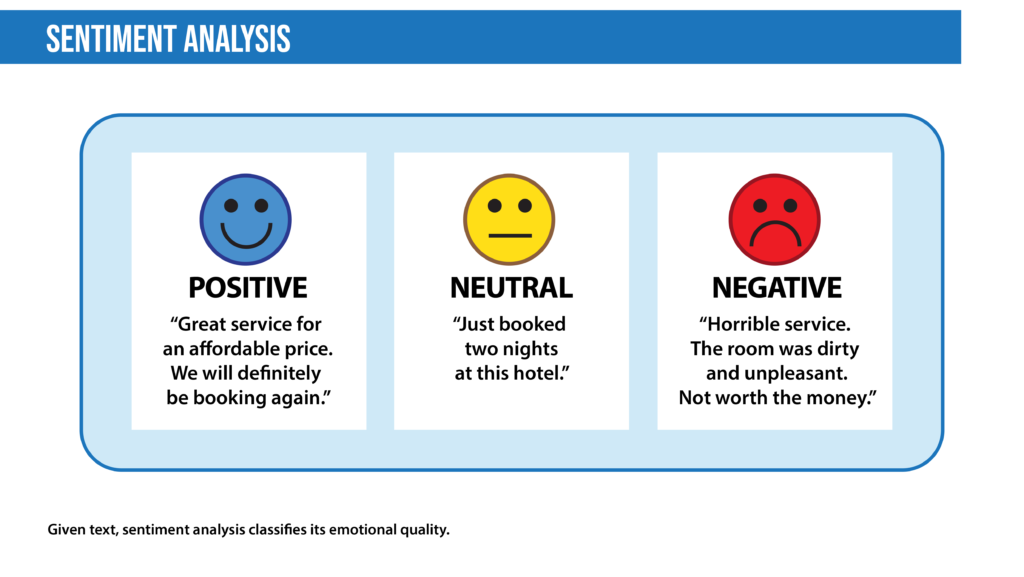
Sentiment analysis is another common application of NLP that involves determining the sentiment or emotion expressed in a piece of text. This can be useful for businesses looking to gauge customer feedback or for social media platforms monitoring user engagement.
Language translation is perhaps one of the most widely recognized applications of NLP. By utilizing machine translation algorithms and neural networks, computers are able to translate text from one language to another with increasing accuracy.
Overall, while NLP may seem like a complex field at first glance, the underlying principles are straightforward and intuitive. By breaking down tasks into simpler components such as tokenization, part-of-speech tagging, sentiment analysis, and language translation, computers are able to effectively process and analyze human language data in a way that enhances communication and understanding.
Six Key Advantages of Simple NLP: Enhancing Communication and Automating Language Processing
- Enhances communication by enabling computers to understand and generate human language.
- Facilitates sentiment analysis, allowing businesses to gauge customer feedback and social media engagement.
- Simplifies text analysis by breaking down text into smaller units for easier processing.
- Supports part-of-speech tagging, which helps in identifying the grammatical category of each word in a sentence.
- Enables accurate language translation between different languages using machine translation algorithms.
- Improves efficiency by automating tasks such as language processing and analysis.
Key Challenges of Simple NLP: Context, Ambiguity, Data Quality, and Adaptability
- Limited contextual understanding
- Ambiguity resolution challenges
- Dependency on data quality
- Lack of adaptability
Enhances communication by enabling computers to understand and generate human language.
By simplifying Natural Language Processing (NLP), computers are empowered to comprehend and produce human language effectively, thereby enhancing communication between individuals and machines. This capability allows for seamless interaction in various applications, from customer service chatbots to language translation tools, ultimately bridging the gap between different languages and cultures. The ability of computers to understand and generate human language through simple NLP techniques revolutionizes the way we communicate and collaborate in our increasingly interconnected world.
Facilitates sentiment analysis, allowing businesses to gauge customer feedback and social media engagement.
Simple NLP facilitates sentiment analysis, a valuable tool that enables businesses to gauge customer feedback and monitor social media engagement effectively. By analyzing the sentiment expressed in text data, businesses can gain valuable insights into customer opinions, preferences, and overall satisfaction levels. This information can help businesses make informed decisions, improve products or services, and enhance customer relationships. Additionally, sentiment analysis on social media platforms allows businesses to track trends, identify influencers, and measure the impact of their marketing strategies in real-time.
Simplifies text analysis by breaking down text into smaller units for easier processing.
By breaking down text into smaller units for easier processing, simple NLP greatly simplifies text analysis. This approach allows computers to efficiently understand the structure of the text and extract valuable insights from it. By breaking text into manageable components, such as words or sentences, computers can more effectively analyze and interpret the content, leading to more accurate results and enabling a wide range of applications in fields such as sentiment analysis, language translation, and information retrieval.
Supports part-of-speech tagging, which helps in identifying the grammatical category of each word in a sentence.
One of the key advantages of simple NLP is its support for part-of-speech tagging, a feature that aids in identifying the grammatical category of each word in a sentence. By assigning labels to words such as noun, verb, adjective, or adverb, part-of-speech tagging enables computers to better understand the structure and meaning of a text. This capability not only enhances the accuracy of language analysis but also facilitates more advanced NLP tasks like sentiment analysis, language translation, and information extraction.
Enables accurate language translation between different languages using machine translation algorithms.
One of the key advantages of simple NLP is its ability to enable accurate language translation between different languages using machine translation algorithms. By breaking down the complexities of language into more manageable components, such as words and sentences, NLP systems can effectively translate text from one language to another with increasing accuracy. This capability not only facilitates communication across language barriers but also promotes cross-cultural understanding and collaboration on a global scale.
Improves efficiency by automating tasks such as language processing and analysis.
By simplifying Natural Language Processing (NLP), efficiency is greatly enhanced through the automation of tasks such as language processing and analysis. By automating these processes, time-consuming tasks that would traditionally require human intervention can now be completed swiftly and accurately by machines. This not only saves time and resources but also allows businesses and individuals to focus on higher-level decision-making and strategic initiatives, ultimately leading to increased productivity and streamlined operations.
Limited contextual understanding
Simple NLP systems may encounter the con of limited contextual understanding, which can hinder their ability to fully grasp the nuances and subtleties of human language. Due to their simplified nature, these systems may struggle to interpret the context in which words or phrases are used, potentially resulting in misinterpretations or inaccuracies in analysis. This limitation underscores the importance of more advanced NLP techniques that can better capture the complexities of language and improve overall accuracy in text processing and understanding.
Ambiguity resolution challenges
Ambiguity resolution challenges pose a significant con for simple NLP models. Resolving ambiguities in language, such as sarcasm or metaphors, can be particularly challenging for basic NLP systems. These models may struggle to accurately interpret and understand the subtle nuances of human language, leading to potential misinterpretations or inaccuracies in the analysis of text. Ambiguities in language require a deep understanding of context, tone, and cultural references, which can be difficult for basic NLP models to grasp effectively. As a result, the limitations of simple NLP systems become apparent when faced with complex linguistic constructs that go beyond literal meanings.
Dependency on data quality
Simple NLP systems face a significant challenge in their dependency on the quality and quantity of training data. The performance of these systems is directly impacted by the data they are trained on, making it crucial to have a diverse and representative dataset for optimal results. Insufficient or biased training data can lead to inaccuracies, errors, and limitations in the system’s ability to effectively understand and process natural language. As a result, ensuring high-quality training data is essential for simple NLP systems to perform at their best and deliver reliable outcomes.
Lack of adaptability
One significant drawback of simple NLP models is their lack of adaptability to new languages, dialects, or specialized domains without extensive retraining. Basic NLP models are often trained on specific datasets and may struggle to effectively process or analyze languages or dialects that were not included in their initial training. This limitation can hinder the performance and accuracy of the models when faced with unfamiliar linguistic variations or specialized terminology, requiring significant time and resources to retrain the models for improved adaptability.