The Power of NLP Analysis
Natural Language Processing (NLP) analysis is a cutting-edge technology that is revolutionizing the way we interact with and understand human language. By combining linguistics, computer science, and artificial intelligence, NLP enables computers to process, interpret, and generate human language in a way that was once thought impossible.
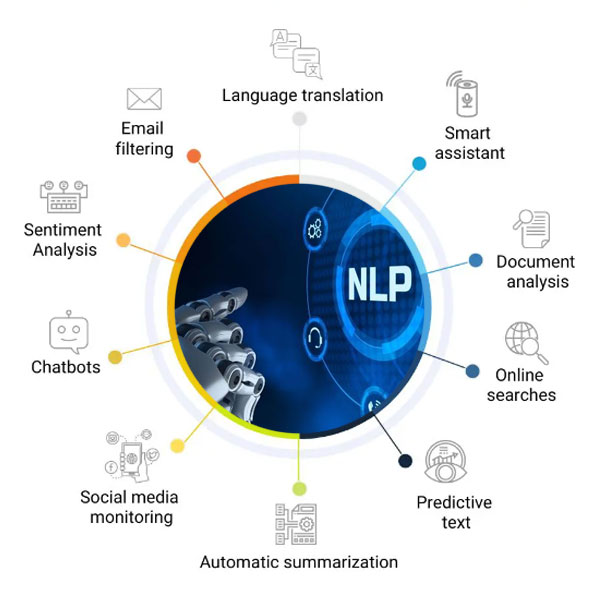
One of the key applications of NLP analysis is sentiment analysis, which involves determining the emotional tone behind a piece of text. This can be incredibly useful for businesses looking to gauge customer feedback, identify trends, and improve their products or services based on customer sentiment.
NLP analysis also plays a crucial role in machine translation, chatbots, information retrieval, and text summarization. By analyzing the structure and meaning of language at a deep level, NLP systems can accurately translate text between languages, provide automated responses in chat conversations, retrieve relevant information from vast amounts of text data, and generate concise summaries of lengthy documents.
Furthermore, NLP analysis is constantly evolving and improving as researchers develop new algorithms and techniques to enhance its capabilities. With the rise of deep learning and neural networks, NLP systems are becoming increasingly sophisticated at understanding context, tone, ambiguity, and even humor in human language.
Overall, NLP analysis holds immense potential for transforming various industries by enabling more effective communication between humans and machines. As this technology continues to advance, we can expect to see even more innovative applications that leverage the power of natural language processing to enhance our daily lives.
8 Essential Tips for Effective NLP Text Analysis
- Preprocess text data by removing noise and irrelevant information.
- Tokenize the text into words or subwords for further analysis.
- Remove stop words to focus on meaningful content in the text.
- Perform lemmatization or stemming to reduce words to their base form.
- Utilize named entity recognition to identify important entities in the text.
- Apply part-of-speech tagging to understand the role of each word in a sentence.
- Use sentiment analysis to determine the sentiment expressed in the text.
- Consider using word embeddings like Word2Vec or GloVe for semantic analysis.
Preprocess text data by removing noise and irrelevant information.
When conducting NLP analysis, a crucial tip is to preprocess text data by eliminating noise and irrelevant information. By cleaning the text data and removing unnecessary elements such as special characters, stopwords, and punctuation, the NLP model can focus on extracting meaningful insights and patterns from the text. This preprocessing step not only improves the accuracy of the analysis but also enhances the efficiency of the NLP system in understanding and interpreting the underlying content of the text data.
Tokenize the text into words or subwords for further analysis.
To enhance the effectiveness of NLP analysis, it is essential to tokenize the text into individual words or subwords. This process involves breaking down the text into its fundamental units, which enables more granular analysis and understanding of the language structure. By tokenizing the text, NLP systems can better identify patterns, relationships, and context within the text, leading to more accurate and insightful analysis results.
Remove stop words to focus on meaningful content in the text.
By removing stop words from the text during NLP analysis, we can effectively filter out common words that do not carry significant meaning, allowing us to focus on the essence and context of the content. This process helps streamline the analysis by highlighting the most relevant and informative words, leading to a more accurate understanding of the text’s underlying message and enabling more precise insights to be extracted from the data.
Perform lemmatization or stemming to reduce words to their base form.
Performing lemmatization or stemming is a crucial step in NLP analysis to simplify and standardize words by reducing them to their base form. By converting words to their root forms, such as removing suffixes or prefixes, lemmatization and stemming help improve the accuracy of text analysis tasks like sentiment analysis, information retrieval, and machine translation. This process not only reduces the complexity of the text but also ensures that variations of the same word are treated as identical, leading to more consistent and reliable results in natural language processing applications.
Utilize named entity recognition to identify important entities in the text.
Utilizing named entity recognition in NLP analysis is a powerful technique that allows for the identification of important entities within a text, such as people, organizations, locations, dates, and more. By extracting and categorizing these entities, researchers and businesses can gain valuable insights into the key elements and relationships present in the text. This process not only aids in information retrieval and organization but also enhances the overall understanding of the content, enabling more accurate analysis and decision-making based on the identified entities.
Apply part-of-speech tagging to understand the role of each word in a sentence.
Applying part-of-speech tagging in natural language processing analysis is a crucial step to understand the specific role that each word plays within a sentence. By labeling each word with its corresponding part of speech, such as noun, verb, adjective, or adverb, NLP systems can accurately analyze the grammatical structure and meaning of the text. This information helps in identifying relationships between words, determining syntax patterns, and extracting valuable insights that contribute to more accurate language processing and understanding.
Use sentiment analysis to determine the sentiment expressed in the text.
Utilizing sentiment analysis in NLP analysis can be a powerful tool to discern the underlying emotions and attitudes conveyed within a piece of text. By employing sentiment analysis techniques, one can effectively gauge whether the sentiment expressed is positive, negative, or neutral, enabling a deeper understanding of the overall tone and implications of the text. This valuable insight can be instrumental in various applications, such as market research, customer feedback analysis, and social media monitoring, allowing organizations to make informed decisions based on the sentiments expressed by their audience.
Consider using word embeddings like Word2Vec or GloVe for semantic analysis.
When delving into NLP analysis, it is highly beneficial to leverage word embeddings such as Word2Vec or GloVe for semantic analysis. These powerful tools map words to high-dimensional vectors, capturing semantic relationships and contextual meanings within a text corpus. By utilizing word embeddings, researchers and developers can enhance the accuracy and efficiency of tasks like sentiment analysis, language translation, and information retrieval, ultimately leading to more nuanced and insightful analyses of human language data.