NLP, Deep Learning, and AI: Transforming the Future of Communication
In recent years, the fields of Natural Language Processing (NLP), deep learning, and artificial intelligence (AI) have seen remarkable advancements. These technologies are not only reshaping industries but also changing the way humans interact with machines and each other. This article explores how these interconnected domains are driving innovation in communication.
Understanding NLP
Natural Language Processing is a branch of AI focused on enabling machines to understand, interpret, and generate human language. By leveraging linguistic rules and statistical models, NLP systems can process large amounts of natural language data. Applications range from sentiment analysis to machine translation and chatbots.
The Role of Deep Learning
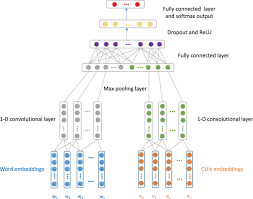
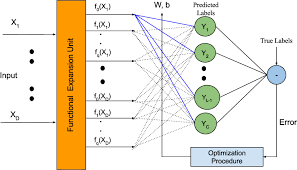
Deep learning is a subset of machine learning that utilizes neural networks with many layers (hence “deep”) to model complex patterns in data. In NLP, deep learning models such as transformers have revolutionized the field by improving accuracy in tasks like language translation and text generation.
Transformers: A Game Changer
The introduction of transformer architectures has been pivotal for NLP. Models like BERT (Bidirectional Encoder Representations from Transformers) and GPT (Generative Pre-trained Transformer) have set new benchmarks by understanding context better than previous models. They achieve this by processing words in relation to all other words in a sentence rather than one at a time.
The Intersection with AI
AI encompasses both NLP and deep learning as part of its broader goal to create intelligent systems capable of performing tasks that typically require human intelligence. By integrating these technologies, AI systems can perform complex tasks such as real-time language translation or providing intelligent responses in virtual assistants.
Applications Across Industries
- Healthcare: AI-powered systems analyze patient data to provide insights into patient care while NLP aids in processing clinical notes for better diagnosis.
- Finance: Algorithms analyze market trends using sentiment analysis from news articles or social media posts to inform trading strategies.
- E-commerce: Personalized recommendations are enhanced by understanding customer reviews through sentiment analysis powered by NLP.
The Future Outlook
The synergy between NLP, deep learning, and AI promises continued advancements in technology that will further bridge gaps between human communication and machine understanding. As these technologies evolve, they hold the potential to create more intuitive interfaces that make human-machine interactions seamless across various languages and contexts.
The future is bright for those who embrace these innovations as they continue transforming industries worldwide—making communication more efficient than ever before.
8 Essential Tips for Mastering NLP with Deep Learning Techniques
- Understand the basics of natural language processing (NLP) before diving into deep learning for NLP.
- Preprocess your text data by tokenizing, removing stopwords, and performing other necessary cleaning steps.
- Experiment with different deep learning architectures like Recurrent Neural Networks (RNNs) and Transformer models for NLP tasks.
- Fine-tune pre-trained language models such as BERT or GPT to boost performance on specific tasks.
- Utilize techniques like word embeddings (e.g., Word2Vec, GloVe) to represent words in a dense vector space.
- Regularly evaluate your model’s performance using metrics like accuracy, precision, recall, and F1 score.
- Consider data augmentation techniques to increase the diversity of your training data and improve generalization.
- Stay updated with the latest research in NLP and AI to incorporate cutting-edge advancements into your projects.
Understand the basics of natural language processing (NLP) before diving into deep learning for NLP.
To effectively navigate the realm of natural language processing (NLP) and its intersection with deep learning, it is crucial to first grasp the fundamentals of NLP. Understanding the basic principles and techniques of NLP sets a solid foundation for delving into more complex deep learning models tailored for NLP tasks. By familiarizing oneself with NLP concepts such as tokenization, part-of-speech tagging, and syntactic analysis, individuals can better appreciate the nuances of language processing and optimize their approach when applying deep learning methodologies to enhance NLP capabilities.
Preprocess your text data by tokenizing, removing stopwords, and performing other necessary cleaning steps.
To harness the full potential of Natural Language Processing (NLP), deep learning, and artificial intelligence (AI), it is crucial to preprocess your text data effectively. This involves tokenizing the text to break it down into individual words or tokens, removing stopwords that do not carry significant meaning, and performing other essential cleaning steps such as stemming or lemmatization. By ensuring that your text data is properly prepared through these preprocessing techniques, you can enhance the accuracy and efficiency of NLP models, enabling them to extract valuable insights and patterns from the data with greater precision.
Experiment with different deep learning architectures like Recurrent Neural Networks (RNNs) and Transformer models for NLP tasks.
To enhance your natural language processing (NLP) tasks, it is beneficial to explore a variety of deep learning architectures, such as Recurrent Neural Networks (RNNs) and Transformer models. By experimenting with different architectures, like RNNs for sequential data processing and Transformer models for capturing contextual relationships in text, you can uncover the strengths and limitations of each approach in tackling specific NLP challenges. This hands-on exploration will not only expand your understanding of deep learning in NLP but also empower you to choose the most suitable architecture for optimizing performance and accuracy in your language-related projects.
Fine-tune pre-trained language models such as BERT or GPT to boost performance on specific tasks.
Fine-tuning pre-trained language models like BERT or GPT is a powerful technique in the realm of Natural Language Processing, deep learning, and artificial intelligence. By customizing these models to specific tasks, such as sentiment analysis or text summarization, researchers and developers can significantly enhance performance and accuracy. This approach leverages the existing knowledge and capabilities of these advanced models while tailoring them to excel in specialized areas, ultimately pushing the boundaries of what is achievable in language-related tasks.
Utilize techniques like word embeddings (e.g., Word2Vec, GloVe) to represent words in a dense vector space.
Utilizing techniques such as word embeddings, including popular models like Word2Vec and GloVe, is essential in the field of NLP and deep learning. These techniques transform words into dense vector spaces where semantically similar words are positioned closer together. This representation allows machines to understand the context and relationships between words more effectively, enhancing the performance of various NLP tasks like sentiment analysis, machine translation, and information retrieval. By capturing the nuances of language in a numerical form, word embeddings enable AI systems to process and interpret human language with greater accuracy and sophistication, leading to more natural interactions between humans and machines.
Regularly evaluate your model’s performance using metrics like accuracy, precision, recall, and F1 score.
Regularly evaluating your model’s performance is crucial in the field of NLP, deep learning, and AI to ensure its effectiveness and reliability. By using metrics such as accuracy, precision, recall, and F1 score, you can gain a comprehensive understanding of how well your model is performing. Accuracy gives an overall sense of correctness, while precision measures the proportion of true positive results in all positive predictions. Recall evaluates the ability of the model to identify all relevant instances, and the F1 score provides a balance between precision and recall. Regular assessments with these metrics help in identifying areas for improvement, allowing for fine-tuning and optimization of the model to achieve better results in real-world applications.
Consider data augmentation techniques to increase the diversity of your training data and improve generalization.
Data augmentation is a powerful technique in the realm of NLP, deep learning, and AI that can significantly enhance the performance of models by increasing the diversity of training data. By artificially expanding the dataset through transformations such as synonym replacement, random insertion, or back-translation, models can be exposed to a broader range of linguistic variations. This not only helps in preventing overfitting but also improves the model’s ability to generalize across different contexts and nuances in language. Implementing data augmentation techniques allows models to better understand and process unseen data, leading to more robust and accurate predictions. As a result, it becomes an essential strategy for developers aiming to build AI systems that are both versatile and resilient in real-world applications.
Stay updated with the latest research in NLP and AI to incorporate cutting-edge advancements into your projects.
Staying updated with the latest research in NLP and AI is crucial for anyone looking to incorporate cutting-edge advancements into their projects. The fields of natural language processing and artificial intelligence are rapidly evolving, with new breakthroughs and techniques emerging regularly. By keeping abreast of the latest developments, you can ensure that your projects leverage the most effective and efficient methods available. This not only enhances the performance of your applications but also keeps you competitive in a fast-paced industry. Engaging with current research allows you to adopt innovative solutions early, address complex challenges more effectively, and ultimately deliver superior results in your AI-driven initiatives.