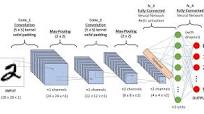
Exploring the World of Neural Networks
In recent years, neural networks have become a cornerstone of artificial intelligence and machine learning, revolutionizing various industries and reshaping how we interact with technology. From powering voice assistants to enhancing medical diagnostics, neural networks are at the forefront of innovation.
What Are Neural Networks?
Neural networks are computational models inspired by the human brain’s structure and function. They consist of interconnected nodes, or “neurons,” that process data in layers. Each neuron receives input, processes it through an activation function, and passes the output to the next layer. This layered approach allows neural networks to learn complex patterns and make predictions based on input data.
The Evolution of Neural Networks
The concept of neural networks dates back to the 1940s, but it wasn’t until recent advancements in computing power and data availability that they became practical for widespread use. The development of deep learning—an advanced form of neural networks with multiple hidden layers—has been particularly transformative, enabling breakthroughs in image recognition, natural language processing, and more.
Applications Across Industries
Neural networks have found applications across a wide range of industries:
- Healthcare: Neural networks assist in diagnosing diseases by analyzing medical images and predicting patient outcomes.
- Finance: They are used for fraud detection, risk management, and algorithmic trading.
- Automotive: Autonomous vehicles rely on neural networks for object detection and decision-making.
- Agriculture: Farmers use them for crop monitoring and yield prediction.
The Future of Neural Networks
The future holds exciting possibilities for neural network technology. As research progresses, we can expect even more sophisticated models capable of understanding context and reasoning like humans. Additionally, efforts to make neural networks more efficient will help reduce their environmental impact by lowering energy consumption during training processes.
Challenges Ahead
Despite their potential, neural networks face several challenges. These include issues related to transparency (often referred to as the “black box” problem), data privacy concerns, and the need for large amounts of labeled data for training purposes. Researchers are actively working on addressing these challenges through innovations such as explainable AI (XAI) and federated learning.
Conclusion
The world of neural networks is vast and continually evolving. As these technologies advance further into uncharted territories—driven by both academic research and industry demand—they promise to unlock new levels of efficiency across numerous sectors while transforming our daily lives in ways we have yet to imagine fully.
Understanding Neural Networks: Key Questions and Insights
- What is a neural network?
- How do neural networks work?
- What are the applications of neural networks?
- What is deep learning and its relationship to neural networks?
- How are neural networks used in healthcare?
- What challenges do neural networks face?
- How can neural networks be made more efficient?
- What does the future hold for neural network technology?
What is a neural network?
A neural network is a computational model inspired by the structure and function of the human brain. It consists of interconnected nodes, or “neurons,” organized in layers to process data. Each neuron receives input, applies an activation function to it, and passes the output to the next layer. This layered approach allows neural networks to learn complex patterns and make predictions based on input data. Neural networks have become a fundamental component of artificial intelligence and machine learning, enabling advancements in various fields by mimicking the brain’s ability to analyze and interpret information.
How do neural networks work?
Neural networks operate by mimicking the structure and functionality of the human brain. Comprised of interconnected nodes, or neurons, organized in layers, neural networks process input data through these layers to make predictions or classifications. Each neuron receives input, applies an activation function to produce an output, and passes it on to the next layer. Through a process known as training, neural networks adjust the weights of connections between neurons based on feedback to improve their predictive accuracy. This iterative learning process enables neural networks to recognize patterns in data and make complex decisions, making them powerful tools for tasks like image recognition, natural language processing, and more.
What are the applications of neural networks?
Neural networks have a wide range of applications across various industries due to their ability to learn complex patterns and make predictions based on data. In healthcare, they assist in diagnosing diseases by analyzing medical images and predicting patient outcomes. In finance, neural networks are used for fraud detection, risk management, and algorithmic trading. The automotive industry relies on them for object detection and decision-making in autonomous vehicles. Additionally, neural networks find applications in agriculture for crop monitoring and yield prediction. These examples demonstrate the versatility and effectiveness of neural networks in solving real-world problems and driving innovation across different sectors.
What is deep learning and its relationship to neural networks?
Deep learning is a subset of machine learning that utilizes neural networks with multiple layers to extract high-level features from raw data. In essence, deep learning is a sophisticated form of neural networks that can automatically discover intricate patterns and representations in data, leading to more accurate predictions and insights. The relationship between deep learning and neural networks lies in the architecture: deep learning algorithms are built upon the principles of neural networks, leveraging their interconnected layers to process information hierarchically. By using deep learning techniques, researchers and developers can tackle complex problems in various fields such as image recognition, natural language processing, and autonomous driving with unprecedented accuracy and efficiency.
How are neural networks used in healthcare?
Neural networks play a crucial role in healthcare by revolutionizing diagnostic processes, treatment planning, and patient care. In the medical field, neural networks are used to analyze complex medical images such as MRI scans, X-rays, and CT scans with remarkable accuracy, aiding in the early detection of diseases like cancer and providing insights for personalized treatment plans. Additionally, neural networks can predict patient outcomes based on historical data, assist in drug discovery by analyzing molecular structures, and even support robotic surgeries for enhanced precision. Overall, the application of neural networks in healthcare is paving the way for more efficient and effective medical practices that benefit both patients and healthcare professionals.
What challenges do neural networks face?
Neural networks, despite their transformative potential, face several significant challenges. One of the primary issues is the “black box” nature of these models, which makes it difficult to understand how they arrive at specific decisions or predictions. This lack of transparency can be problematic in critical applications where understanding the decision-making process is essential. Additionally, neural networks require vast amounts of labeled data for training, which can be time-consuming and costly to obtain. Overfitting is another challenge, where a model becomes too tailored to the training data and performs poorly on new, unseen data. Furthermore, neural networks demand substantial computational resources and energy, raising concerns about their environmental impact. Lastly, ensuring data privacy and security remains a critical issue as these models often rely on sensitive information for training purposes. Researchers are actively exploring solutions to address these challenges and enhance the reliability and efficiency of neural networks.
How can neural networks be made more efficient?
Improving the efficiency of neural networks is a crucial area of research in the field of artificial intelligence. There are several strategies to enhance the efficiency of neural networks, such as optimizing network architecture, implementing regularization techniques to prevent overfitting, utilizing transfer learning to leverage pre-trained models, and exploring quantization methods to reduce computational complexity. Additionally, advancements in hardware acceleration, like specialized processing units for deep learning tasks, can significantly boost the speed and energy efficiency of neural network computations. By combining these approaches and continuously refining algorithms, researchers and engineers strive to make neural networks more efficient and scalable for a wide range of applications.
What does the future hold for neural network technology?
The future of neural network technology holds immense promise and potential for groundbreaking advancements. As researchers continue to push the boundaries of artificial intelligence and machine learning, we can expect neural networks to become even more sophisticated, capable of handling complex tasks with greater efficiency and accuracy. Innovations in areas such as explainable AI, federated learning, and energy-efficient training methods are poised to address current challenges and propel neural networks into new realms of application. With ongoing developments in the field, the future likely holds a world where neural networks play an increasingly integral role in shaping how we interact with technology, driving innovation across various industries and transforming the way we live and work.