Understanding Machine Learning and Deep Learning: A Comprehensive Guide
In recent years, the terms “machine learning” and “deep learning” have become buzzwords in the tech industry. These technologies are driving innovations across various sectors, from healthcare to finance, and transforming how we interact with the digital world. But what exactly are machine learning and deep learning, and how do they differ?
What is Machine Learning?
Machine learning is a subset of artificial intelligence (AI) that focuses on building systems capable of learning from data and improving their performance over time without being explicitly programmed. In essence, machine learning algorithms identify patterns in data, which they use to make decisions or predictions.
There are three primary types of machine learning:
- Supervised Learning: In this approach, algorithms are trained on labeled data. The model learns to associate inputs with the correct output by analyzing examples.
- Unsupervised Learning: Here, algorithms work with unlabeled data. The system tries to identify patterns or groupings within the data without any prior training.
- Semi-supervised Learning: This method combines both labeled and unlabeled data to improve learning accuracy.
The Rise of Deep Learning
Deep learning is a specialized branch of machine learning that utilizes neural networks with many layers (hence “deep”) to analyze various factors of data. It mimics the way humans gain insights from multiple levels of information processing.
The key component of deep learning is the neural network architecture, which consists of layers of nodes or neurons. These networks can automatically learn representations from raw data by adjusting weights through processes like backpropagation.
Main Features of Deep Learning
- High Accuracy: Deep neural networks can achieve high accuracy levels in tasks such as image recognition or natural language processing due to their ability to process large datasets.
- No Manual Feature Extraction: Unlike traditional machine learning models that require manual feature extraction, deep networks automatically derive features from raw input.
- Scalability: With access to large datasets and computational power, deep learning models can scale effectively for complex tasks.
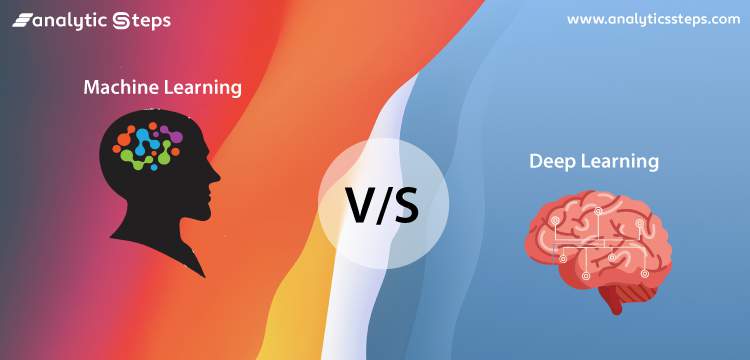
Differentiating Between Machine Learning and Deep Learning
The primary difference between these two lies in their approach to problem-solving:
- Simplicity vs Complexity: Machine learning models often require simpler architectures compared to deep networks’ multilayered structures.
- Data Dependency: While traditional machine-learning techniques perform well on smaller datasets with curated features, deep-learning requires vast amounts of unstructured data for optimal performance.
- Computation Power: Deep-learning demands significant computational resources due its complex architectures whereas simpler models may run efficiently even on standard hardware setups.
The Impact on Industries
The adoption rate for both technologies has been rapid across industries due their potential benefits such as improved efficiency cost savings enhanced decision-making capabilities among others some notable applications include :
- E-commerce : Personalized recommendations based user behavior analysis .
- Healthcare : Disease diagnosis treatment planning using medical imaging genomic sequencing .
- Finance : Fraud detection algorithmic trading risk management strategies .
- Autonomous Vehicles : Real-time object detection navigation systems ensuring safety reliability transportation sector .
< / ul >
< p >< strong > Conclusion : Embracing Future Possibilities
< p > As technology continues evolve rapidly understanding leveraging power tools like machine -learning-deep -learning becomes crucial businesses individuals alike staying competitive landscape today tomorrow embracing these advancements not only enhances operational efficiencies but also opens door endless possibilities innovation creativity exploration unknown frontiers future holds exciting promise those willing adapt change harness potential transformative forces shaping world around us every day !
9 Essential Tips for Mastering Machine Learning and Deep Learning
- Start with a clear understanding of the problem you want to solve.
- Collect and preprocess quality data; it’s crucial for model performance.
- Choose the right algorithm based on your data and problem type.
- Don’t overlook feature engineering; it can significantly improve results.
- Use cross-validation to ensure your model generalizes well to unseen data.
- Regularization techniques can help prevent overfitting in complex models.
- Experiment with different hyperparameters to optimize model performance.
- Understand the trade-offs between bias and variance when tuning models.
- Keep learning about new advancements; machine learning is a fast-evolving field.
Start with a clear understanding of the problem you want to solve.
Before delving into the intricate world of machine learning and deep learning, it is crucial to begin with a clear understanding of the problem you aim to solve. By defining the problem statement and its objectives upfront, you lay a solid foundation for developing effective solutions using these advanced technologies. A well-defined problem not only guides your approach but also ensures that the resulting models address the core challenges at hand, leading to more accurate and impactful outcomes. Therefore, starting with a clear understanding of the problem is key to unlocking the full potential of machine learning and deep learning in tackling real-world issues.
Collect and preprocess quality data; it’s crucial for model performance.
Ensuring the collection and preprocessing of high-quality data is essential for optimal model performance in machine learning and deep learning. The accuracy and reliability of the data fed into the algorithms directly impact the effectiveness of the models in making informed decisions or predictions. By carefully curating and cleaning the data before training, potential biases, errors, or inconsistencies can be minimized, leading to more accurate outcomes and better generalization of the models. Quality data serves as the foundation for successful machine learning and deep learning applications, emphasizing the importance of meticulous data handling processes in achieving desired results.
Choose the right algorithm based on your data and problem type.
When delving into the realms of machine learning and deep learning, a crucial tip to keep in mind is the importance of selecting the appropriate algorithm tailored to your specific data and problem type. The success of your model heavily relies on this decision, as different algorithms are designed to address distinct types of data and tasks. By carefully analyzing your dataset characteristics and understanding the nature of your problem, you can choose an algorithm that aligns best with your objectives, leading to more accurate predictions and valuable insights.
Don’t overlook feature engineering; it can significantly improve results.
When delving into the realms of machine learning and deep learning, it is essential not to underestimate the importance of feature engineering. This crucial step in the model development process involves selecting, extracting, and transforming relevant features from raw data to enhance the predictive power of algorithms. By carefully crafting these features, one can uncover hidden patterns and relationships within the data, ultimately leading to improved accuracy and performance of the models. Neglecting feature engineering can limit the effectiveness of machine learning and deep learning systems, highlighting its significance in achieving optimal results.
Use cross-validation to ensure your model generalizes well to unseen data.
When working with machine learning and deep learning models, utilizing cross-validation is a crucial step to ensure that your model can generalize effectively to unseen data. By splitting your dataset into multiple subsets for training and validation, cross-validation helps assess the model’s performance across different data samples. This technique aids in identifying potential issues like overfitting or underfitting, ultimately improving the model’s ability to make accurate predictions on new, unseen data. Incorporating cross-validation into your workflow enhances the reliability and robustness of your machine learning and deep learning models.
Regularization techniques can help prevent overfitting in complex models.
Regularization techniques play a crucial role in mitigating overfitting in complex machine learning and deep learning models. By adding penalty terms to the model’s loss function, regularization methods such as L1 (Lasso) and L2 (Ridge) regularization help prevent the model from fitting too closely to the training data, thus improving its generalization performance on unseen data. These techniques effectively balance the trade-off between model complexity and accuracy, ensuring that the model can make reliable predictions even in challenging scenarios with high-dimensional data.
Experiment with different hyperparameters to optimize model performance.
To enhance the performance of your machine learning and deep learning models, it is essential to experiment with various hyperparameters. Hyperparameters are settings that control the learning process and impact the model’s behavior and accuracy. By adjusting these parameters, such as learning rate, batch size, or network architecture, you can optimize your model’s performance and achieve better results. Through systematic experimentation and fine-tuning of hyperparameters, you can unlock the full potential of your models and improve their ability to learn from data effectively.
Understand the trade-offs between bias and variance when tuning models.
Understanding the trade-offs between bias and variance is crucial when tuning machine learning and deep learning models. Bias refers to the error introduced by overly simplistic assumptions in the model, leading to underfitting and poor performance on both training and test data. On the other hand, variance represents the sensitivity of the model to fluctuations in the training data, potentially causing overfitting and high performance on training data but poor generalization to unseen data. Striking a balance between bias and variance is essential for creating models that generalize well to new data while capturing underlying patterns accurately. By carefully managing these trade-offs during model tuning, practitioners can optimize performance and ensure robustness in their predictive models.
Keep learning about new advancements; machine learning is a fast-evolving field.
Staying informed about the latest advancements is crucial in the rapidly evolving field of machine learning. With technology progressing at a rapid pace, continuous learning is essential to keep up with new developments and innovations. By staying abreast of the latest trends and breakthroughs in machine learning and deep learning, individuals can enhance their skills, stay competitive in the industry, and contribute to the advancement of this dynamic field.