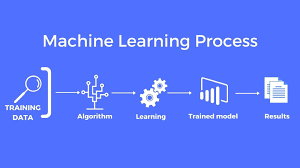
The Power of Machine Learning
Machine learning is a cutting-edge technology that is revolutionizing industries and transforming the way we live and work. It is a subset of artificial intelligence that enables computers to learn from data and improve their performance without being explicitly programmed.
One of the key strengths of machine learning is its ability to analyze large volumes of data quickly and accurately, identifying patterns and making predictions based on that data. This has numerous applications across various fields, including healthcare, finance, marketing, and more.
In healthcare, machine learning algorithms are being used to analyze medical images, diagnose diseases, predict patient outcomes, and personalize treatment plans. This has the potential to improve patient care, reduce medical errors, and save lives.
In finance, machine learning is used for fraud detection, algorithmic trading, credit scoring, and risk management. By analyzing vast amounts of financial data in real-time, machine learning models can identify anomalies and trends that humans may overlook.
In marketing, machine learning helps businesses understand customer behavior, optimize advertising campaigns, personalize recommendations, and forecast sales. This allows companies to target their audience more effectively and increase their return on investment.
Overall, machine learning is driving innovation and efficiency across industries by automating tasks, uncovering insights from data, and enabling smarter decision-making. As this technology continues to evolve and mature, its impact on society will only grow stronger.
Understanding Machine Learning: Types, Definitions, and Differences from AI
- What are the 4 types of machine learning?
- What is meant by machine learning?
- What exactly machine learning?
- What is the difference between AI and ML?
- What are the 4 basics of machine learning?
What are the 4 types of machine learning?
In the field of machine learning, there are four main types of approaches: supervised learning, unsupervised learning, semi-supervised learning, and reinforcement learning. Supervised learning involves training a model on labeled data to make predictions or classifications. Unsupervised learning focuses on finding patterns and relationships in unlabeled data. Semi-supervised learning combines elements of both supervised and unsupervised learning by using a small amount of labeled data along with a larger amount of unlabeled data. Reinforcement learning is about training an agent to make sequential decisions by rewarding desired behaviors and punishing undesired ones based on feedback from the environment. Each type of machine learning has its own strengths and applications, contributing to the diverse landscape of artificial intelligence technologies.
What is meant by machine learning?
Machine learning refers to a branch of artificial intelligence where computer systems are programmed to learn from data and improve their performance over time without being explicitly programmed. In essence, it involves developing algorithms that allow machines to recognize patterns in data, make decisions, and predictions based on that data. By leveraging statistical techniques and computational power, machine learning enables computers to continuously learn and adapt, leading to more accurate results and insights. This transformative technology is revolutionizing various industries by automating tasks, optimizing processes, and driving innovation at an unprecedented pace.
What exactly machine learning?
Machine learning is a branch of artificial intelligence that focuses on developing algorithms and models that enable computers to learn from data and make predictions or decisions without being explicitly programmed. In essence, machine learning allows machines to analyze patterns in data, learn from past experiences, and improve their performance over time. By leveraging statistical techniques and computational power, machine learning algorithms can extract valuable insights from large datasets, automate tasks, and enhance decision-making processes in various fields such as healthcare, finance, marketing, and more.
What is the difference between AI and ML?
Artificial Intelligence (AI) and Machine Learning (ML) are often used interchangeably, but they are distinct concepts. AI is a broad field that encompasses the development of systems capable of performing tasks that typically require human intelligence, such as visual perception, speech recognition, decision-making, and language translation. Machine Learning, on the other hand, is a subset of AI focused specifically on the idea that machines can learn from data. ML involves algorithms and statistical models that enable computers to improve their performance on a task through experience without being explicitly programmed for each specific task. In essence, while all machine learning is part of AI, not all AI involves machine learning.
What are the 4 basics of machine learning?
In the realm of machine learning, understanding the four fundamental concepts is crucial for building a strong foundation in this field. The four basics of machine learning are: supervised learning, unsupervised learning, semi-supervised learning, and reinforcement learning. Supervised learning involves training a model on labeled data to make predictions or classifications. Unsupervised learning focuses on finding patterns and relationships in unlabeled data. Semi-supervised learning combines both labeled and unlabeled data for training. Lastly, reinforcement learning is about training an agent to make sequential decisions by rewarding desired actions. Mastering these four basics is essential for grasping the core principles of machine learning and applying them effectively in various real-world scenarios.