Understanding Deep Learning: A Google Scholar Perspective
Deep learning has emerged as a transformative technology in the field of artificial intelligence (AI), revolutionizing industries from healthcare to finance. As researchers and practitioners seek to explore the depths of this technology, Google Scholar serves as a vital resource for accessing scholarly articles, papers, and research studies on deep learning.
The Rise of Deep Learning
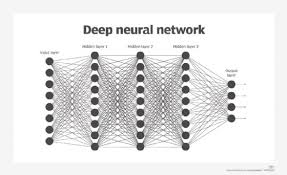
Deep learning is a subset of machine learning that utilizes neural networks with many layers — hence “deep” — to model complex patterns in data. This approach has proven particularly effective in tasks such as image and speech recognition, natural language processing, and autonomous systems.
The success of deep learning can be attributed to several factors: the availability of large datasets, advancements in computational power (particularly GPUs), and innovative algorithms that improve training efficiency. These developments have allowed deep learning models to achieve unprecedented accuracy in various applications.
Google Scholar: A Treasure Trove for Researchers
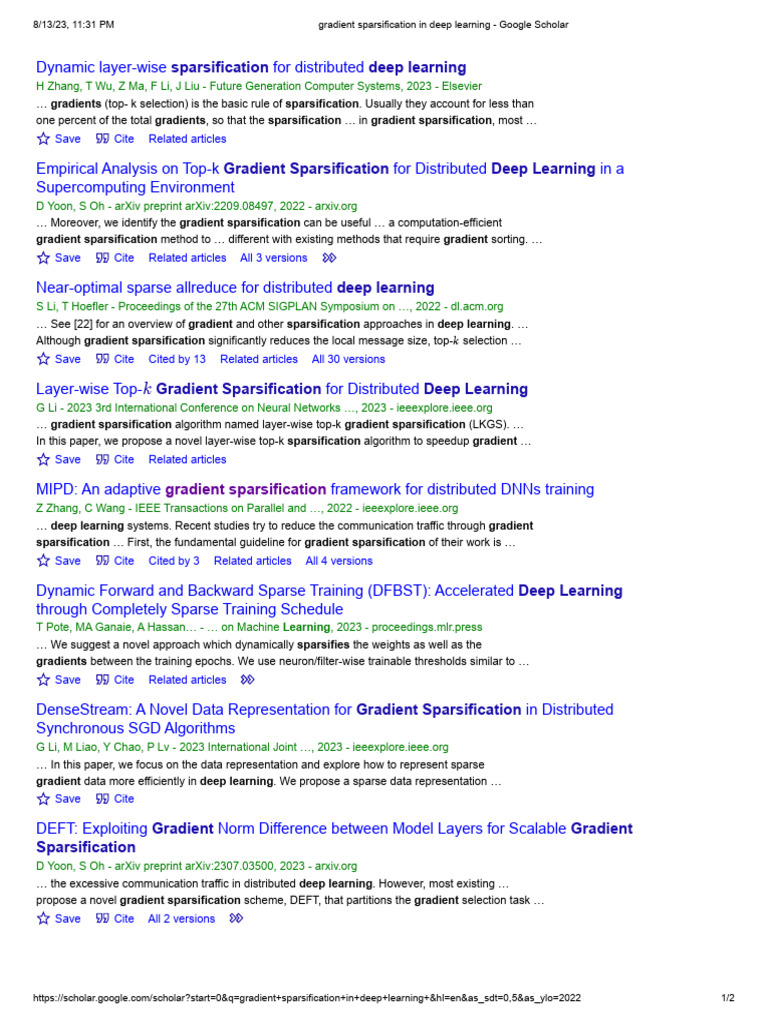
Google Scholar is an invaluable tool for anyone researching deep learning. It aggregates scholarly articles from diverse sources, providing access to peer-reviewed papers, theses, books, conference proceedings, and technical reports. By searching “deep learning” on Google Scholar, users can find a wealth of information ranging from foundational theories to cutting-edge advancements.
The platform’s advanced search capabilities allow users to filter results by date range, author, publication venue, and more. This helps researchers stay current with the latest trends and breakthroughs in deep learning.
Key Topics in Deep Learning Research
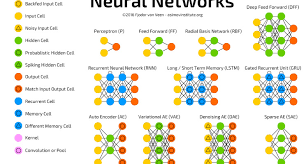
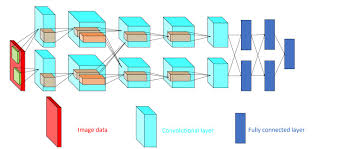
- Convolutional Neural Networks (CNNs): Widely used in image processing tasks due to their ability to automatically learn spatial hierarchies of features.
- Recurrent Neural Networks (RNNs): Essential for sequence prediction problems such as time series analysis and language modeling.
- Generative Adversarial Networks (GANs): Known for generating realistic data samples by pitting two neural networks against each other.
- Transfer Learning: Focuses on leveraging pre-trained models for new tasks with limited data availability.
The Future of Deep Learning Research
The field of deep learning is rapidly evolving with ongoing research addressing challenges such as model interpretability, reducing data requirements through unsupervised learning techniques, and improving the robustness of models against adversarial attacks. Google Scholar will continue to play a crucial role by providing access to pioneering research that pushes the boundaries of what AI can achieve.
As researchers delve deeper into these topics using resources like Google Scholar, they contribute not only to academic knowledge but also to practical applications that enhance everyday life. The future holds exciting possibilities as deep learning continues its trajectory toward greater sophistication and impact across various domains.
Top 5 Benefits of Using Google Scholar for Deep Learning Research
- 1. Access to a vast repository of scholarly articles and research papers on deep learning.
- 2. Advanced search features for filtering results by author, publication date, and more.
- 3. Helps researchers stay up-to-date with the latest trends and advancements in deep learning.
- 4. Enables users to explore key topics such as CNNs, RNNs, GANs, and transfer learning.
- 5. Facilitates knowledge dissemination and collaboration among researchers in the field of AI.
Challenges of Navigating Deep Learning Research on Google Scholar: Information Overload, Access Barriers, Quality Concerns, and Search Limitations
- 1. Overwhelming Amount of Information
- 2. Access Restrictions
- 3. Quality Variability
- 4. Limited Search Customization
1. Access to a vast repository of scholarly articles and research papers on deep learning.
One of the key advantages of utilizing Google Scholar for deep learning research is the unparalleled access it provides to a vast repository of scholarly articles and research papers. Researchers and enthusiasts in the field can explore a wealth of knowledge, ranging from foundational theories to the latest advancements in deep learning technology. By leveraging this extensive collection of peer-reviewed literature, users can stay informed about cutting-edge developments, gain insights from diverse perspectives, and deepen their understanding of the complexities within the realm of deep learning.
2. Advanced search features for filtering results by author, publication date, and more.
One significant advantage of using Google Scholar for deep learning research is its advanced search features, which empower users to refine their results based on specific criteria such as author names, publication dates, and more. By leveraging these filtering options, researchers can efficiently navigate through a vast array of scholarly articles and pinpoint relevant information tailored to their needs. This capability not only saves time but also enhances the precision and relevance of the search results, enabling users to stay up-to-date with the latest research trends and insights in the dynamic field of deep learning.
3. Helps researchers stay up-to-date with the latest trends and advancements in deep learning.
Google Scholar plays a crucial role in helping researchers stay up-to-date with the latest trends and advancements in deep learning. By providing access to a vast database of scholarly articles, conference papers, and technical reports, it enables researchers to quickly find the most recent studies and breakthroughs in the field. The platform’s advanced search features allow users to filter results by date, ensuring they can easily track the newest developments and emerging technologies. This continuous flow of information helps researchers remain informed about cutting-edge techniques and methodologies, fostering innovation and collaboration within the deep learning community.
4. Enables users to explore key topics such as CNNs, RNNs, GANs, and transfer learning.
One of the significant advantages of using Google Scholar for deep learning research is its capability to enable users to delve into key topics such as Convolutional Neural Networks (CNNs), Recurrent Neural Networks (RNNs), Generative Adversarial Networks (GANs), and transfer learning. By accessing scholarly articles and research papers on these advanced topics through Google Scholar, researchers and practitioners can deepen their understanding of these crucial concepts and explore the latest developments in these areas. This feature empowers users to stay informed about cutting-edge technologies and methodologies within the realm of deep learning, fostering continuous learning and innovation in the field.
5. Facilitates knowledge dissemination and collaboration among researchers in the field of AI.
Deep learning, in conjunction with Google Scholar, facilitates knowledge dissemination and collaboration among researchers in the field of AI. By providing a centralized platform for accessing a vast array of scholarly articles and research studies, Google Scholar enables researchers to stay informed about the latest advancements in deep learning. This easy access to information fosters collaboration, idea sharing, and the exchange of insights among professionals worldwide, ultimately driving innovation and progress in the field of artificial intelligence.
1. Overwhelming Amount of Information
One significant con of utilizing Google Scholar for deep learning research is the overwhelming amount of information it can present. The vast repository of scholarly articles and research papers on the platform can be daunting to navigate, leading to challenges in filtering through and identifying relevant studies amidst the sea of information available. Researchers may find themselves spending considerable time sifting through search results to pinpoint the most pertinent and impactful resources, potentially hindering their efficiency and productivity in exploring the depths of deep learning through Google Scholar.
2. Access Restrictions
Access Restrictions can pose a significant drawback when using Google Scholar for deep learning research. Some scholarly articles may be inaccessible to the general public due to paywalls or institutional access requirements. This limitation restricts the availability of certain research papers, potentially hindering the dissemination of valuable knowledge and insights in the field of deep learning. Researchers and enthusiasts may encounter obstacles in accessing critical information, impacting their ability to stay informed about the latest developments and advancements in this rapidly evolving domain.
3. Quality Variability
Quality Variability is a notable con of using Google Scholar for deep learning research. The platform hosts a wide range of research papers, from groundbreaking studies by reputable institutions to less credible sources with questionable validity. This variability in quality necessitates users to exercise discernment and critical evaluation when selecting sources for their research. By carefully assessing the credibility and reliability of each publication, researchers can ensure that they are drawing insights from trustworthy and authoritative sources in the field of deep learning.
4. Limited Search Customization
One drawback of using Google Scholar for deep learning research is the limited search customization it provides. While the platform does offer advanced search features, users may encounter constraints in terms of customization options when compared to specialized academic databases. This limitation could potentially hinder researchers in their quest for precise information retrieval, as they may not have the flexibility to tailor their searches according to specific criteria or parameters required for in-depth analysis and exploration within the realm of deep learning.