The Importance of Certified Translations
Certified translations play a crucial role in ensuring accurate and legally recognized translations of documents. Whether you need to translate official documents for immigration, education, legal, or business purposes, certified translations provide credibility and authenticity.
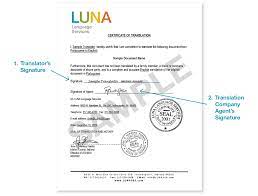
What makes a translation certified? A certified translation is a translation that has been completed by a professional translator who has declared, typically in writing, that the translation is accurate and complete. The translator also includes their signature and sometimes a stamp to authenticate the document.
Why are certified translations important? In many official settings, such as courts, government agencies, academic institutions, and businesses, only certified translations are accepted. These translations are considered reliable and trustworthy because they have been produced by qualified professionals who understand the nuances of both languages.
Furthermore, certified translations are essential for ensuring that the intended meaning of the original document is accurately conveyed in the target language. This is particularly important for legal documents, contracts, academic transcripts, medical records, and other sensitive materials where accuracy is paramount.
When seeking a certified translation service, it is essential to choose a reputable agency or translator with experience in providing accurate and reliable translations. By opting for certified translations, you can have peace of mind knowing that your documents will be accepted and recognized by official authorities.
In conclusion, certified translations play a vital role in facilitating communication across languages and cultures while maintaining accuracy and authenticity. Whether you need to translate personal documents or business materials, choosing certified translations ensures compliance with legal requirements and guarantees the quality of your translated content.
7 Key Benefits of Certified Translations: Ensuring Accuracy, Credibility, and Official Acceptance
- Accepted by official authorities
- Ensure accuracy and reliability
- Maintain the integrity of original documents
- Required for legal and official purposes
- Provide credibility and authenticity
- Performed by qualified professional translators
- Recognized in courts, government agencies, and academic institutions
7 Drawbacks of Certified Translations: Understanding the Costs and Challenges
- Costlier than non-certified translations
- May take longer to complete due to certification process
- Limited availability of certified translators for rare languages
- Certification requirements vary by country, leading to potential confusion
- Additional fees may apply for notarization or apostille services
- Strict adherence to formatting guidelines can be time-consuming
- Certified translations may not be required for all purposes, leading to unnecessary expenses in some cases
Accepted by official authorities
Certified translations hold the significant advantage of being accepted by official authorities. Whether for legal proceedings, immigration applications, academic admissions, or business transactions, having a translation that is certified ensures that the document will be recognized and acknowledged by government agencies, courts, educational institutions, and other official entities. This acceptance provides assurance that the translated content meets the required standards of accuracy and authenticity, making certified translations an essential tool for navigating bureaucratic processes and ensuring compliance with regulatory requirements.
Ensure accuracy and reliability
Certified translations offer the invaluable benefit of ensuring accuracy and reliability in translated documents. Professional translators who provide certified translations are trained to accurately convey the meaning and nuances of the original text in the target language. This meticulous attention to detail guarantees that the translated document maintains its integrity and authenticity, making it a trusted and reliable source of information for various official purposes. The certification process adds an extra layer of assurance that the translation is accurate, complete, and faithful to the original content, instilling confidence in both the content and the credibility of the translated document.
Maintain the integrity of original documents
Certified translations uphold the integrity of original documents by ensuring that the content, context, and meaning remain accurate and faithful to the source material. Professional translators meticulously translate each word and phrase with precision, preserving the legal and technical nuances of the original text. This meticulous attention to detail guarantees that the translated document maintains its authenticity and reliability, making it a trusted and legally recognized representation of the original content.
Required for legal and official purposes
Certified translations are essential for legal and official purposes due to their credibility and accuracy. When it comes to legal documents, such as contracts, court orders, or immigration papers, accuracy is paramount to ensure that the intended meaning is preserved in the translated version. Official institutions and authorities often require certified translations to guarantee the authenticity of the documents being submitted. By obtaining certified translations for legal and official purposes, individuals and organizations can ensure compliance with regulations and trust that their translated documents will be accepted and recognized by the relevant entities.
Provide credibility and authenticity
Certified translations offer a significant advantage by providing credibility and authenticity to translated documents. When a translation is certified, it signifies that a professional translator has verified the accuracy and completeness of the content, adding a layer of trust and reliability to the document. This credibility is crucial in legal, academic, and business contexts where accurate communication is essential for making informed decisions and building trustworthy relationships. By opting for certified translations, individuals and organizations can ensure that their documents are not only linguistically accurate but also carry the necessary authenticity to be accepted and recognized by official entities.
Performed by qualified professional translators
Certified translations offer the significant advantage of being performed by qualified professional translators. These experts possess the necessary language skills, cultural understanding, and subject matter expertise to ensure accurate and high-quality translations. By entrusting your documents to certified translators, you can have confidence in the precision and reliability of the translated content. Their proficiency in both the source and target languages guarantees that nuances, technical terms, and cultural references are accurately conveyed, making certified translations a trusted choice for a wide range of official and business purposes.
Recognized in courts, government agencies, and academic institutions
Certified translations hold a significant advantage in that they are recognized and accepted by courts, government agencies, and academic institutions. This recognition ensures the credibility and validity of the translated documents in official settings, where accuracy and authenticity are paramount. By opting for certified translations, individuals and organizations can confidently submit their documents knowing that they meet the stringent requirements of these authoritative bodies, facilitating smooth communication and compliance with legal standards.
Costlier than non-certified translations
One downside of certified translations is that they tend to be costlier compared to non-certified translations. The certification process involves additional steps, such as verification by a professional translator and the inclusion of a signed statement attesting to the accuracy of the translation. These extra requirements contribute to the higher cost of certified translations. While the added expense may deter some individuals or businesses from opting for certified translations, it is important to consider the value of accuracy, reliability, and official recognition that certified translations provide, especially in legal or official contexts where precision is essential.
May take longer to complete due to certification process
One drawback of certified translations is that they may take longer to complete compared to non-certified translations. The certification process involves additional steps, such as verification by a professional translator, signing of the document, and sometimes obtaining official stamps or seals. These extra requirements can add to the turnaround time of the translation, especially when strict quality control measures are in place to ensure accuracy and authenticity. While the time needed for certification may cause delays in receiving the translated documents, it is a necessary aspect to uphold the credibility and legality of the translation in official settings.
Limited availability of certified translators for rare languages
One significant con of certified translations is the limited availability of certified translators for rare languages. In cases where documents need to be translated into languages that are not commonly spoken or written, finding a certified translator with expertise in that specific language can be challenging. This scarcity of qualified professionals for rare languages can lead to delays in obtaining certified translations and may result in higher costs due to the specialized nature of the translation work required. As a result, individuals and organizations seeking certified translations in less common languages may face difficulties in securing timely and accurate services to meet their needs.
Certification requirements vary by country, leading to potential confusion
One notable con of certified translations is the variation in certification requirements from country to country, which can result in potential confusion for individuals or organizations seeking to use translated documents across different jurisdictions. Different countries may have specific guidelines and standards for what constitutes a certified translation, including the qualifications of the translator, the format of the certification statement, and any additional authentication or notarization requirements. This lack of uniformity can create challenges in ensuring that translated documents meet the necessary criteria for acceptance in various legal, academic, or business contexts, adding complexity and uncertainty to the translation process.
Additional fees may apply for notarization or apostille services
One potential drawback of certified translations is that additional fees may apply for notarization or apostille services. While the cost of the translation itself is standard, the need for notarization or apostille to authenticate the translated document can incur extra expenses. This can be a concern for individuals or businesses working within a tight budget, as these supplementary services are often necessary for official and legal purposes but come with an added financial burden. It is important to consider these potential extra costs when seeking certified translations to ensure full transparency and budget planning.
Strict adherence to formatting guidelines can be time-consuming
Strict adherence to formatting guidelines in certified translations can be a time-consuming aspect of the process. Ensuring that the layout, structure, and visual elements of the translated document match those of the original source document can require meticulous attention to detail and additional time for formatting adjustments. This adherence is necessary to maintain the integrity and professionalism of the certified translation, but it can add complexity and lengthen the overall translation timeline. Despite this challenge, meticulous formatting is essential to meet the stringent requirements of official institutions that demand accuracy not only in content but also in presentation.
Certified translations may not be required for all purposes, leading to unnecessary expenses in some cases
While certified translations offer credibility and authenticity in various official settings, they may not always be necessary for every purpose, potentially resulting in unnecessary expenses for individuals or businesses. In situations where a document does not require official recognition or legal validity, opting for a certified translation may prove to be an extra cost that does not provide additional benefits. It is essential for individuals to assess the specific requirements of their translation needs to determine whether a certified translation is truly warranted, thus avoiding unnecessary expenses in such cases.