Understanding Deep Learning in AI
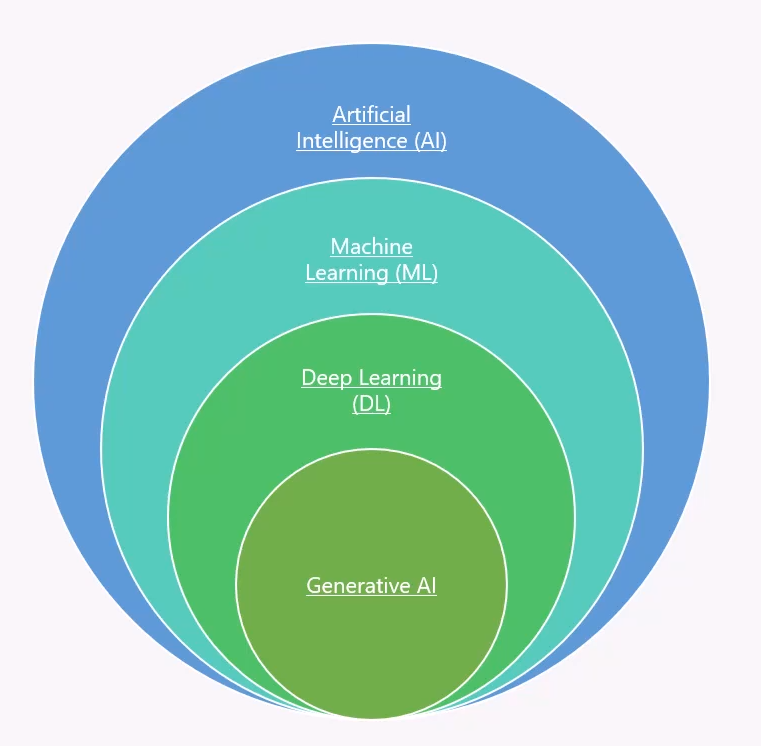
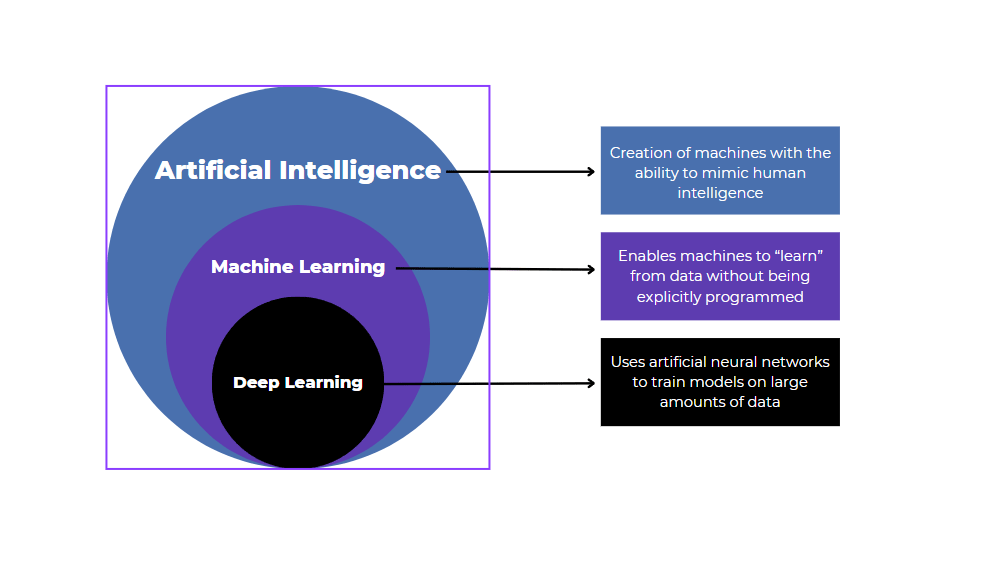
Deep learning is a subset of artificial intelligence (AI) that has revolutionized the way machines understand and interpret data. It mimics the workings of the human brain in processing data for a variety of tasks such as speech recognition, image identification, and decision-making.
What is Deep Learning?
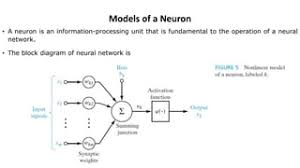
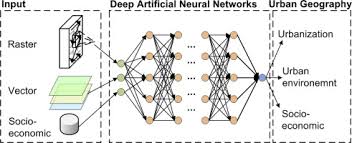
At its core, deep learning involves neural networks with three or more layers. These neural networks attempt to simulate the behavior of the human brain to “learn” from large amounts of data. While a single-layer neural network can still make approximate predictions, additional hidden layers can help optimize accuracy.
How Does Deep Learning Work?
The process begins with inputting raw data into the first layer of the network. Each subsequent layer processes this input further, extracting increasingly complex features until it reaches the final layer, which produces an output or prediction. This layered approach allows deep learning models to handle vast amounts of unstructured data efficiently.
Applications of Deep Learning
- Image and Speech Recognition: Deep learning algorithms excel in identifying patterns in images and sounds. This capability powers facial recognition systems and virtual assistants like Siri and Alexa.
- Natural Language Processing (NLP): By understanding context and semantics, deep learning enhances machine translation services and chatbots.
- Autonomous Vehicles: Self-driving cars use deep learning to interpret sensor data for navigating roads safely.
- Healthcare: In medical imaging, deep learning helps detect anomalies in X-rays or MRIs with high accuracy.
The Future of Deep Learning
The potential for deep learning continues to expand as researchers develop more sophisticated models and techniques. As computational power increases and more data becomes available, deep learning will likely drive further advancements in AI across various sectors.
Challenges Facing Deep Learning
Despite its successes, deep learning faces challenges such as requiring large datasets for training models effectively. Additionally, these models are often seen as “black boxes,” making it difficult to understand how they arrive at specific decisions—a concern for industries where transparency is crucial.
Conclusion
Deep learning represents a significant leap forward in AI technology, offering transformative solutions across industries. As research progresses, its applications will continue to grow, paving the way for smarter machines capable of performing complex tasks with human-like proficiency.
6 Essential Tips for Mastering Deep Learning in AI
- Start with a solid understanding of linear algebra and calculus.
- Familiarize yourself with popular deep learning frameworks like TensorFlow or PyTorch.
- Experiment with different neural network architectures to understand their strengths and weaknesses.
- Preprocess your data carefully to ensure high-quality input for your models.
- Regularly update yourself on the latest research and trends in deep learning.
- Practice coding regularly to improve your implementation skills.
Start with a solid understanding of linear algebra and calculus.
To excel in deep learning in AI, it is crucial to begin with a strong foundation in linear algebra and calculus. These mathematical disciplines serve as the building blocks for understanding the complex algorithms and concepts that underpin deep learning models. Linear algebra helps in grasping the operations performed on vectors and matrices, which are fundamental to neural network computations. Calculus, on the other hand, provides insights into optimization techniques used to train these models effectively. By mastering these core mathematical principles, one can navigate the intricacies of deep learning with confidence and precision.
Familiarize yourself with popular deep learning frameworks like TensorFlow or PyTorch.
Familiarizing yourself with popular deep learning frameworks such as TensorFlow and PyTorch is essential for anyone looking to dive into the field of artificial intelligence. These frameworks provide powerful tools that simplify the process of building and training complex neural networks. TensorFlow, developed by Google, offers a flexible ecosystem for research and production, while PyTorch, created by Facebook’s AI Research lab, is known for its dynamic computation graph and ease of use in prototyping. Both frameworks have extensive communities and resources, making it easier to find tutorials, documentation, and support when tackling deep learning projects. By gaining proficiency in these tools, you can efficiently implement state-of-the-art models and contribute to advancements in AI technology.
Experiment with different neural network architectures to understand their strengths and weaknesses.
Experimenting with different neural network architectures is a crucial step in mastering deep learning, as it allows one to understand the unique strengths and weaknesses of each design. By exploring various architectures, such as convolutional neural networks (CNNs) for image processing or recurrent neural networks (RNNs) for sequential data, practitioners can gain insights into how these models handle specific tasks and data types. This hands-on approach not only enhances one’s ability to select the most suitable architecture for a given problem but also fosters a deeper comprehension of how different layers and configurations affect model performance. Ultimately, this experimentation paves the way for creating more efficient and effective AI solutions tailored to diverse applications.
Preprocess your data carefully to ensure high-quality input for your models.
When delving into deep learning in AI, it is crucial to pay close attention to preprocessing your data meticulously. By carefully preparing and cleaning your datasets, you can ensure that your models receive high-quality input, leading to more accurate and reliable results. Proper data preprocessing helps remove noise, handle missing values, normalize features, and standardize the data format, ultimately enhancing the performance of your deep learning models.
Regularly update yourself on the latest research and trends in deep learning.
Staying updated on the latest research and trends in deep learning is crucial for anyone involved in AI, as this field evolves rapidly with continuous advancements. Regularly engaging with new studies, attending conferences, and participating in online forums can provide valuable insights into cutting-edge techniques and emerging applications. This proactive approach not only enhances one’s understanding of deep learning but also helps in identifying innovative solutions to complex problems. By keeping abreast of the latest developments, professionals can ensure that they are utilizing the most effective strategies and tools available, maintaining a competitive edge in a fast-paced industry.
Practice coding regularly to improve your implementation skills.
To enhance your proficiency in deep learning within AI, it is crucial to engage in regular coding practice. Consistent practice not only sharpens your coding skills but also strengthens your ability to implement complex algorithms effectively. By dedicating time to coding regularly, you can gain a deeper understanding of how different techniques and models function, ultimately boosting your expertise in developing innovative solutions within the realm of AI.