Understanding Artificial Intelligence, Machine Learning, and Deep Learning
In the rapidly evolving world of technology, terms like “Artificial Intelligence” (AI), “Machine Learning” (ML), and “Deep Learning” (DL) are often used interchangeably. However, each of these concepts represents distinct areas of study and application within the broader field of computer science.
Artificial Intelligence: The Big Picture
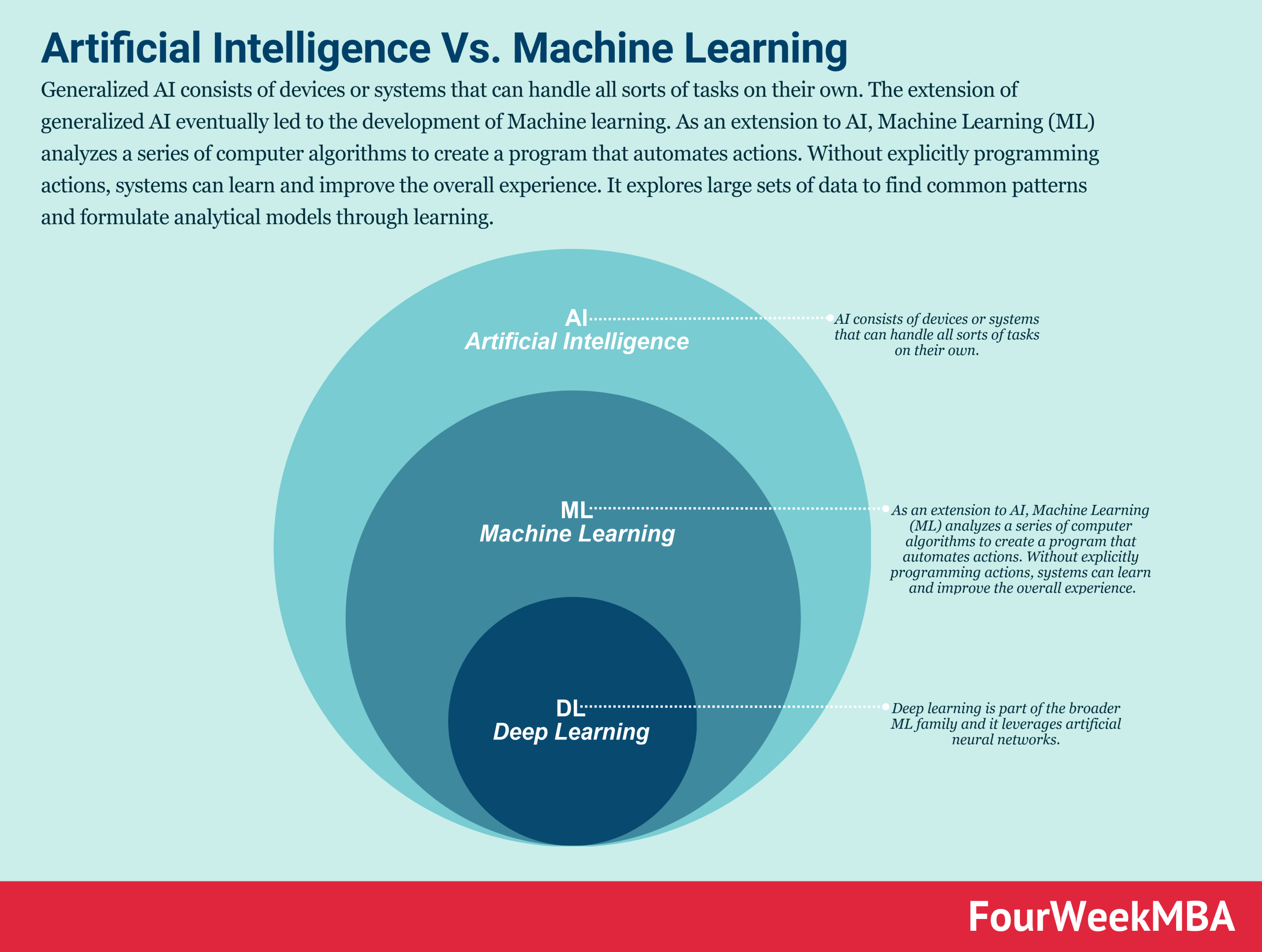
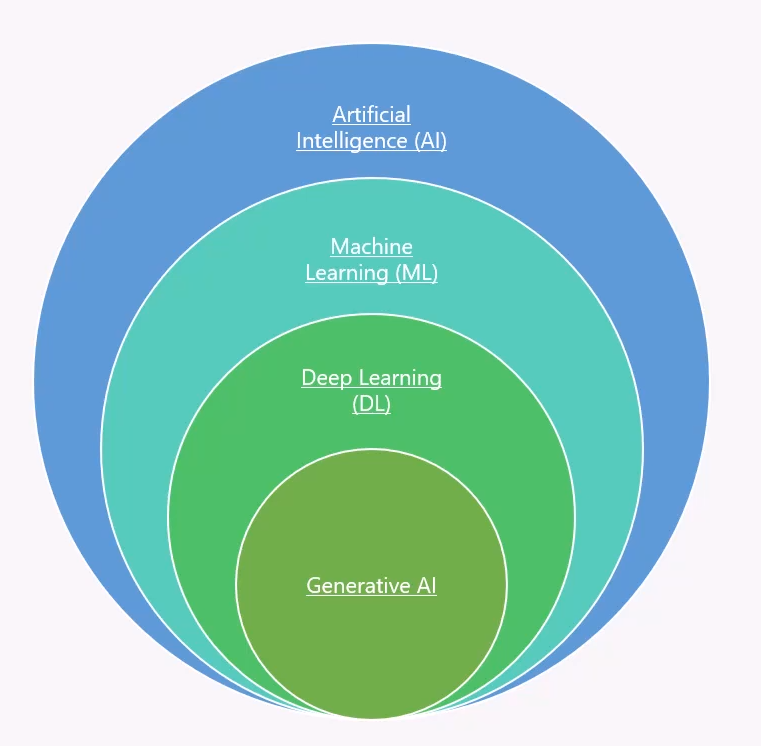
Artificial Intelligence is a branch of computer science aimed at creating systems capable of performing tasks that typically require human intelligence. These tasks include problem-solving, understanding natural language, recognizing patterns, and making decisions. AI is the overarching concept that encompasses both machine learning and deep learning.
Machine Learning: The Heart of AI
Machine Learning is a subset of AI that focuses on building systems that can learn from data and improve their performance over time without being explicitly programmed. ML algorithms identify patterns in data to make predictions or decisions. Common applications include recommendation systems, fraud detection, and image recognition.
Supervised vs Unsupervised Learning
Machine learning can be categorized into supervised and unsupervised learning:
- Supervised Learning: Involves training a model on a labeled dataset, where the desired output is known. The model learns to map inputs to outputs based on this training data.
- Unsupervised Learning: Involves working with unlabeled data. The model tries to identify patterns or groupings within the data without prior knowledge of what the output should be.
Deep Learning: A Step Further
Deep Learning is a specialized subfield of machine learning that uses neural networks with many layers—known as deep neural networks—to analyze complex patterns in large volumes of data. Inspired by the structure and function of the human brain, these networks are particularly effective for tasks such as image classification, speech recognition, and natural language processing.
The power of deep learning lies in its ability to automatically extract features from raw data without manual intervention. This capability has led to significant breakthroughs in areas like autonomous driving and medical image analysis.
The Interconnected Future
The synergy between artificial intelligence, machine learning, and deep learning continues to drive innovation across multiple industries. As these technologies evolve, they hold the promise of transforming how we interact with machines—and each other—by making systems more intelligent and responsive.
Understanding AI, ML, and DL: Key Differences, Applications, Challenges, Skills Needed, and Impact on Industries
- What is Artificial Intelligence (AI) and how does it differ from Machine Learning (ML) and Deep Learning (DL)?
- How are AI, ML, and DL being used in real-world applications?
- What are the main challenges or limitations of implementing AI, ML, and DL technologies?
- What skills or background knowledge are required to work in the field of AI, ML, or DL?
- How do AI, ML, and DL contribute to advancements in fields like healthcare, finance, and autonomous vehicles?
What is Artificial Intelligence (AI) and how does it differ from Machine Learning (ML) and Deep Learning (DL)?
Artificial Intelligence (AI) is a broad field of computer science focused on creating systems that can perform tasks typically requiring human intelligence, such as understanding language, recognizing patterns, and making decisions. Machine Learning (ML), a subset of AI, involves the development of algorithms that enable computers to learn from and make predictions based on data. Unlike traditional programming where rules are explicitly coded, ML systems improve their performance over time through exposure to more data. Deep Learning (DL), a further specialization within ML, utilizes neural networks with many layers to analyze complex patterns in large datasets. While AI encompasses both ML and DL as tools for achieving intelligent behavior, ML focuses on learning from data to improve accuracy and efficiency, and DL leverages advanced neural architectures to tackle more intricate tasks like image and speech recognition.
How are AI, ML, and DL being used in real-world applications?
In real-world applications, Artificial Intelligence (AI), Machine Learning (ML), and Deep Learning (DL) are being utilized across various industries to revolutionize processes and enhance efficiency. AI-powered systems are employed in customer service chatbots to provide personalized assistance, in healthcare for medical image analysis and diagnosis, and in autonomous vehicles for intelligent navigation. ML algorithms are used in financial institutions for fraud detection, in e-commerce platforms for recommendation engines, and in predictive maintenance for manufacturing equipment. Deep Learning techniques are applied in speech recognition technologies like virtual assistants, in natural language processing for sentiment analysis, and in computer vision systems for object detection and recognition. These technologies collectively drive innovation and pave the way for smarter, more adaptive solutions that shape the future of technology integration in our daily lives.
What are the main challenges or limitations of implementing AI, ML, and DL technologies?
Implementing AI, ML, and DL technologies comes with several challenges and limitations that organizations must navigate. One of the primary challenges is the need for large volumes of high-quality data to train models effectively; without sufficient data, these systems may produce inaccurate or biased results. Additionally, there are significant computational resource requirements, as processing complex algorithms and large datasets demands powerful hardware and infrastructure. Another limitation is the lack of transparency in AI models, especially deep learning networks, which can act as “black boxes” where decision-making processes are not easily understood or explained. This opacity raises concerns about accountability and trust in AI-driven decisions. Furthermore, there are ethical considerations regarding privacy and data security, as well as potential biases that can arise from training data that may not be representative of diverse populations. Finally, integrating these advanced technologies into existing systems requires specialized expertise and can involve substantial costs and time investments.
What skills or background knowledge are required to work in the field of AI, ML, or DL?
To work in the field of Artificial Intelligence (AI), Machine Learning (ML), or Deep Learning (DL), a strong foundation in mathematics, particularly in linear algebra, calculus, probability, and statistics, is essential. Proficiency in programming languages such as Python or R is also crucial, as these are commonly used for developing algorithms and models. A background in computer science or a related discipline provides a solid understanding of data structures and algorithms. Familiarity with specialized tools and libraries like TensorFlow, PyTorch, and Scikit-learn is highly beneficial for building and deploying models. Additionally, domain-specific knowledge can be advantageous depending on the application area, such as healthcare or finance. Critical thinking and problem-solving skills are vital for designing effective solutions and interpreting complex data insights. Continuous learning is key due to the rapidly evolving nature of these fields.
How do AI, ML, and DL contribute to advancements in fields like healthcare, finance, and autonomous vehicles?
Artificial Intelligence (AI), Machine Learning (ML), and Deep Learning (DL) play pivotal roles in driving advancements in fields such as healthcare, finance, and autonomous vehicles. In healthcare, AI-powered systems can analyze vast amounts of medical data to assist in disease diagnosis, personalized treatment plans, and drug discovery. ML algorithms enable financial institutions to detect fraudulent activities, predict market trends, and optimize investment strategies. Moreover, DL techniques are revolutionizing autonomous vehicles by enhancing their ability to perceive the environment, make real-time decisions, and navigate safely. The integration of AI, ML, and DL in these industries is propelling innovation and reshaping the future of technology-driven solutions.