AI, Machine Learning, and Deep Learning: Transforming the Future
The fields of Artificial Intelligence (AI), Machine Learning (ML), and Deep Learning are revolutionizing industries across the globe. These technologies are not only transforming how businesses operate but also reshaping the way humans interact with machines. Understanding these concepts is essential for anyone looking to stay ahead in today’s rapidly evolving technological landscape.
What is Artificial Intelligence?
Artificial Intelligence refers to the simulation of human intelligence processes by machines, particularly computer systems. These processes include learning (the acquisition of information and rules for using it), reasoning (using rules to reach approximate or definite conclusions), and self-correction. AI can be classified into two types: narrow AI, which is designed to perform a narrow task (like facial recognition or internet searches), and general AI, which can perform any intellectual task that a human can do.
The Role of Machine Learning
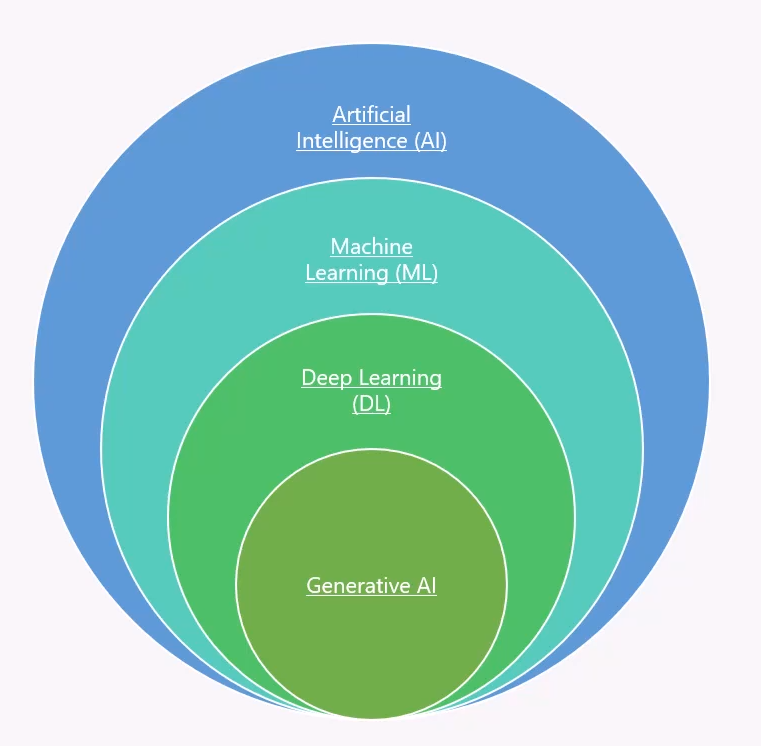
Machine Learning is a subset of AI that focuses on the development of systems that can learn from data, identify patterns, and make decisions with minimal human intervention. Unlike traditional programming where explicit instructions are coded for every scenario, ML algorithms use statistical methods to enable machines to improve their performance over time as they are exposed to more data.
Supervised vs Unsupervised Learning
In supervised learning, algorithms are trained on labeled data sets, which means that each training example is paired with an output label. The goal is for the algorithm to learn a mapping from inputs to outputs so it can predict labels for new data. In contrast, unsupervised learning involves training algorithms on data without labeled responses; the system tries to learn patterns and structure from the input data.
Diving into Deep Learning
Deep Learning is a specialized subset of machine learning that uses neural networks with many layers (hence “deep”) to analyze various factors of data. This approach has been inspired by how human brains process information through interconnected neurons. Deep learning models excel at recognizing complex patterns in large amounts of unstructured data such as images, audio files, and text documents.
The Power of Neural Networks
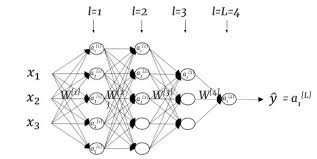
Neural networks consist of layers of nodes or “neurons,” each connected by edges representing weights adjusted during training through backpropagation. These models have achieved impressive results in fields like image recognition (e.g., identifying objects in photos) and natural language processing (e.g., understanding spoken language).
The Impact Across Industries
The integration of AI technologies has led to significant advancements across multiple sectors:
- Healthcare: AI systems assist in diagnosing diseases more accurately and developing personalized treatment plans.
- Finance: Machine learning algorithms help detect fraudulent transactions and automate trading strategies.
- Automotive: Self-driving cars leverage deep learning models for object detection and decision-making on roads.
- E-commerce: Recommendation engines use ML techniques to suggest products based on user preferences.
The Future Outlook
The potential applications for AI continue expanding as research advances further into uncharted territories like quantum computing integration or enhancing ethical decision-making capabilities within autonomous systems. As these technologies evolve rapidly alongside societal needs changing dynamically over time – it’s crucial we remain informed about developments shaping our future world today!
The journey towards fully realizing artificial intelligence’s full potential may still be underway; however one thing remains clear: its transformative power will continue reshaping industries worldwide while unlocking new possibilities never before imagined!
Understanding AI, ML, and Deep Learning: Answers to 9 Common Questions
- What is Artificial Intelligence (AI) and how does it differ from Machine Learning (ML)?
- How does Machine Learning work and what are some common algorithms used in ML?
- What is Deep Learning and how does it relate to Artificial Intelligence?
- Can you explain the concept of neural networks in the context of Deep Learning?
- What are some real-world applications of Artificial Intelligence, Machine Learning, and Deep Learning?
- How can businesses benefit from implementing AI, ML, and Deep Learning technologies?
- Are there any ethical considerations associated with the use of AI and ML in decision-making processes?
- What are the challenges faced by organizations when adopting AI, ML, and Deep Learning solutions?
- How can individuals learn more about AI, ML, and Deep Learning to pursue a career in these fields?
What is Artificial Intelligence (AI) and how does it differ from Machine Learning (ML)?
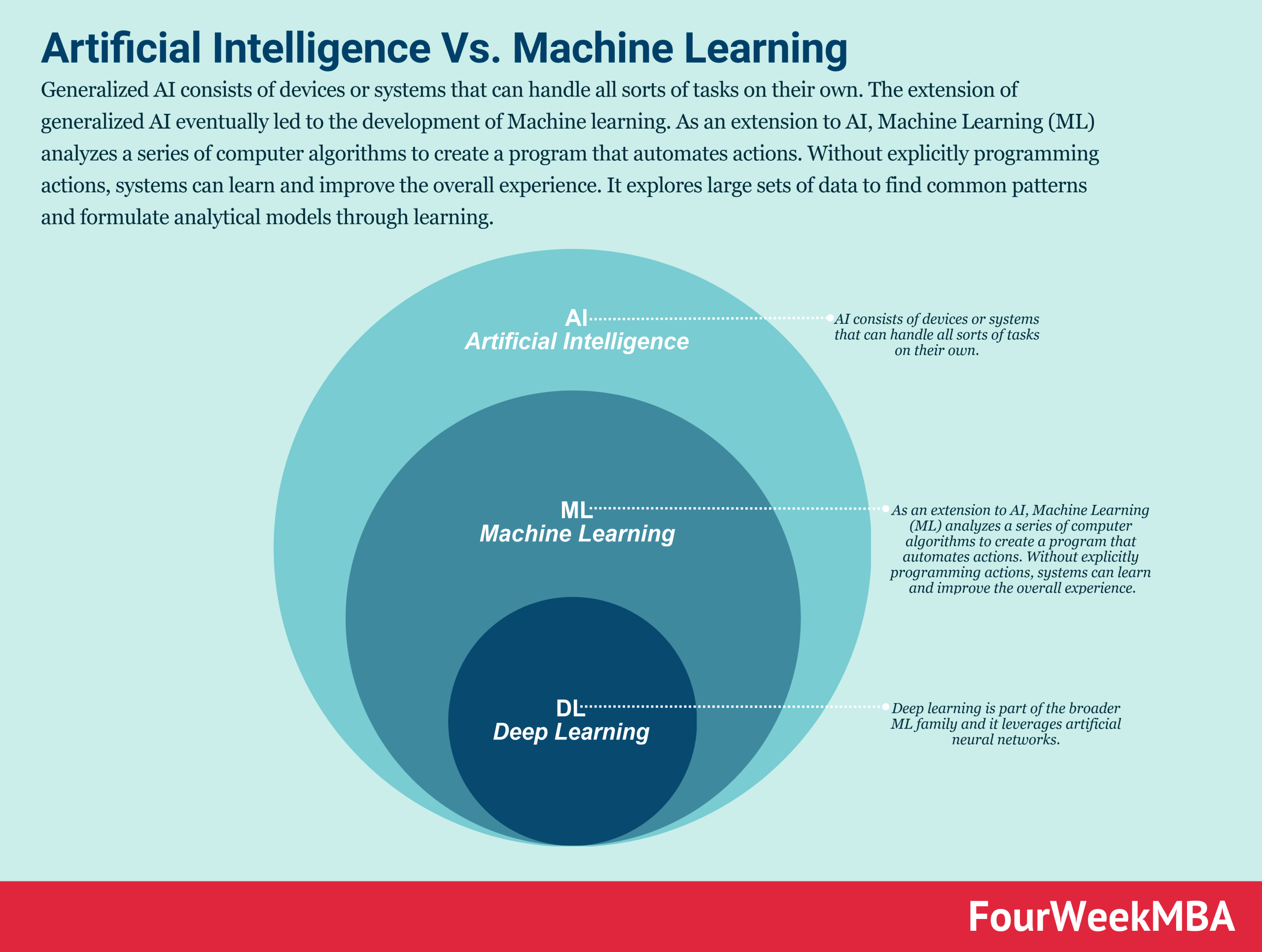
Artificial Intelligence (AI) is a broad field of computer science focused on creating systems capable of performing tasks that typically require human intelligence, such as visual perception, speech recognition, decision-making, and language translation. It encompasses various techniques and approaches to make machines “intelligent.” Machine Learning (ML), on the other hand, is a subset of AI that specifically refers to the use of algorithms and statistical models to enable computers to improve their performance on a specific task through experience or data. While AI aims to simulate human intelligence in machines more generally, ML focuses on developing systems that can learn from data and improve over time without being explicitly programmed for each task. Essentially, all machine learning is AI, but not all AI involves machine learning.
How does Machine Learning work and what are some common algorithms used in ML?
Machine Learning is a branch of Artificial Intelligence that enables machines to learn from data and improve their performance without being explicitly programmed. In essence, it involves training algorithms to recognize patterns in data and make decisions based on that information. Common algorithms used in Machine Learning include supervised learning algorithms like Linear Regression, Decision Trees, Support Vector Machines, and Neural Networks. Unsupervised learning algorithms such as K-means clustering and Principal Component Analysis are also widely used to identify patterns and structures in unlabeled data. Each algorithm has its strengths and weaknesses, making them suitable for different types of tasks within the realm of Machine Learning.
What is Deep Learning and how does it relate to Artificial Intelligence?
Deep Learning is a specialized subset of Machine Learning that focuses on using neural networks with multiple layers to analyze and learn from large amounts of complex data. It mimics the way the human brain operates, allowing computers to recognize patterns, make decisions, and even generate new content. Deep Learning is a crucial component of Artificial Intelligence (AI) because it enables machines to perform tasks that require human-like understanding, such as image and speech recognition, natural language processing, and autonomous decision-making. While AI encompasses a broad range of technologies aimed at simulating human intelligence, Deep Learning provides the advanced capabilities needed for machines to process intricate data and improve their performance over time without explicit programming for each task.
Can you explain the concept of neural networks in the context of Deep Learning?
In the context of Deep Learning, neural networks play a crucial role as the foundational architecture for processing and analyzing complex data. Neural networks are a series of interconnected nodes, or “neurons,” organized in layers that work together to learn patterns and relationships within the data. Each neuron receives input, processes it using an activation function, and passes the output to the next layer of neurons. Through a process known as backpropagation, neural networks adjust their internal parameters (weights) during training to optimize their ability to make accurate predictions or classifications. This iterative learning process allows neural networks to recognize intricate patterns in data, making them powerful tools for tasks such as image recognition, natural language processing, and more within the realm of Deep Learning.
What are some real-world applications of Artificial Intelligence, Machine Learning, and Deep Learning?
Artificial Intelligence, Machine Learning, and Deep Learning have found numerous real-world applications across various industries, transforming how tasks are performed and decisions are made. In healthcare, AI is used for early disease detection and personalized treatment planning through analysis of medical images and patient data. In the financial sector, machine learning algorithms help in fraud detection by identifying unusual patterns in transactions, as well as in algorithmic trading to optimize investment strategies. The automotive industry benefits from deep learning in the development of autonomous vehicles that can navigate roads safely by recognizing objects and making real-time decisions. E-commerce platforms utilize AI-driven recommendation systems to enhance customer experiences by suggesting products based on user behavior and preferences. Additionally, AI technologies are employed in natural language processing applications such as virtual assistants and chatbots, which improve customer service by providing instant responses to inquiries. These applications illustrate the transformative impact of AI technologies on efficiency, accuracy, and innovation across diverse fields.
How can businesses benefit from implementing AI, ML, and Deep Learning technologies?
Implementing AI, ML, and Deep Learning technologies can significantly benefit businesses by enhancing efficiency, improving decision-making, and driving innovation. These technologies enable companies to automate repetitive tasks, reducing operational costs and allowing employees to focus on more strategic activities. By analyzing vast amounts of data quickly and accurately, AI and ML provide valuable insights that can lead to better-informed decisions. Deep Learning models can identify complex patterns in data, leading to improved customer experiences through personalized recommendations and targeted marketing strategies. Additionally, these technologies help businesses stay competitive by fostering innovation in product development and optimizing supply chain management. Overall, integrating AI, ML, and Deep Learning into business operations can lead to increased productivity, profitability, and a stronger market presence.
Are there any ethical considerations associated with the use of AI and ML in decision-making processes?
Yes, there are significant ethical considerations associated with the use of AI and ML in decision-making processes. One major concern is bias, as AI systems can inadvertently perpetuate or even amplify existing biases present in the data they are trained on, leading to unfair or discriminatory outcomes. Privacy is another critical issue, as these technologies often require large amounts of data, raising concerns about how personal information is collected, stored, and used. Additionally, transparency and accountability are essential; it can be challenging to understand how complex AI models arrive at their decisions, making it difficult to hold them accountable for errors or harmful consequences. Ensuring that AI and ML systems are developed and deployed responsibly involves addressing these ethical challenges through careful design, regulation, and ongoing oversight.
What are the challenges faced by organizations when adopting AI, ML, and Deep Learning solutions?
Adopting AI, ML, and Deep Learning solutions presents several challenges for organizations. One significant hurdle is the requirement for high-quality data; these technologies rely heavily on large datasets that are clean, well-labeled, and relevant. Additionally, there is a need for skilled personnel who understand both the technical aspects of these technologies and the specific business context in which they will be applied. The integration of AI systems with existing infrastructure can also be complex and resource-intensive. Furthermore, organizations must consider ethical implications and ensure compliance with regulations regarding data privacy and security. Finally, managing expectations is crucial, as the implementation of AI solutions may not yield immediate results or may require iterative refinement to achieve desired outcomes.
How can individuals learn more about AI, ML, and Deep Learning to pursue a career in these fields?
To pursue a career in AI, ML, and Deep Learning, individuals can start by building a strong foundation in mathematics, particularly in areas such as linear algebra, calculus, probability, and statistics. Enrolling in online courses or degree programs focused on computer science or data science can provide essential knowledge and skills. Platforms like Coursera, edX, and Udacity offer specialized courses on AI and machine learning from leading universities. Additionally, gaining hands-on experience through projects and internships is crucial; using tools like TensorFlow or PyTorch can help individuals apply theoretical concepts to real-world problems. Joining online communities and attending workshops or conferences can also provide valuable networking opportunities and insights into the latest industry trends. Continuous learning and staying updated with the latest research papers will further enhance one’s expertise in these dynamic fields.