Understanding AI Deep Learning
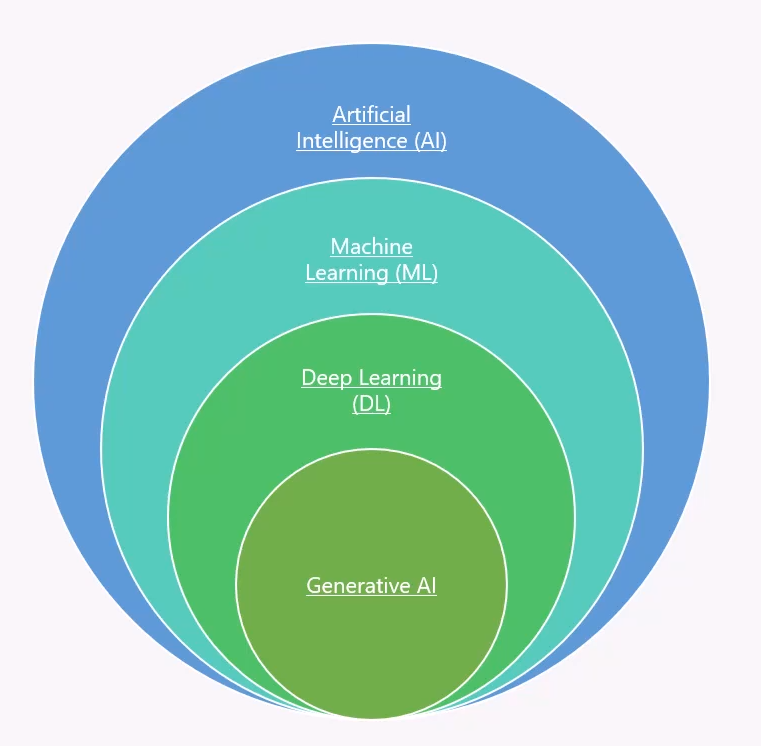
Artificial Intelligence (AI) has rapidly evolved over the past few decades, with deep learning emerging as one of its most powerful and transformative branches. Deep learning is a subset of machine learning that uses neural networks with many layers to analyze various types of data and make predictions or decisions without human intervention.
What is Deep Learning?
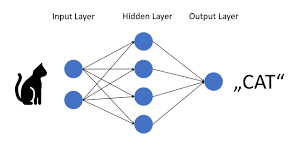
Deep learning models are inspired by the structure and function of the human brain, specifically its neural networks. These models consist of layers of interconnected nodes, or “neurons,” that process input data, extract features, and deliver outputs. The term “deep” refers to the number of layers in these networks; deeper networks can capture more complex patterns in data.
How Does Deep Learning Work?
Deep learning algorithms learn from large amounts of data through a process called training. During training, the model adjusts its internal parameters to minimize errors in its predictions. This is usually done using a technique called backpropagation, where errors are propagated back through the network to update weights.
The power of deep learning lies in its ability to automatically discover intricate structures in high-dimensional data without explicit programming. This makes it particularly effective for tasks such as image and speech recognition, natural language processing, and even autonomous driving.
Applications of Deep Learning
- Image Recognition: Deep learning is at the heart of modern computer vision systems used in facial recognition technology, medical imaging diagnostics, and automated video analysis.
- Speech Recognition: Virtual assistants like Siri and Alexa rely on deep learning algorithms to understand and respond to voice commands accurately.
- Natural Language Processing (NLP): From chatbots to translation services, deep learning enhances machines’ ability to understand and generate human language.
- Autonomous Vehicles: Self-driving cars use deep learning models to interpret sensory data from cameras and sensors for navigation and obstacle avoidance.
The Future of Deep Learning
The future of deep learning holds immense potential as researchers continue to develop more sophisticated architectures like convolutional neural networks (CNNs), recurrent neural networks (RNNs), and transformers. These advancements promise further breakthroughs across industries such as healthcare, finance, entertainment, and beyond.
The challenges ahead include improving model interpretability, reducing computational costs, ensuring ethical use cases, and addressing biases inherent in training datasets. As solutions emerge for these challenges, deep learning will continue to revolutionize how we interact with technology.
Understanding Deep Learning: Key Questions Answered
- What is deep learning in AI?
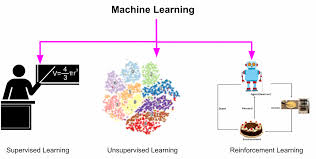
- How does deep learning differ from traditional machine learning?
- What are neural networks and how are they used in deep learning?
- What are some common applications of deep learning?
- Can you explain the training process of a deep learning model?
- What are the challenges associated with implementing deep learning algorithms?
- How is deep learning shaping the future of artificial intelligence?
What is deep learning in AI?
Deep learning in AI is a specialized subset of machine learning that focuses on using artificial neural networks with multiple layers to process and analyze complex data. These networks are designed to mimic the human brain’s neural structure, allowing computers to learn from large amounts of data and improve their performance over time. Unlike traditional machine learning algorithms that require manual feature extraction, deep learning models automatically identify patterns and features in raw data, making them particularly effective for tasks such as image and speech recognition, natural language processing, and more. By utilizing vast amounts of computational power and data, deep learning has enabled significant advancements in AI capabilities, driving innovation across various industries.
How does deep learning differ from traditional machine learning?
Deep learning differs from traditional machine learning primarily in how it processes data and the complexity of models used. Traditional machine learning often relies on manual feature extraction, where human experts identify relevant features from raw data to train algorithms like decision trees or support vector machines. In contrast, deep learning uses neural networks with multiple layers that automatically learn to extract features and patterns directly from the raw data, eliminating the need for manual intervention. This allows deep learning models to handle large volumes of unstructured data, such as images or text, more effectively and achieve higher accuracy in complex tasks like image recognition and natural language processing. Additionally, deep learning models typically require more computational power and larger datasets for training compared to traditional machine learning approaches.
What are neural networks and how are they used in deep learning?
Neural networks are a fundamental component of deep learning, mimicking the structure and function of the human brain to process and analyze complex data. These networks consist of layers of interconnected nodes, or “neurons,” that receive input data, perform computations, and generate output predictions. In deep learning, neural networks with multiple layers can learn intricate patterns and relationships in data through training processes that adjust internal parameters to minimize errors. By leveraging the power of neural networks, deep learning algorithms can excel in tasks such as image recognition, speech processing, natural language understanding, and more, making them essential tools for unlocking the full potential of artificial intelligence technologies.
What are some common applications of deep learning?
Deep learning, a powerful subset of artificial intelligence, finds its applications across various industries. Some common applications of deep learning include image recognition, where it powers facial recognition technology and medical imaging diagnostics. In speech recognition, virtual assistants like Siri and Alexa utilize deep learning algorithms to understand and respond to voice commands accurately. Natural Language Processing (NLP) benefits from deep learning in chatbots and translation services, enhancing machines’ language understanding capabilities. Additionally, autonomous vehicles rely on deep learning models for interpreting sensory data from cameras and sensors to navigate and avoid obstacles effectively. These are just a few examples of how deep learning is transforming different fields with its ability to analyze complex data patterns autonomously.
Can you explain the training process of a deep learning model?
The training process of a deep learning model involves feeding large amounts of data into the neural network to enable it to learn and make predictions. During training, the model adjusts its internal parameters, known as weights, based on the errors between its predictions and the actual outcomes in the training data. This adjustment is achieved through an iterative process called backpropagation, where the errors are propagated back through the network to update the weights. The goal is for the model to minimize these errors over time, improving its ability to generalize and make accurate predictions on new, unseen data. Training a deep learning model requires significant computational resources and can take time depending on the complexity of the network and size of the dataset.
What are the challenges associated with implementing deep learning algorithms?
Implementing deep learning algorithms presents several challenges that organizations and researchers need to address. One major challenge is the requirement for large amounts of high-quality data to train these complex models effectively. Data preprocessing, cleaning, and labeling can be time-consuming and resource-intensive tasks. Additionally, deep learning models are computationally intensive and require powerful hardware accelerators like GPUs to train efficiently. Another challenge is the interpretability of deep learning models, as their complex architectures make it difficult to understand how they arrive at decisions or predictions. Overcoming these challenges requires a combination of domain expertise, computational resources, robust data pipelines, and ongoing research into model explainability and transparency.
How is deep learning shaping the future of artificial intelligence?
Deep learning is significantly shaping the future of artificial intelligence by driving advancements in how machines perceive, understand, and interact with the world. As a subset of AI, deep learning leverages complex neural networks to process vast amounts of data, enabling systems to learn and improve over time without explicit programming. This capability is transforming various sectors, from healthcare, where it aids in diagnosing diseases through medical imaging analysis, to autonomous vehicles that rely on real-time data processing for navigation and safety. Furthermore, deep learning enhances natural language processing tasks, making virtual assistants more intuitive and conversational AI more effective. As these technologies continue to evolve, deep learning will play a pivotal role in developing intelligent systems that can perform tasks with human-like understanding and efficiency, ultimately pushing the boundaries of what artificial intelligence can achieve.