Deep Learning AI: Revolutionizing Technology
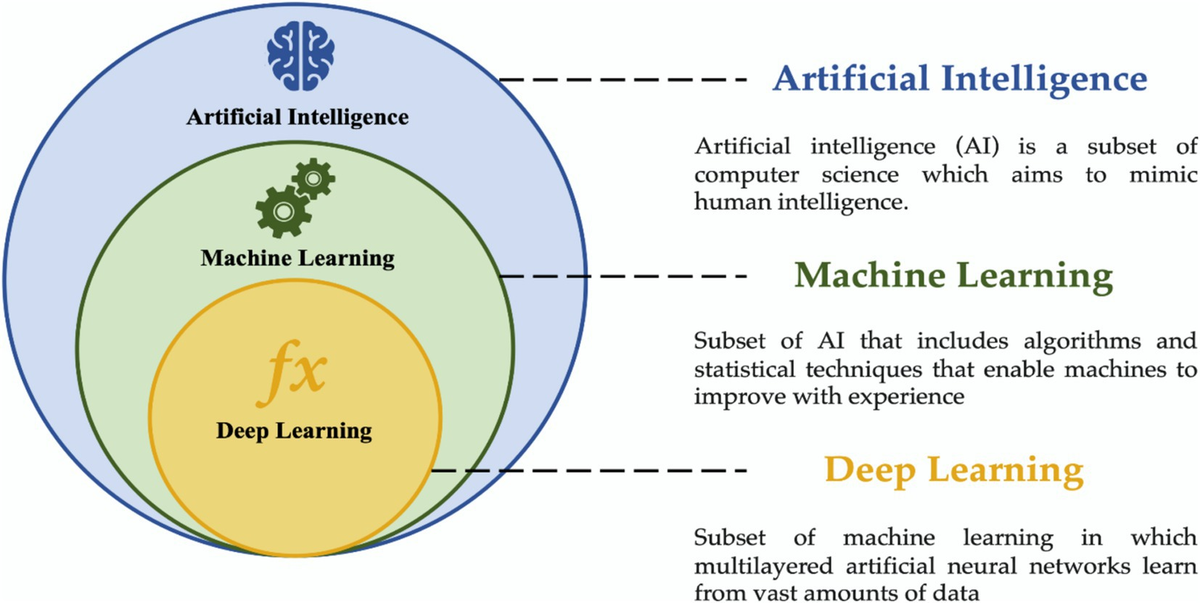
In the realm of artificial intelligence, deep learning has emerged as a transformative technology that is reshaping industries and enhancing the way we interact with machines. This subset of machine learning is inspired by the structure and function of the human brain, specifically neural networks, and it enables computers to learn from vast amounts of data.
What is Deep Learning?
Deep learning is a type of machine learning that uses neural networks with many layers—hence “deep”—to analyze various factors of data. Unlike traditional algorithms that rely on structured data, deep learning can process unstructured data such as images, audio, and text. This capability makes it particularly powerful for tasks like image recognition, natural language processing, and autonomous driving.
The Architecture of Neural Networks
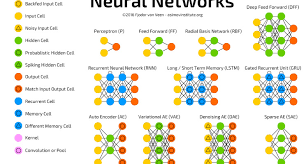
At the core of deep learning are artificial neural networks (ANNs), which are composed of layers of nodes or neurons. Each neuron receives input, processes it through an activation function, and passes on the output to the next layer. The power of deep learning lies in its ability to automatically discover intricate patterns in large datasets by adjusting weights through backpropagation during training.
Applications of Deep Learning
The applications for deep learning are vast and varied:
- Image Recognition: Deep learning algorithms can identify objects within images with high accuracy. This technology is used in facial recognition systems and medical imaging diagnostics.
- Natural Language Processing (NLP): From chatbots to translation services, NLP powered by deep learning allows machines to understand and respond to human language effectively.
- Autonomous Vehicles: Self-driving cars use deep learning models to interpret sensor data for navigation and obstacle detection.
- Healthcare: In healthcare, deep learning aids in predicting disease outcomes and personalizing treatment plans based on patient data.
The Future of Deep Learning
The future holds exciting possibilities for deep learning as research continues to advance. Improvements in computational power and access to larger datasets will drive further breakthroughs. Additionally, innovations such as transfer learning and reinforcement learning are expected to enhance the capabilities of AI systems even further.
As we continue exploring these frontiers, ethical considerations around privacy, bias, and transparency will be crucial in ensuring that deep learning technologies benefit society as a whole.
Conclusion
Deep learning is at the forefront of AI innovation, offering unprecedented opportunities across various fields. As this technology evolves, its potential to revolutionize industries while improving everyday life becomes increasingly apparent. By harnessing its power responsibly, we can look forward to a future where intelligent machines enhance human capabilities like never before.
Understanding Deep Learning AI: Key Differences, Types, and Applications
- What is the difference between ML and DL?
- What is the difference between AI and deep learning?
- What is deep learning AI?
- What is deep learning and how is it different from AI?
- What are the 4 types of AI learning?
- Is ChatGPT a deep learning model?
- What is a deep AI?
- What is deep learning AI in healthcare?
What is the difference between ML and DL?
When discussing the difference between machine learning (ML) and deep learning (DL), it is important to understand that deep learning is a subset of machine learning. While both ML and DL are branches of artificial intelligence that involve training algorithms to learn from data, the key distinction lies in their approach to processing information. Machine learning algorithms rely on feature engineering, where human experts manually select and extract relevant features from data, while deep learning algorithms use neural networks with multiple layers to automatically learn hierarchical representations of data. In essence, deep learning excels at handling unstructured data like images and text, making it particularly effective for tasks such as image recognition and natural language processing.
What is the difference between AI and deep learning?
Artificial Intelligence (AI) is a broad field that encompasses various techniques and technologies aimed at creating machines capable of performing tasks that typically require human intelligence, such as problem-solving, understanding natural language, and recognizing patterns. Deep learning, on the other hand, is a specific subset of machine learning within AI that focuses on using neural networks with multiple layers to analyze complex data patterns. While AI includes a wide range of approaches like rule-based systems and traditional machine learning algorithms, deep learning is particularly known for its ability to process vast amounts of unstructured data, such as images and text, making it highly effective for tasks like image recognition and natural language processing. In essence, deep learning is one of the many tools used within the broader scope of AI to achieve intelligent behavior in machines.
What is deep learning AI?
Deep learning AI is a subset of artificial intelligence that focuses on algorithms inspired by the structure and function of the brain’s neural networks. It involves the use of multi-layered artificial neural networks to process and analyze vast amounts of data, enabling machines to make decisions, recognize patterns, and perform complex tasks with minimal human intervention. Unlike traditional machine learning, which often requires manual feature extraction, deep learning automatically identifies features through its layered architecture. This makes it particularly effective for handling unstructured data such as images, audio, and text. By leveraging deep learning, AI systems can achieve remarkable accuracy in applications like image recognition, natural language processing, and autonomous driving.
What is deep learning and how is it different from AI?
Deep learning is a specialized subset of artificial intelligence (AI) that focuses on using neural networks with multiple layers to analyze and interpret complex data. While AI is a broad field encompassing various techniques to create intelligent systems, deep learning specifically utilizes algorithms modeled after the human brain to process data in a structured way. This approach allows deep learning models to automatically discover patterns and features in large datasets, making them highly effective for tasks such as image recognition, natural language processing, and speech recognition. In contrast, traditional AI methods might rely on predefined rules or simpler algorithms that do not have the same capacity for handling unstructured data. Thus, deep learning represents a more advanced and nuanced approach within the wider spectrum of AI technologies.
What are the 4 types of AI learning?
In the realm of artificial intelligence, there are four primary types of AI learning methods that enable machines to acquire knowledge and improve their performance over time. These are supervised learning, unsupervised learning, semi-supervised learning, and reinforcement learning. Supervised learning involves training a model on a labeled dataset, where the input-output pairs are known, allowing the model to learn by example. Unsupervised learning, on the other hand, deals with unlabeled data and focuses on identifying patterns or structures within the data without explicit guidance. Semi-supervised learning is a hybrid approach that utilizes both labeled and unlabeled data to improve learning accuracy. Lastly, reinforcement learning is based on an agent interacting with an environment to maximize cumulative rewards through trial and error. Each of these methods has distinct applications and strengths, contributing to the diverse capabilities of deep learning AI systems.
Is ChatGPT a deep learning model?
Yes, ChatGPT is indeed a deep learning model. ChatGPT is based on the GPT (Generative Pre-trained Transformer) architecture, which is a type of deep learning model known for its ability to generate human-like text responses. By leveraging deep neural networks with multiple layers, ChatGPT can understand and generate conversational responses in a wide range of contexts. This deep learning approach enables ChatGPT to learn from vast amounts of text data and continuously improve its language understanding and generation capabilities.
What is a deep AI?
Deep AI, often referred to as deep learning, is a subset of artificial intelligence that focuses on neural networks with many layers to model complex patterns in large amounts of data. Unlike traditional AI systems that rely on predefined rules and structured data, deep AI uses these layered neural networks to automatically learn representations from unstructured data such as images, audio, and text. This approach mimics the human brain’s ability to recognize patterns and make decisions, enabling machines to perform tasks like image recognition, natural language processing, and autonomous driving with high accuracy. Deep AI’s capacity for learning intricate features from raw data makes it a powerful tool for advancing technology across various fields.
What is deep learning AI in healthcare?
Deep learning AI in healthcare refers to the application of sophisticated neural network algorithms to analyze complex medical data and improve patient outcomes. By leveraging large datasets, such as medical images, electronic health records, and genomic information, deep learning models can identify patterns and insights that might be missed by traditional methods. These models are particularly effective in tasks like diagnosing diseases from medical scans, predicting patient outcomes, personalizing treatment plans, and even discovering new drugs. The adoption of deep learning AI in healthcare promises to enhance diagnostic accuracy, streamline clinical workflows, and ultimately lead to more personalized and effective care for patients. However, it also necessitates careful consideration of ethical issues such as data privacy and algorithmic bias.