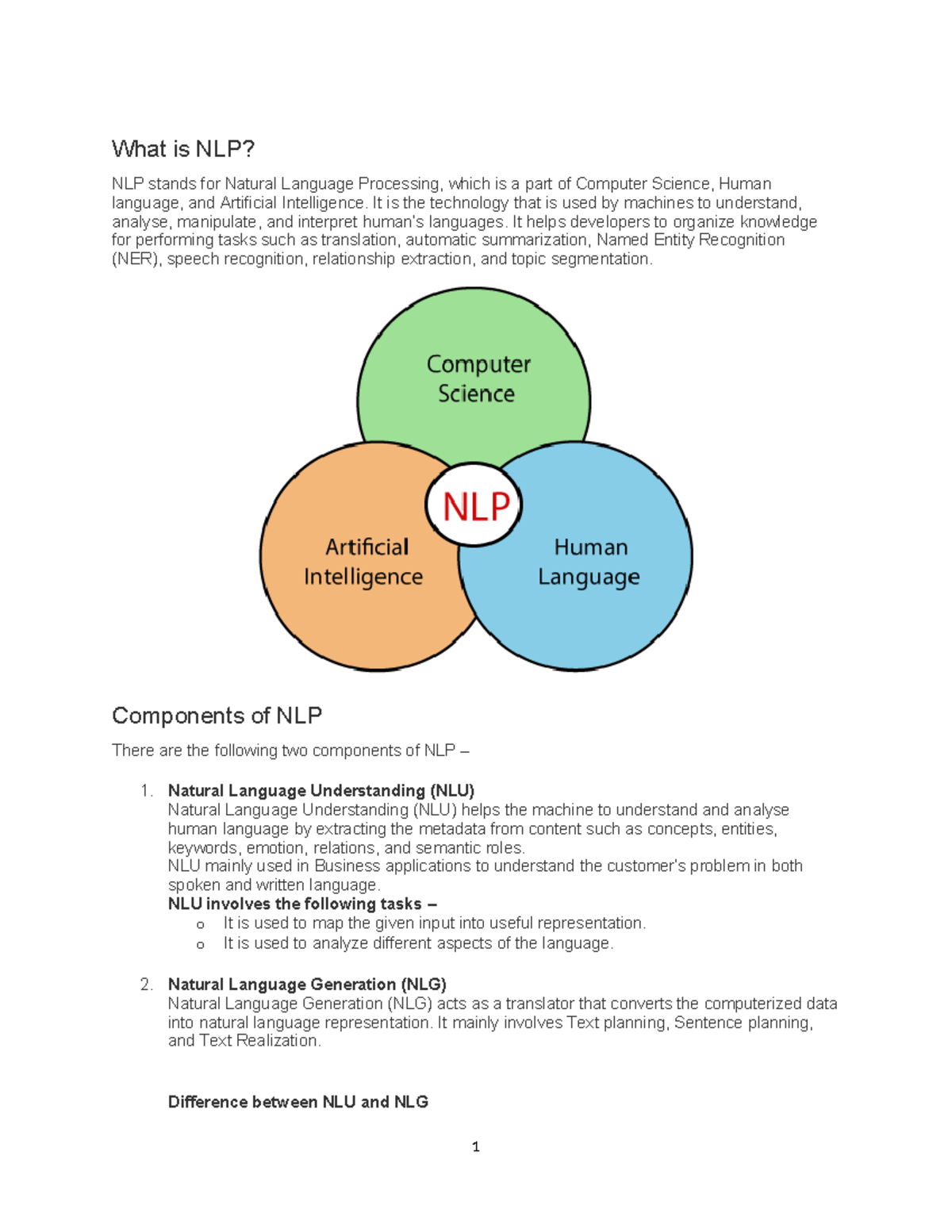
The Power of English Natural Language Processing (NLP)
Natural Language Processing (NLP) is a branch of artificial intelligence that focuses on the interaction between computers and humans using natural language. When it comes to NLP in English, the possibilities and applications are vast and transformative.
English NLP has revolutionized the way we interact with technology. From virtual assistants like Siri and Alexa to language translation tools and sentiment analysis software, English NLP plays a crucial role in making human-computer interactions more intuitive and seamless.
One of the key strengths of English NLP is its ability to analyze and understand human language patterns. By processing large amounts of text data, NLP algorithms can extract meaningful insights, identify sentiment, categorize content, and even generate human-like responses.
In the field of business, English NLP is used for various applications such as customer service chatbots, email categorization, social media monitoring, and market trend analysis. By harnessing the power of NLP, businesses can streamline operations, improve customer satisfaction, and gain valuable insights from textual data.
English NLP also plays a vital role in academic research and linguistic studies. Researchers use NLP techniques to analyze texts, extract information from large corpora, study language evolution, and even detect plagiarism. The possibilities for using English NLP in research are endless.
As technology continues to advance, the potential for English NLP to enhance our daily lives grows exponentially. With ongoing developments in machine learning and deep learning algorithms, we can expect even more sophisticated applications of English NLP in areas such as healthcare, education, law enforcement, and beyond.
In conclusion, English Natural Language Processing is a powerful tool that has transformed the way we interact with technology and process textual data. Its applications are diverse and impactful across various industries, making it an essential component of modern artificial intelligence systems.
Exploring English NLP: Answers to 9 Frequently Asked Questions
- What is English Natural Language Processing (NLP)?
- How does English NLP work?
- What are the applications of English NLP?
- What are the benefits of using English NLP?
- Is English NLP used in virtual assistants like Siri and Alexa?
- How is English NLP used in business?
- What role does English NLP play in academic research?
- What advancements are being made in English NLP technology?
- How can I learn more about English NLP and its implementation?
What is English Natural Language Processing (NLP)?
English Natural Language Processing (NLP) is a field of artificial intelligence that focuses on enabling computers to understand, interpret, and generate human language in a way that is both meaningful and natural. In essence, English NLP empowers machines to process and analyze text data in a manner that mimics human language comprehension. By leveraging advanced algorithms and linguistic rules, English NLP technology can perform tasks such as text translation, sentiment analysis, speech recognition, and information extraction. This capability revolutionizes the interaction between humans and machines, enhancing communication, automation, and decision-making processes across various industries and applications.
How does English NLP work?
English Natural Language Processing (NLP) works by utilizing algorithms and linguistic rules to process and analyze human language data in English. The process involves various steps such as tokenization, parsing, semantic analysis, and machine learning to understand the structure and meaning of text. NLP algorithms break down sentences into individual words or tokens, identify parts of speech, extract entities, and infer relationships between words to derive context and intent. By training models on large datasets of English text, NLP systems can learn patterns and nuances of the language, enabling them to perform tasks like sentiment analysis, language translation, text summarization, and more with a high level of accuracy and efficiency.
What are the applications of English NLP?
The applications of English Natural Language Processing (NLP) are wide-ranging and impactful. From virtual assistants and chatbots that provide personalized customer service to sentiment analysis tools that gauge public opinion on social media, English NLP plays a crucial role in enhancing human-computer interactions. In business, NLP is utilized for tasks such as email classification, market trend analysis, and content categorization. Moreover, in academic research, English NLP is instrumental in studying language patterns, analyzing textual data, and detecting plagiarism. The versatility of English NLP extends to various fields including healthcare, education, law enforcement, and more, showcasing its significance in modern technology and society.
What are the benefits of using English NLP?
The benefits of using English Natural Language Processing (NLP) are numerous and impactful. By leveraging NLP technology, users can automate tasks that involve processing and understanding human language, leading to increased efficiency and productivity. English NLP enables accurate sentiment analysis, text summarization, and information extraction from vast amounts of textual data, providing valuable insights for businesses and researchers. Additionally, NLP tools facilitate multilingual communication, making it easier to bridge language barriers in a globalized world. Overall, the benefits of using English NLP extend to improved customer service, enhanced decision-making processes, and innovative applications across various industries.
Is English NLP used in virtual assistants like Siri and Alexa?
Yes, English Natural Language Processing (NLP) is a fundamental component utilized in virtual assistants like Siri and Alexa. These intelligent voice-activated systems rely on English NLP algorithms to understand and interpret human language input. By processing spoken commands or queries, NLP enables virtual assistants to generate appropriate responses, execute tasks, and provide users with personalized assistance. The integration of English NLP in virtual assistants has revolutionized the way we interact with technology, making human-computer communication more intuitive and natural.
How is English NLP used in business?
English Natural Language Processing (NLP) is widely utilized in business for a variety of applications that enhance operational efficiency and customer engagement. In the realm of customer service, businesses employ NLP-powered chatbots to provide instant responses to customer inquiries, streamline support processes, and improve overall user experience. Additionally, English NLP is leveraged for sentiment analysis of customer feedback on social media platforms, enabling companies to gauge public opinion, identify trends, and tailor their marketing strategies accordingly. Furthermore, in the field of data analysis, NLP algorithms are employed to categorize and extract insights from vast amounts of text data, aiding in market trend analysis, competitor monitoring, and decision-making processes. Overall, English NLP plays a crucial role in helping businesses automate tasks, understand customer sentiments, and derive actionable intelligence from textual information.
What role does English NLP play in academic research?
English Natural Language Processing (NLP) plays a crucial role in academic research by providing researchers with powerful tools to analyze, interpret, and extract valuable insights from vast amounts of textual data. In the realm of academic research, English NLP enables scholars to automate the process of text analysis, allowing them to uncover patterns, trends, and relationships within written content more efficiently. Researchers use NLP techniques to conduct sentiment analysis, topic modeling, information retrieval, and even plagiarism detection. By leveraging English NLP in their studies, academics can enhance their research methodologies, gain deeper understanding of language structures and patterns, and ultimately contribute to advancements in various fields of study.
What advancements are being made in English NLP technology?
Advancements in English NLP technology are rapidly evolving, pushing the boundaries of what is possible in natural language processing. Researchers and developers are constantly exploring new techniques and algorithms to improve the accuracy, efficiency, and scalability of NLP systems. Some key advancements include the integration of deep learning models like transformers, which have significantly enhanced the ability to understand context and generate more human-like responses. Additionally, there is a growing focus on multilingual NLP models that can handle multiple languages seamlessly. Furthermore, advancements in transfer learning and pre-trained language models have led to breakthroughs in various NLP tasks such as text classification, sentiment analysis, language translation, and more. As the field continues to progress, we can expect even more exciting innovations that will further revolutionize the capabilities of English NLP technology.
How can I learn more about English NLP and its implementation?
For those seeking to deepen their understanding of English Natural Language Processing (NLP) and explore its practical application, there are various resources available to facilitate learning. One effective approach is to enroll in online courses or workshops specifically tailored to NLP in English, where participants can gain hands-on experience with tools and techniques used in NLP projects. Additionally, reading research papers, articles, and books on the subject can provide valuable insights into the theoretical foundations and latest advancements in English NLP. Engaging with online forums, attending conferences, and networking with professionals in the field are also great ways to stay updated on trends and best practices in English NLP implementation. By combining theoretical knowledge with practical experience and staying connected with the NLP community, individuals can enhance their expertise and proficiency in English NLP.