The Process of Natural Language Processing (NLP)
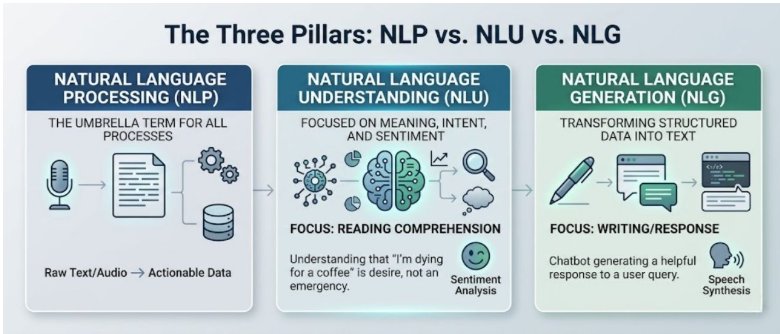
Natural Language Processing (NLP) is a branch of artificial intelligence that focuses on the interaction between computers and humans using natural language. NLP enables computers to understand, interpret, and generate human language, allowing for seamless communication between machines and humans. The process of NLP involves several key steps that work together to analyze and process human language data.
Step 1: Tokenization
Tokenization is the process of breaking down text into smaller units called tokens, which can be words, phrases, or symbols. This step helps in preparing the text for further analysis by separating it into meaningful components.
Step 2: Stopword Removal
In this step, common words that do not carry significant meaning, such as “and,” “the,” and “is,” are removed from the text. This helps in reducing noise in the data and improving the accuracy of analysis.
Step 3: Lemmatization or Stemming
Lemmatization and stemming are techniques used to reduce words to their base or root form. This step helps in standardizing words with similar meanings, making it easier for computers to process and analyze the text.
Step 4: Part-of-Speech Tagging
Part-of-speech tagging involves categorizing words in a text based on their grammatical properties, such as nouns, verbs, adjectives, etc. This step helps in understanding the syntactic structure of sentences and extracting valuable information from the text.
Step 5: Named Entity Recognition
Named Entity Recognition (NER) is the process of identifying named entities in text, such as names of people, organizations, locations, etc. This step helps in extracting important information from unstructured text data.
Step 6: Sentiment Analysis
Sentiment analysis is a technique used to determine the sentiment or emotion expressed in a piece of text. This step involves classifying text as positive, negative, or neutral based on the tone and context of the language used.
In conclusion,
The process of NLP involves a series of steps that enable computers to understand and analyze human language data effectively. By leveraging these techniques, NLP systems can extract valuable insights from text data, automate tasks like translation and summarization, and facilitate seamless communication between humans and machines.
Understanding the Key Phases and Processes of Natural Language Processing (NLP)
- What are the 4 phases of NLP?
- What is the process of NLP?
- What are the 5 phases of NLP?
- What is NLP and how does it work?
- Is ChatGPT an NLP?
- What are the 7 layers of NLP?
- How does NLP work step by step?
What are the 4 phases of NLP?
The process of Natural Language Processing (NLP) typically involves four key phases: 1. Text Preprocessing – where the raw text data is cleaned, tokenized, and transformed into a format suitable for analysis. 2. Feature Extraction – where relevant features are identified and extracted from the text data to represent its meaning and context. 3. Model Training – where machine learning algorithms are applied to train a model on the processed text data to perform tasks such as sentiment analysis, named entity recognition, or language translation. 4. Evaluation and Deployment – where the trained model is evaluated for performance and accuracy before being deployed for real-world applications. These phases work together to enable NLP systems to understand and process human language effectively.
What is the process of NLP?
The process of Natural Language Processing (NLP) involves several key steps that enable computers to understand, interpret, and generate human language. It typically begins with tokenization, where text is broken down into smaller units called tokens. Stopword removal follows, eliminating common words that do not carry significant meaning. Lemmatization or stemming then standardizes words to their base form for easier analysis. Part-of-speech tagging categorizes words based on grammatical properties, while Named Entity Recognition identifies named entities in text. Sentiment analysis determines the sentiment expressed in the text. By following these steps, NLP systems can effectively process and extract valuable insights from human language data.
What are the 5 phases of NLP?
The 5 phases of Natural Language Processing (NLP) encompass key stages in the analysis and understanding of human language data. These phases typically include tokenization, stopword removal, lemmatization or stemming, part-of-speech tagging, and named entity recognition. Tokenization involves breaking down text into smaller units for analysis, while stopword removal eliminates common words that do not carry significant meaning. Lemmatization or stemming helps standardize words to their base form, and part-of-speech tagging categorizes words based on their grammatical properties. Named entity recognition identifies important entities in text data. By progressing through these phases, NLP systems can effectively process and extract valuable insights from natural language text.
What is NLP and how does it work?
Natural Language Processing (NLP) is a branch of artificial intelligence that focuses on enabling computers to understand, interpret, and generate human language. NLP works by utilizing a combination of computational linguistics, machine learning, and deep learning techniques to analyze and process large amounts of natural language data. Through processes such as tokenization, part-of-speech tagging, named entity recognition, and sentiment analysis, NLP systems can break down text into meaningful components, categorize words based on their grammatical properties, identify named entities, and determine the sentiment or emotion expressed in the text. By applying these techniques, NLP systems can extract valuable insights from text data, automate tasks like translation and summarization, and facilitate effective communication between humans and machines.
Is ChatGPT an NLP?
ChatGPT is a prime example of an application powered by Natural Language Processing (NLP) technology. While ChatGPT itself is not an NLP, it utilizes the principles and processes of NLP to function effectively. Developed by OpenAI, ChatGPT is a language model that can understand and generate human-like text based on the input it receives. It employs various NLP techniques such as tokenization, semantic understanding, and context recognition to interpret user queries and generate coherent responses. Essentially, ChatGPT leverages the advancements in NLP to facilitate interactive communication between humans and machines, making it a practical demonstration of NLP capabilities in action.
What are the 7 layers of NLP?
In the context of Natural Language Processing (NLP), the “7 layers” refer to the different levels of linguistic analysis that are typically involved in processing and understanding human language. These layers include tokenization, stopwords removal, lemmatization or stemming, part-of-speech tagging, named entity recognition, sentiment analysis, and syntactic parsing. Each layer plays a crucial role in breaking down and analyzing text data to extract meaningful insights and facilitate various NLP tasks such as text classification, information retrieval, and machine translation. By traversing through these layers systematically, NLP systems can effectively interpret and respond to human language input with accuracy and efficiency.
How does NLP work step by step?
Understanding how Natural Language Processing (NLP) works step by step involves a series of key processes that enable computers to analyze and interpret human language data. The first step in NLP is tokenization, where text is broken down into smaller units called tokens. These tokens are then processed through steps such as stopword removal to eliminate common, non-essential words, lemmatization or stemming to standardize words, part-of-speech tagging to categorize words based on their grammatical properties, named entity recognition to identify entities like names and locations, and sentiment analysis to determine the emotional tone of the text. By following these steps systematically, NLP systems can effectively process and understand human language for various applications such as text analysis, chatbots, and machine translation.