Understanding Deep Learning Networks
In recent years, deep learning networks have revolutionized the field of artificial intelligence, enabling breakthroughs in areas such as image recognition, natural language processing, and autonomous systems. But what exactly are these networks, and how do they work?
The Basics of Deep Learning
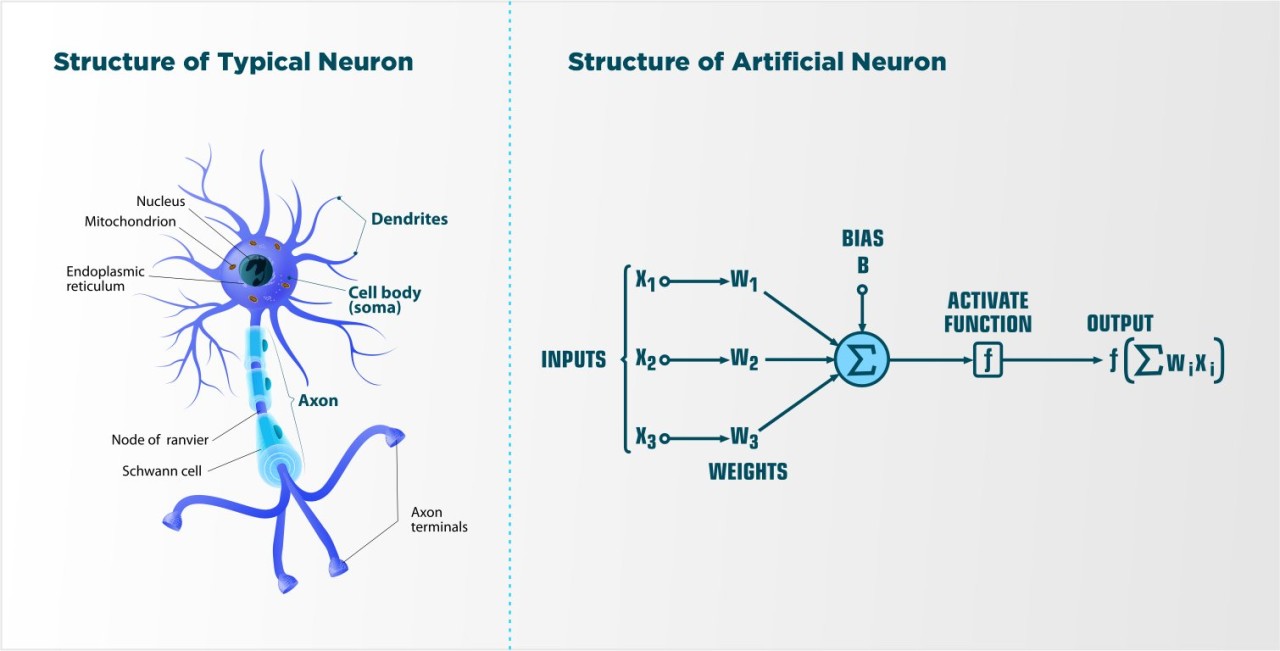
Deep learning is a subset of machine learning that involves training artificial neural networks with multiple layers to learn representations of data. These networks are designed to mimic the way the human brain processes information, allowing them to identify patterns and make decisions based on vast amounts of data.
Neural Networks Explained
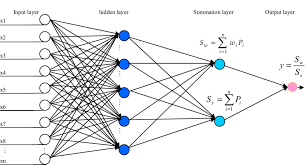
A neural network consists of interconnected nodes, or “neurons,” organized into layers. Each neuron receives input from the previous layer, processes it through a mathematical function, and passes the result to the next layer. The network’s ability to learn comes from adjusting the weights of these connections during training.
The Structure of Deep Learning Networks
Deep learning networks are characterized by their depth—meaning they contain many hidden layers between the input and output layers. This depth allows them to model complex relationships in data.
- Input Layer: The first layer that receives raw data for processing.
- Hidden Layers: Intermediate layers where computations occur; these can number from a few to several hundred.
- Output Layer: The final layer that provides predictions or classifications based on the processed data.
Types of Deep Learning Networks
Diverse architectures have been developed for specific tasks:
- Convolutional Neural Networks (CNNs): Primarily used for image processing tasks, CNNs excel at recognizing spatial hierarchies in visual data.
- Recurrent Neural Networks (RNNs): Designed for sequential data such as time series or language modeling, RNNs retain information across inputs through loops within their architecture.
- Generative Adversarial Networks (GANs): Consist of two networks—a generator and a discriminator—that compete against each other to produce realistic synthetic data.
The Impact and Future of Deep Learning
The impact of deep learning is profound across various industries. In healthcare, it aids in diagnosing diseases with high accuracy; in finance, it enhances fraud detection systems; in transportation, it powers self-driving cars. As research advances and computational power grows, deep learning networks will continue to evolve and unlock new possibilities.
The future holds exciting potential as researchers explore more efficient algorithms and architectures capable of solving increasingly complex problems while requiring less computational resources. As we move forward into this era driven by AI innovation, understanding deep learning networks becomes crucial for harnessing their full potential.
6 Essential Tips for Optimizing Deep Learning Networks
- Choose the appropriate network architecture for your task.
- Collect and preprocess high-quality data to train your model.
- Regularize your model to prevent overfitting.
- Monitor and fine-tune hyperparameters for better performance.
- Use transfer learning when you have limited data.
- Visualize and interpret the results to gain insights.
Choose the appropriate network architecture for your task.
When working with deep learning networks, it is crucial to choose the appropriate network architecture for your specific task. The architecture of a neural network plays a significant role in determining its performance and efficiency. By selecting the right network structure, such as Convolutional Neural Networks (CNNs) for image processing or Recurrent Neural Networks (RNNs) for sequential data, you can optimize the model’s ability to learn and make accurate predictions. Tailoring the network architecture to match the requirements of your task is essential for achieving successful outcomes in deep learning applications.
Collect and preprocess high-quality data to train your model.
To maximize the effectiveness of your deep learning network, it is essential to collect and preprocess high-quality data before training your model. The quality of the data directly influences the accuracy and performance of the network, as it learns patterns and makes decisions based on the information provided. By ensuring that your data is clean, relevant, and well-structured, you set a solid foundation for training a robust and reliable deep learning model that can yield accurate results and valuable insights.
Regularize your model to prevent overfitting.
Regularizing your deep learning model is a crucial step to prevent overfitting, a common issue where the model performs well on training data but poorly on unseen data. By incorporating regularization techniques such as L1 or L2 regularization, dropout, or early stopping, you can help your model generalize better and improve its performance on new, unseen data. Regularization adds constraints to the model’s complexity, discouraging it from memorizing noise in the training data and promoting a more robust and generalizable solution.
Monitor and fine-tune hyperparameters for better performance.
To optimize the performance of deep learning networks, it is essential to monitor and fine-tune hyperparameters. Hyperparameters are settings that control the learning process of the network, such as learning rate, batch size, and regularization strength. By carefully adjusting these parameters based on performance metrics and validation results, researchers can enhance the network’s efficiency and accuracy. Continuous monitoring and refinement of hyperparameters play a crucial role in achieving better performance and ensuring that the deep learning model operates at its full potential.
Use transfer learning when you have limited data.
When faced with limited data for training deep learning networks, a valuable tip is to leverage transfer learning. Transfer learning involves utilizing pre-trained models on large datasets and adapting them to suit your specific task with limited data. By leveraging the knowledge and features learned from the pre-trained model, you can significantly improve the performance of your model on smaller datasets. This approach not only saves time and computational resources but also enhances the generalization and accuracy of your deep learning network in scenarios where data scarcity is a challenge.
Visualize and interpret the results to gain insights.
Visualizing and interpreting the results of deep learning networks is a crucial step in gaining valuable insights from the data. By visualizing the output of the neural network, such as feature maps or activation patterns, researchers and developers can better understand how the model is processing information and making decisions. This visualization not only helps in debugging and improving the network’s performance but also provides insights into the underlying patterns and relationships within the data, leading to more informed decision-making and potential enhancements to the model’s architecture.