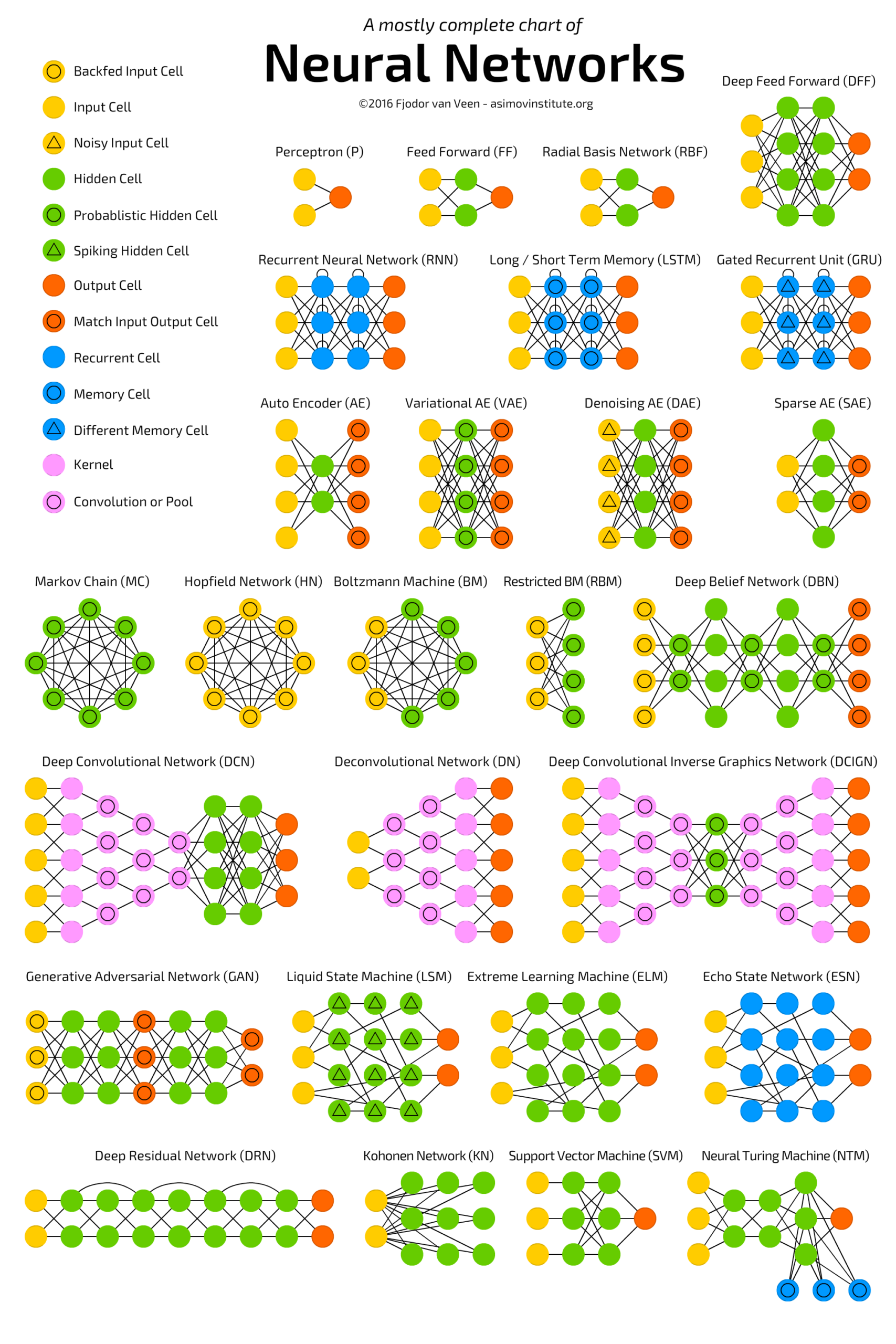
Neural Networks: The Building Blocks of Artificial Intelligence
Neural networks have revolutionized the field of artificial intelligence, enabling machines to learn from data and perform tasks that were once thought to be exclusive to human intelligence. These powerful computational models are inspired by the structure and function of the human brain, with interconnected nodes that work together to process information and make decisions.
At the core of neural networks are neurons, which are computational units that receive input, process it through an activation function, and produce an output. These neurons are organized into layers, with each layer responsible for specific computations. The input layer receives data, the hidden layers process it through complex transformations, and the output layer generates the final result.
One of the key features of neural networks is their ability to learn from data through a process known as training. During training, the network adjusts its internal parameters based on examples provided in a dataset, gradually improving its performance on specific tasks. This ability to learn and adapt makes neural networks incredibly versatile and powerful tools for a wide range of applications.
Neural networks have been successfully applied in various fields, including image and speech recognition, natural language processing, autonomous driving, healthcare diagnostics, and more. Their ability to analyze complex patterns in data and make accurate predictions has led to significant advancements in technology and has opened up new possibilities for innovation.
As researchers continue to explore new architectures and algorithms for neural networks, their capabilities are expected to grow even further. From deep learning models with multiple layers to recurrent neural networks that can handle sequential data, the potential applications of neural networks are virtually limitless.
In conclusion, neural networks represent a fundamental building block of artificial intelligence that has transformed how machines perceive and interact with the world. With their ability to learn from data and adapt to new challenges, neural networks are paving the way for a future where intelligent systems can assist us in solving complex problems and enhancing our lives in countless ways.
7 Advantages of Neural Networks: Revolutionizing Technology and Innovation
- Powerful computational models inspired by the human brain
- Ability to learn from data and improve performance over time
- Versatile tools with applications in various fields such as image recognition, natural language processing, and healthcare diagnostics
- Capable of analyzing complex patterns in data and making accurate predictions
- Enable advancements in technology and innovation across industries
- Flexible architectures that can be adapted for different tasks and datasets
- Potential for continued growth and development to tackle increasingly challenging problems
Challenges of Neural Networks: Data Demands, Complexity, and Computational Costs
- 1. Require large amounts of data for training, which can be time-consuming and expensive.
- 2. Complex neural network architectures may be difficult to interpret and explain, leading to challenges in understanding how decisions are made.
- 3. Vulnerable to overfitting, where the model performs well on training data but poorly on unseen data.
- 4. Computationally intensive, requiring significant processing power and memory resources.
- 5. Training neural networks can be a resource-intensive process, especially for deep learning models with many layers.
- 6. Limited transferability between different tasks or domains, requiring retraining or fine-tuning for each new application.
Powerful computational models inspired by the human brain
Neural networks, as powerful computational models inspired by the intricate workings of the human brain, have revolutionized the field of artificial intelligence. By mimicking the interconnected structure of neurons in our brains, neural networks are able to process vast amounts of data and make complex decisions with remarkable efficiency and accuracy. This biological inspiration has enabled neural networks to excel in tasks such as pattern recognition, language processing, and predictive analytics, making them invaluable tools for a wide range of applications across various industries.
Ability to learn from data and improve performance over time
Neural networks possess a remarkable capability to learn from data and enhance their performance over time. Through a process known as training, neural networks adjust their internal parameters based on the examples provided in a dataset, allowing them to gradually improve their ability to perform specific tasks with greater accuracy and efficiency. This adaptive learning mechanism enables neural networks to continuously refine their predictive capabilities, making them invaluable tools for a wide range of applications where iterative improvement and optimization are essential for achieving optimal results.
Versatile tools with applications in various fields such as image recognition, natural language processing, and healthcare diagnostics
Neural networks stand out as versatile tools with a wide range of applications across diverse fields, including image recognition, natural language processing, and healthcare diagnostics. In the realm of image recognition, neural networks have demonstrated remarkable accuracy in identifying objects, patterns, and faces in digital images, paving the way for advancements in security systems, autonomous vehicles, and medical imaging. Moreover, in natural language processing, neural networks excel at understanding and generating human language, enabling innovations in virtual assistants, machine translation, sentiment analysis, and more. Additionally, in healthcare diagnostics, neural networks have proven to be invaluable in analyzing medical images, predicting patient outcomes, diagnosing diseases, and personalizing treatment plans based on individual patient data. The versatility of neural networks continues to drive innovation and breakthroughs in these critical fields and beyond.
Capable of analyzing complex patterns in data and making accurate predictions
Neural networks demonstrate a remarkable capability in analyzing intricate patterns within vast datasets and delivering precise predictions. By leveraging their ability to process and interpret complex information, neural networks excel in recognizing subtle correlations and trends that may elude traditional algorithms. This proficiency enables them to make accurate forecasts and informed decisions across a wide array of applications, ranging from image recognition and natural language processing to financial forecasting and medical diagnostics. The unparalleled pattern recognition and predictive prowess of neural networks continue to drive advancements in artificial intelligence, offering transformative solutions to diverse real-world challenges.
Enable advancements in technology and innovation across industries
Neural networks have played a pivotal role in driving advancements in technology and fostering innovation across various industries. By harnessing the power of artificial intelligence, neural networks have enabled machines to process vast amounts of data, recognize patterns, and make intelligent decisions. This capability has revolutionized fields such as healthcare, finance, manufacturing, transportation, and more, by enhancing efficiency, accuracy, and productivity. From improving medical diagnostics to optimizing supply chain management, neural networks continue to push the boundaries of what is possible, fueling progress and sparking new ideas that shape the future of technology-driven solutions.
Flexible architectures that can be adapted for different tasks and datasets
Neural networks offer a significant advantage in their flexible architectures, which can be easily adapted to accommodate various tasks and datasets. This adaptability allows neural networks to effectively handle a wide range of applications, from image recognition to natural language processing, by adjusting their structure and parameters to suit the specific requirements of each task. By being able to tailor the network architecture to different datasets, neural networks demonstrate their versatility and efficiency in addressing diverse challenges across multiple domains.
Potential for continued growth and development to tackle increasingly challenging problems
Neural networks offer immense potential for continued growth and development, enabling them to tackle increasingly challenging problems with remarkable efficiency and accuracy. As researchers delve deeper into exploring advanced architectures and algorithms, neural networks are constantly evolving to handle complex tasks that were once deemed impossible for machines. This adaptability and scalability make neural networks a promising tool for addressing a wide range of real-world challenges, from climate modeling to medical diagnostics, paving the way for groundbreaking advancements in artificial intelligence.
1. Require large amounts of data for training, which can be time-consuming and expensive.
Neural networks, while powerful, often require vast amounts of data for effective training, which can be both time-consuming and costly. This need for large datasets arises from the complexity of these models; they must learn intricate patterns and relationships within the data to make accurate predictions. Gathering such extensive datasets can be a significant challenge, especially in specialized fields where data might not be readily available. Additionally, the computational resources required to process and train on these large datasets can be expensive, necessitating high-performance hardware and extended processing times. This demand for substantial data and resources can pose a barrier to entry for smaller organizations or individuals looking to leverage neural network technology.
2. Complex neural network architectures may be difficult to interpret and explain, leading to challenges in understanding how decisions are made.
Complex neural network architectures may pose a significant challenge when it comes to interpretation and explanation, making it difficult to understand how decisions are reached. As these networks consist of numerous interconnected layers and nodes, the inner workings can become convoluted and opaque, hindering transparency in decision-making processes. This lack of interpretability not only raises concerns about the reliability and trustworthiness of neural network outputs but also limits the ability to identify and rectify potential biases or errors within the system. Addressing this con is crucial to ensure accountability and ethical use of neural networks in various applications.
3. Vulnerable to overfitting, where the model performs well on training data but poorly on unseen data.
Neural networks are susceptible to a significant drawback known as overfitting, a phenomenon where the model excels in performing tasks on the training data but struggles when presented with new, unseen data. This issue arises when the neural network learns to memorize the training data rather than generalize patterns and relationships within it. As a result, the model may not be able to make accurate predictions or classifications on real-world data that it has not encountered before. Overfitting can lead to unreliable and inconsistent performance, undermining the overall effectiveness and reliability of neural networks in practical applications.
4. Computationally intensive, requiring significant processing power and memory resources.
Neural networks, while powerful and effective in various applications, face the con of being computationally intensive, demanding substantial processing power and memory resources. The complex computations involved in training and running neural networks can strain hardware resources, leading to longer processing times and higher energy consumption. This limitation poses a challenge for deploying neural networks on devices with limited computational capabilities, hindering their widespread adoption in resource-constrained environments. Researchers are actively exploring ways to optimize neural network architectures and algorithms to mitigate these computational demands and make them more efficient for practical use cases.
5. Training neural networks can be a resource-intensive process, especially for deep learning models with many layers.
Training neural networks, particularly deep learning models with numerous layers, can be a highly resource-intensive process. These models require substantial computational power and memory to process large datasets effectively, often necessitating specialized hardware like GPUs or TPUs to accelerate the training process. As the complexity of the model increases, so does the demand for these resources, leading to higher energy consumption and longer training times. This can pose a significant barrier for organizations with limited access to advanced computational infrastructure or those seeking to implement AI solutions in an environmentally sustainable manner. Additionally, the resource-intensive nature of training deep neural networks can increase operational costs, making it challenging for smaller enterprises to leverage these powerful AI tools effectively.
6. Limited transferability between different tasks or domains, requiring retraining or fine-tuning for each new application.
One significant drawback of neural networks is their limited transferability between different tasks or domains, often necessitating retraining or fine-tuning for each new application. While neural networks excel at learning specific patterns from data during training, they struggle to generalize this knowledge to unrelated tasks or domains. As a result, when applying a pre-trained neural network to a new problem, it may not perform effectively without additional training on task-specific data. This lack of transferability can lead to increased time and resources spent on retraining models for different applications, limiting the efficiency and scalability of neural networks across diverse use cases.