
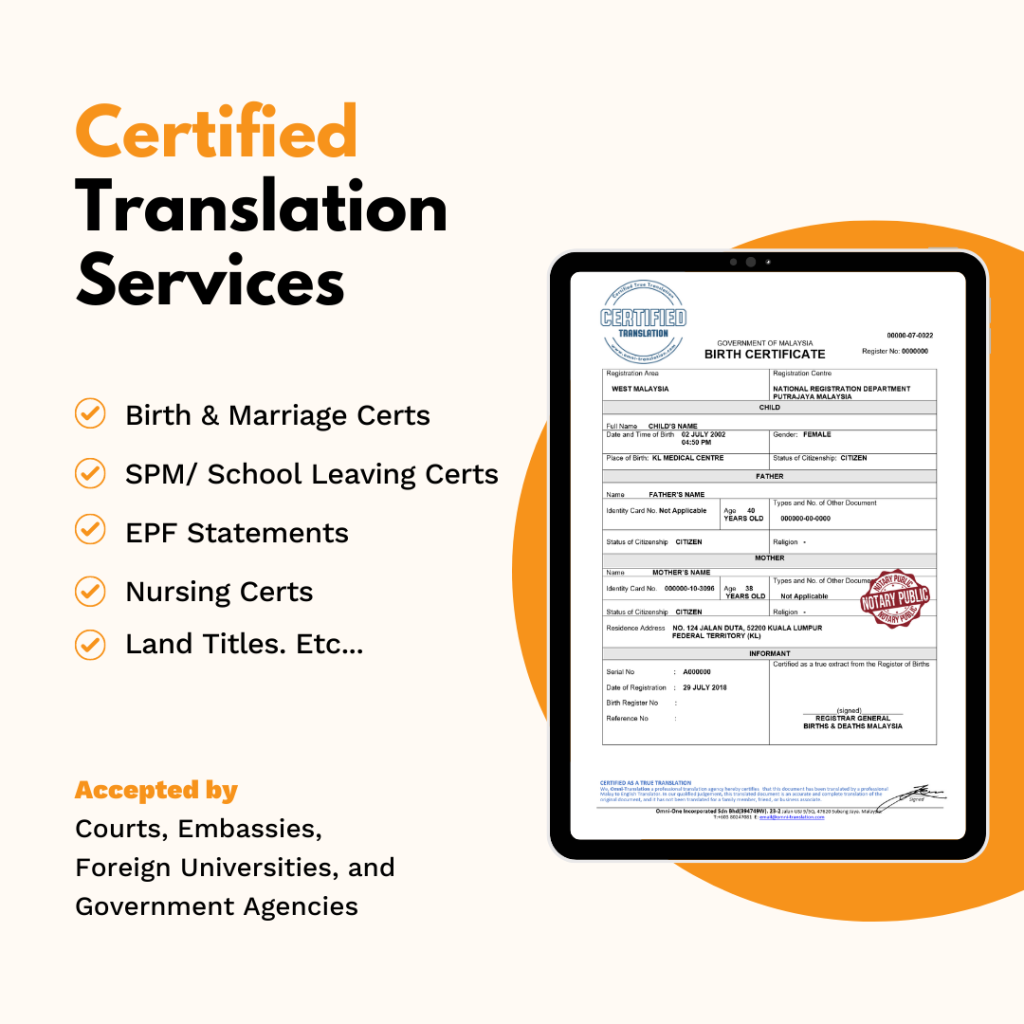
Certified Translation Services: Ensuring Accuracy and Reliability
In today’s globalized world, the need for accurate and reliable translation services is more important than ever. Whether you are a business expanding into new markets, an individual navigating immigration processes, or a legal professional handling multilingual documents, certified translation services play a crucial role in ensuring that communication is clear and precise.
What is Certified Translation?
Certified translation involves translating a document from one language to another by a professional translator who has been officially recognized as competent to provide accurate and reliable translations. The translator certifies the accuracy of the translation with their signature and stamp, indicating that the translation is true and complete to the best of their knowledge.
The Importance of Certified Translation
Certified translation services are often required for official documents such as birth certificates, marriage licenses, academic transcripts, legal contracts, and more. These documents may be needed for immigration purposes, legal proceedings, academic admissions, or business transactions where accuracy and authenticity are paramount.
By using certified translation services, you can have confidence that your translated documents will be accepted by government agencies, educational institutions, courts, and other official entities. Certified translations provide assurance that the content has been accurately rendered from one language to another without any loss of meaning or information.
Choosing a Certified Translation Provider
When selecting a certified translation provider, it is essential to choose a reputable company or individual with a track record of delivering high-quality translations. Look for translators who are fluent in both the source and target languages, have expertise in the subject matter of the document being translated, and adhere to strict quality control processes.
Additionally, ensure that the certified translator follows industry standards and guidelines for certified translations to guarantee that your documents meet the necessary requirements for official use. By working with a trusted certified translation provider, you can rest assured that your translated documents will be accurate, reliable, and legally recognized.
Conclusion
Certified translation services play a vital role in facilitating communication across language barriers while maintaining accuracy and reliability. Whether you require certified translations for personal or professional purposes, choosing a reputable provider can ensure that your translated documents meet the necessary standards for official use.
Answers to 8 Common Questions About Certified Translation Services
- Who can certify translation for USCIS?
- Who can certify a translation in the US?
- What is the difference between a certified translation and a notarized translation?
- What qualifies as a certified translation?
- What is the rate for a certified translator?
- How much does it cost to have a translation service?
- How do I certify a translation document?
- How to get something officially translated?
Who can certify translation for USCIS?
When it comes to certifying translations for USCIS (United States Citizenship and Immigration Services), the responsibility typically falls on professional translators or translation agencies that have the expertise and credentials to provide accurate and reliable translations. USCIS requires that translations of documents such as birth certificates, marriage licenses, academic transcripts, and other official records be certified to ensure their authenticity and accuracy. It is essential to work with certified translators who are fluent in both the source and target languages and follow USCIS guidelines for certified translations to ensure that your documents meet the necessary requirements for immigration purposes.
Who can certify a translation in the US?
In the United States, certified translations are typically certified by professional translators or translation agencies who have the expertise and qualifications to provide accurate and reliable translations. A certified translator affirms the accuracy of the translation by signing a statement attesting to the completeness and correctness of the translated document. It is important to ensure that the certified translator is proficient in both the source and target languages and follows industry standards for certified translations to meet the requirements of official entities such as government agencies, courts, educational institutions, and businesses.
What is the difference between a certified translation and a notarized translation?
When it comes to certified translation services, one common question that arises is the difference between a certified translation and a notarized translation. While both types of translations are often required for official documents, they serve different purposes. A certified translation is a document translated by a professional translator who certifies the accuracy and completeness of the translation with their signature and stamp. On the other hand, a notarized translation involves having the translated document signed and sealed by a notary public to verify the identity of the translator and confirm that the translation is accurate. In essence, while a certified translation attests to the accuracy of the content, a notarized translation adds an additional layer of authentication through notarization by a legal authority.
What qualifies as a certified translation?
A certified translation is a translation of a document that has been accompanied by a signed statement from the translator or translation agency, affirming that the translation is accurate and complete to the best of their knowledge and ability. This statement, often referred to as a certification or affidavit of accuracy, serves as a guarantee that the translated document is a true representation of the original text. In addition to the signed statement, certified translations may also include other elements such as an official stamp or seal to further validate the authenticity of the translation.
What is the rate for a certified translator?
The rate for a certified translator can vary depending on several factors, including the language pair, complexity of the document, turnaround time, and the reputation and experience of the translator or translation agency. Generally, certified translation services are priced per word, per page, or per hour. It is recommended to obtain quotes from multiple certified translators or agencies to compare rates and ensure that you are getting a fair price for high-quality translation services. Keep in mind that while cost is an important factor to consider, it is equally crucial to prioritize accuracy, reliability, and adherence to industry standards when selecting a certified translator for your specific needs.
How much does it cost to have a translation service?
The cost of translation services can vary depending on several factors such as the language pair, the complexity of the content, the turnaround time, and the certification requirements. Generally, translation services are priced per word, per page, or per hour of work. Additional fees may apply for rush orders, specialized terminology, or formatting needs. It is recommended to request a quote from a reputable translation service provider to get an accurate estimate based on your specific requirements. Investing in professional translation services ensures accuracy and reliability in conveying your message across different languages.
How do I certify a translation document?
To certify a translation document, you typically need to engage a professional translator or translation service provider who is qualified to certify translations. The translator will review the original document, accurately translate it into the target language, and then sign a statement certifying the accuracy and completeness of the translation. This certification is usually accompanied by the translator’s signature, date, and sometimes a stamp or seal to authenticate the document. By following this process, you can ensure that your translation document is certified and accepted as accurate for official use.
How to get something officially translated?
To get something officially translated, such as a document or certificate, you can follow a few simple steps. First, identify a reputable certified translation service provider with experience in translating the type of document you need. Next, submit the document to the translation service along with any specific requirements or instructions. The professional translator will then accurately translate the content while ensuring that it maintains its original meaning and context. Once the translation is complete, the translator will certify the accuracy of the translation with their signature and stamp. Finally, you will receive the officially translated document that can be used for various official purposes, such as immigration applications, legal proceedings, academic admissions, or business transactions.