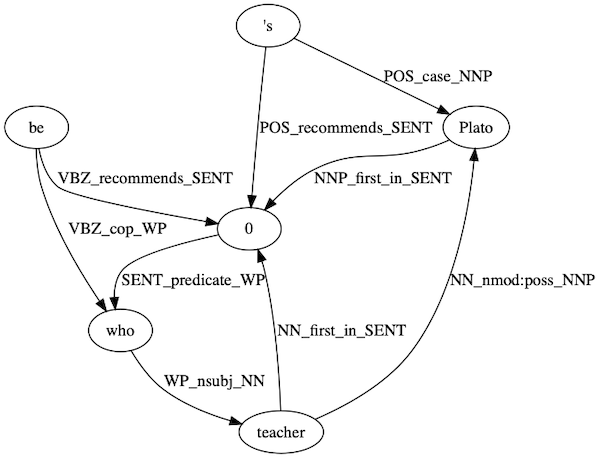
Symbolic Natural Language Processing (NLP) is a fascinating approach that combines the power of language processing with symbolic reasoning to understand and generate human language. This innovative field of study has gained significant attention in recent years due to its potential to revolutionize how computers interpret and generate natural language.
At the core of Symbolic NLP is the idea that language can be represented and manipulated using symbols, rules, and logic. By breaking down language into its fundamental components, such as words, phrases, and grammar rules, researchers in this field aim to create intelligent systems that can comprehend and generate human-like text.
One key advantage of Symbolic NLP is its ability to handle ambiguity and complex linguistic structures. By leveraging symbolic representations and logical reasoning, these systems can infer meaning from context, resolve ambiguities, and generate coherent responses.
Symbolic NLP has applications across various domains, including machine translation, sentiment analysis, question answering, and information retrieval. By combining symbolic processing with statistical methods and machine learning techniques, researchers are able to build more robust and accurate NLP systems.
Despite its potential benefits, Symbolic NLP also faces challenges, such as scalability issues when dealing with large amounts of data and the need for extensive linguistic knowledge for rule-based systems. Researchers continue to explore ways to overcome these challenges and further advance the field.
In conclusion, Symbolic NLP represents a promising approach towards achieving human-like language understanding in machines. By combining the strengths of symbolic reasoning with natural language processing techniques, researchers are paving the way for a new generation of intelligent systems that can interact with humans in a more natural and meaningful way.
7 Essential Tips for Mastering Symbolic NLP Techniques
- Understand the symbolic representation of language in NLP.
- Explore semantic analysis to extract meaning from symbols.
- Use knowledge graphs to represent relationships between symbols.
- Apply logic-based reasoning for inference and decision-making.
- Utilize rule-based systems for pattern matching and information retrieval.
- Consider ontologies to organize symbolic data and concepts.
- Combine symbolic NLP with statistical methods for comprehensive analysis.
Understand the symbolic representation of language in NLP.
To excel in Symbolic NLP, it is crucial to grasp the concept of symbolic representation of language in Natural Language Processing. By understanding how language can be broken down into symbols, rules, and logical structures, one can effectively navigate the complexities of linguistic analysis and generation. Symbolic representation forms the foundation for building intelligent systems that can interpret and produce human-like text, enabling researchers and developers to create more accurate and contextually-aware NLP solutions. Mastering the symbolic representation of language is key to unlocking the full potential of Symbolic NLP and harnessing its power to revolutionize communication and interaction between humans and machines.
Explore semantic analysis to extract meaning from symbols.
Semantic analysis plays a crucial role in symbolic NLP by enabling the extraction of meaning from symbols. By delving into the semantics of language, researchers can uncover deeper layers of understanding and context, allowing for more accurate interpretation and generation of text. Through semantic analysis, symbolic NLP systems can identify relationships between words, infer implied meanings, and capture the nuances of human language. This approach not only enhances the overall performance of NLP systems but also opens up new possibilities for developing more sophisticated and intuitive language processing tools.
Use knowledge graphs to represent relationships between symbols.
Knowledge graphs play a crucial role in Symbolic Natural Language Processing by providing a structured way to represent relationships between symbols. By organizing information in a graph format, with nodes representing entities and edges denoting relationships between them, knowledge graphs enable NLP systems to capture complex semantic connections and contextual dependencies. Leveraging knowledge graphs allows researchers to incorporate external knowledge sources, such as ontologies and databases, into the NLP process, enhancing the system’s ability to understand and generate natural language text with greater accuracy and depth. This approach not only improves the overall performance of Symbolic NLP systems but also facilitates more sophisticated reasoning and inference capabilities.
Apply logic-based reasoning for inference and decision-making.
When utilizing Symbolic NLP, it is essential to apply logic-based reasoning for inference and decision-making. By incorporating logical rules and principles into the processing of natural language, systems can effectively analyze and interpret text, infer meaning from context, and make informed decisions based on the information available. This approach not only enhances the accuracy and reliability of NLP systems but also enables them to handle complex linguistic structures and resolve ambiguities more effectively. Overall, leveraging logic-based reasoning in Symbolic NLP plays a crucial role in advancing the field and improving the capabilities of language processing technologies.
Utilize rule-based systems for pattern matching and information retrieval.
When implementing Symbolic NLP, it is beneficial to utilize rule-based systems for pattern matching and information retrieval. By defining specific rules and patterns within the system, it becomes easier to extract relevant information from textual data and perform accurate pattern matching tasks. Rule-based systems excel at handling structured data and can effectively process linguistic patterns to retrieve specific information, making them a valuable tool in the realm of Symbolic NLP.
Consider ontologies to organize symbolic data and concepts.
When delving into Symbolic Natural Language Processing, it is essential to consider utilizing ontologies as a powerful tool for organizing symbolic data and concepts. Ontologies provide a structured framework for representing knowledge, relationships, and entities in a domain-specific manner. By incorporating ontologies into Symbolic NLP systems, researchers can effectively capture the semantics of language and enhance the understanding of complex linguistic structures. This approach not only facilitates better organization and retrieval of symbolic data but also enables more accurate reasoning and inference capabilities within the system. Ultimately, leveraging ontologies can significantly improve the performance and efficiency of Symbolic NLP applications by providing a solid foundation for representing and processing symbolic information.
Combine symbolic NLP with statistical methods for comprehensive analysis.
By combining symbolic Natural Language Processing (NLP) with statistical methods, researchers can achieve a comprehensive analysis of human language. This hybrid approach allows for the utilization of symbolic representations and logical reasoning to interpret linguistic structures, while also leveraging statistical methods to handle large datasets and extract patterns from real-world language usage. By integrating these two methodologies, practitioners can develop more robust NLP systems that are capable of both understanding the nuances of human language and processing vast amounts of textual data efficiently and accurately.